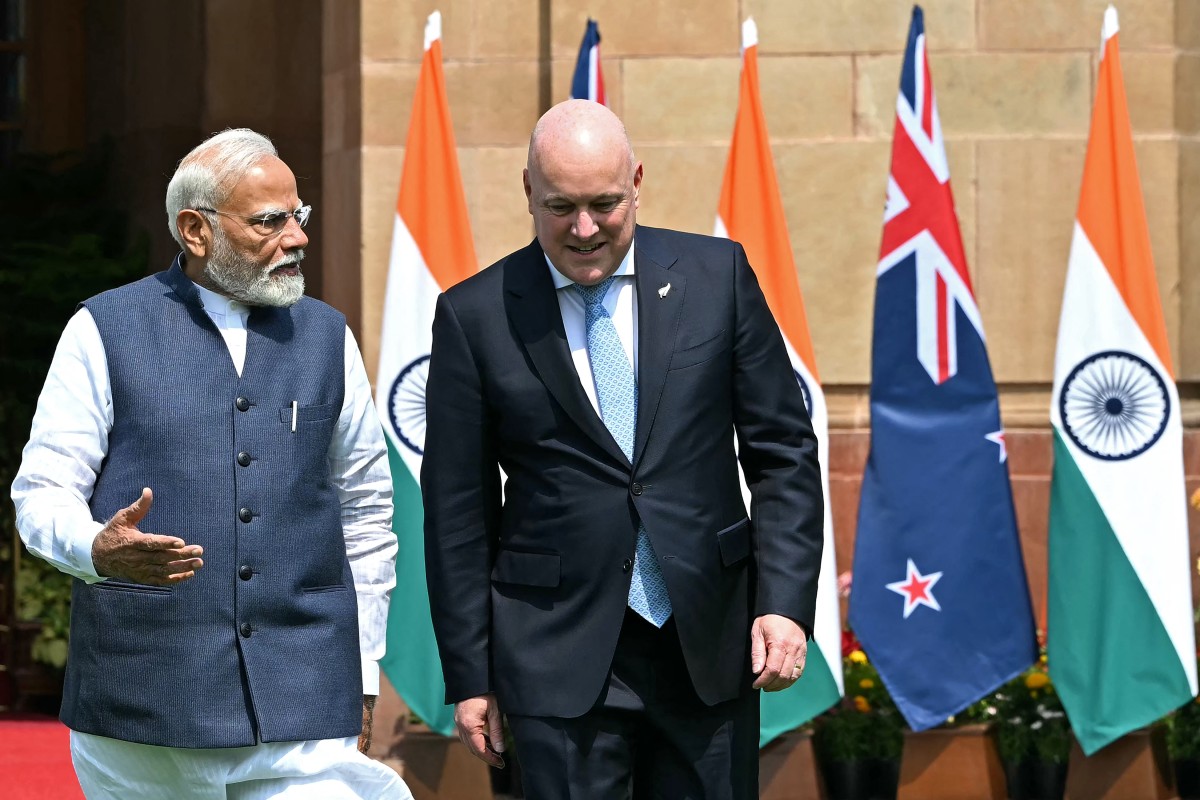
India–New Zealand Trade Pact Signals Long-Term Strategy- India and New Zealand have agreed on a free trade pact that reflects strategic timing as much as commercial ambition, with both governments looking to strengthen economic resilience amid an unsettled global trade environment. The agreement, concluded after nine months of negotiations, is designed to reduce tariffs, simplify regulations, and expand cooperation across goods, services, and investment, according to officials from both sides. A formal signing is expected in the first quarter of next year once legal reviews are completed.
For India, the deal fits into a broader effort to widen its network of trade partners as it seeks to cushion exporters from growing uncertainty in global markets, including the impact of higher U.S. import tariffs and rising protectionism. While trade volumes between India and New Zealand are relatively small compared with India’s major partners, New Delhi appears to view the agreement as a building block for deeper engagement rather than a quick boost to exports.
New Zealand’s government has framed the pact as a long-term growth opportunity. Prime Minister Christopher Luxon said the agreement could lift New Zealand’s exports to India by between $1.1 billion and $1.3 billion annually over the next two decades, translating into job creation, higher wages, and expanded opportunities for domestic industries. The projections underline Wellington’s expectation that improved access to India’s large and growing market will gradually pay dividends.
Trade analysts, however, caution against overstating the immediate economic impact. Ajay Srivastava, a trade expert, described the agreement as more of a cooperation framework than a transformative trade breakthrough, noting that existing trade levels limit near-term gains. Still, such frameworks can shape future flows by aligning standards, building trust, and reducing non-tariff barriers over time.
From New Zealand’s perspective, the agreement delivers tangible wins in specific sectors. Trade Minister Todd McClay said the deal grants New Zealand market access that India has not extended to any other country under a free trade agreement, including first-ever access for apples and honey, as well as the most favorable terms worldwide for kiwi fruit. These concessions highlight how targeted sectoral openings can carry symbolic and economic weight, even when overall trade volumes remain modest.
Taken together, the India–New Zealand free trade agreement signals a shared intent to invest in long-term economic ties. While its immediate commercial effects may be limited, the pact positions both countries to benefit from closer cooperation as global trade patterns continue to shift.