
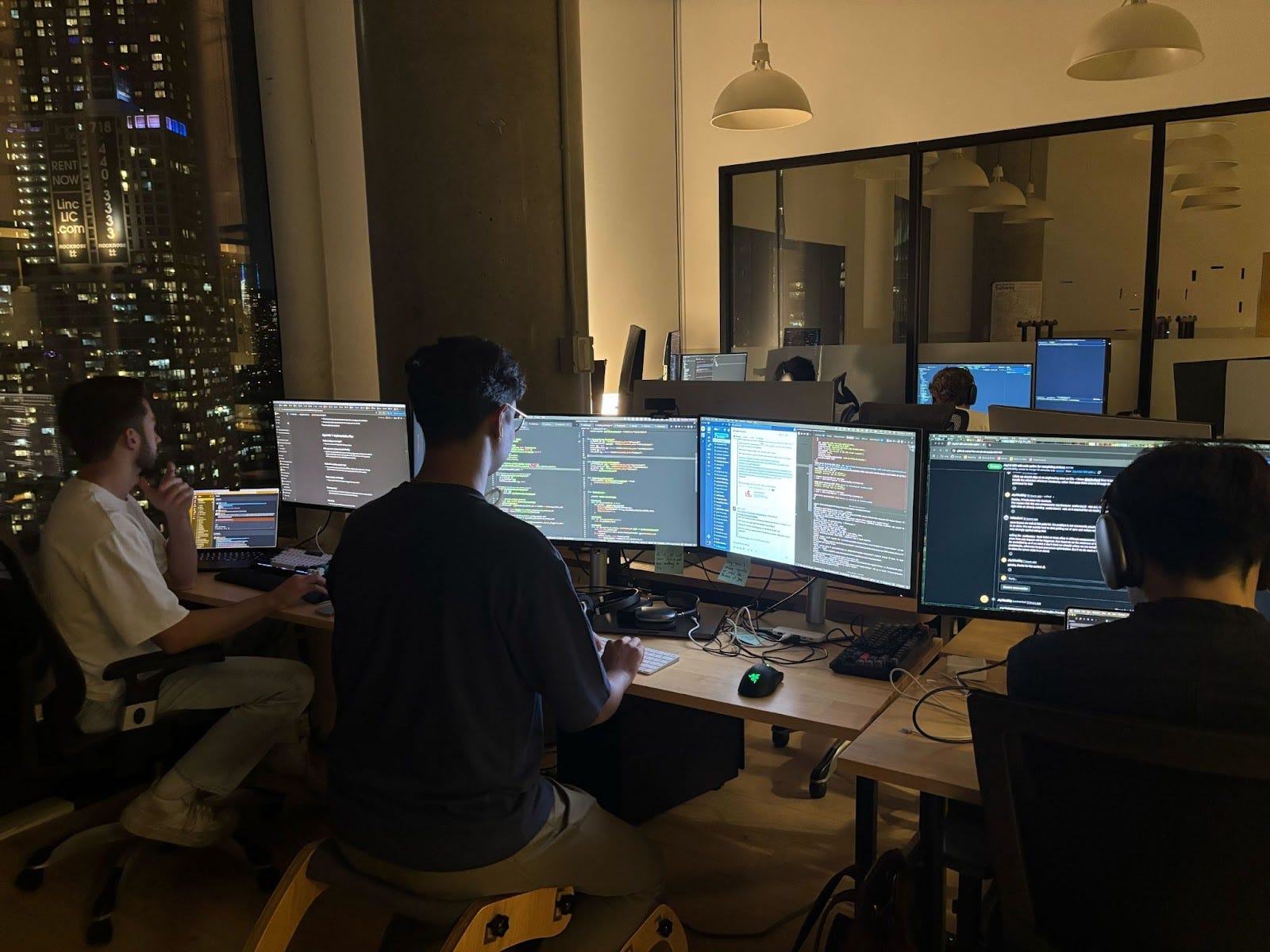
Inside Rilla: The NYC Startup That Turns 70-Hour Weeks Into a Selling Point- Rilla, a fast-growing New York-based AI startup, is making waves in the tech world — not just for its products, but for the culture it proudly advertises. Scroll through the company’s recruitment website and you’re greeted with vibrant photos of smiling young employees and slogans like “insane speed,” “infinite curiosity,” and “customer obsession.”
The perks are just as flashy: competitive salaries, free meals, gym memberships, full health and dental coverage. Yet, right in the fine print of every job posting is a stark warning: “Please don’t join if you’re not excited about… working ~70 hrs/week in person with some of the most ambitious people in NYC.”
Bringing 996 Culture to NYC
Rilla is part of a growing movement in tech often called 996, shorthand for working 9 a.m. to 9 p.m., six days a week. Originating in China, this “hustle culture” or “grindcore” mindset prizes long hours, high intensity, and constant output. For most people, 70-hour weeks would be grueling — bordering on impossible.
But at Rilla, the grind is positioned as a feature, not a bug. Employees reportedly thrive under the pressure, drawn by the challenge and the promise of accelerated growth.
Looking for “Olympian Athletes”
Will Gao, Rilla’s Head of Growth, compares the company’s ideal employees to elite athletes. “We look for people who are like Olympians — obsessed, ambitious, and ready to push themselves beyond ordinary limits,” he says. “It’s about doing incredible things and having fun while doing them.”
This ethos reflects a deliberate strategy: only those who embrace intensity, competition, and long hours should apply. The culture is unapologetically selective, framing overwork as part of the excitement and opportunity.
Work That Mirrors the Product
Rilla sells AI-driven tools that monitor sales representatives in real time, tracking client interactions and optimizing performance on the go. The company’s own workplace mirrors the product’s philosophy: constant monitoring, accountability, and relentless performance metrics.
The environment is built to encourage high output and efficiency, and employees are expected to thrive under these expectations. In this sense, Rilla doesn’t just sell productivity tools — it embodies them.
The Appeal of the High-Intensity Startup
Despite the long hours, Rilla has successfully attracted talent. Many employees are drawn to the combination of fast-paced learning, ambitious peers, and high rewards. The culture is marketed as a chance to grow faster, take on significant responsibility, and accelerate one’s career in a way that traditional workplaces can’t match.
“It’s not for everyone,” Gao admits. “But for people who enjoy working at a high velocity, it’s energizing. You’re constantly learning, constantly pushing, and constantly achieving.”
The Grind Culture Debate
Rilla highlights a larger conversation in tech: how sustainable is extreme hustle culture? Critics argue that 996-style workplaces risk burnout, mental health issues, and unsustainable work-life balance. Advocates counter that, for highly driven individuals, these environments offer unparalleled growth and career opportunities.
Rilla’s model makes this trade-off explicit. The company doesn’t hide its expectations; it sells them as part of the package, making it clear that only the most motivated, ambitious candidates will thrive.
Looking Forward
Rilla’s workplace philosophy illustrates a growing trend in startups: blending high-intensity work with attractive perks and using culture as a recruiting tool. It’s a world where long hours are normalized, ambition is currency, and the boundary between work and life is deliberately blurred.
For the company’s 120 employees, the pressure may feel exciting. For outsiders, it may appear extreme. Either way, Rilla is unapologetically marketing a lifestyle as much as it is selling AI products — a culture built around obsession, speed, and relentless ambition. Whether this model becomes a template or a cautionary tale will be a story the tech industry continues to watch closely.

