Inside the ChatGPT Caricature Craze: Where Creativity Meets Data—and Privacy Questions Follow
The Rise of AI-Generated Caricatures
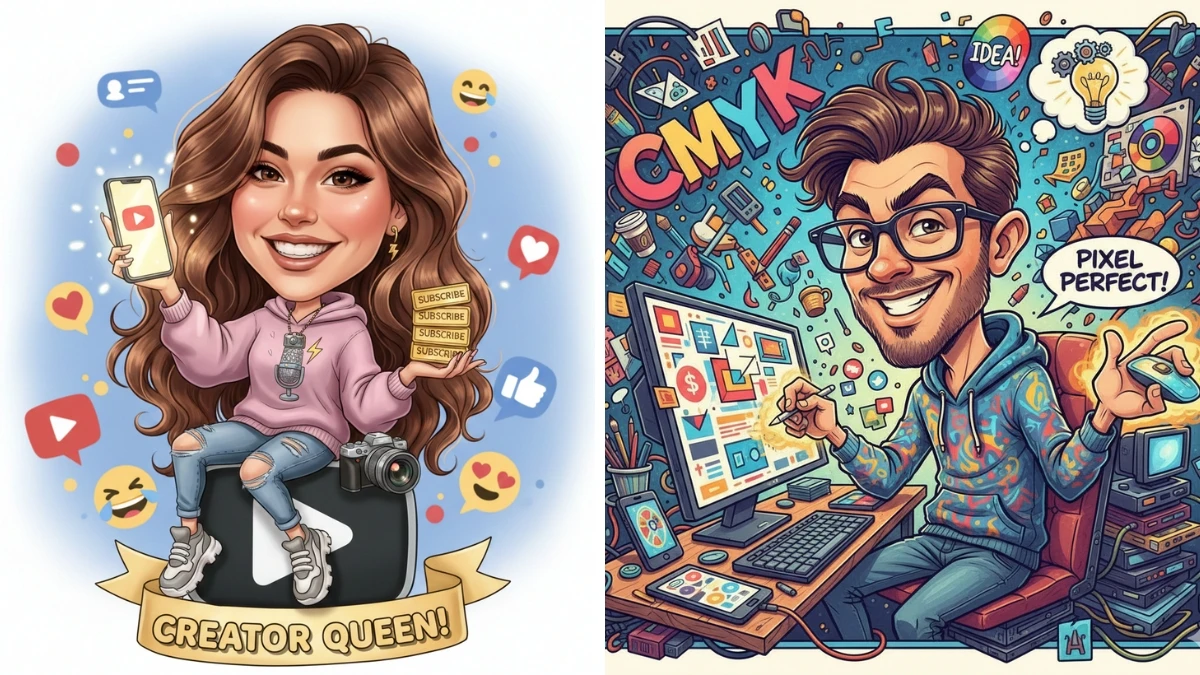
AI-generated caricatures are quickly becoming one of the most popular creative trends online. From exaggerated avatars to cartoon-style portraits, users are turning to generative AI tools—often guided by ChatGPT—to create highly personalized digital art.
This surge reflects a broader shift in how people interact with artificial intelligence: not just as a productivity tool, but as a creative collaborator.
How ChatGPT Fuels the Caricature Trend
While ChatGPT doesn’t directly generate images, it plays a key role in the caricature workflow. Users rely on it to:
-
Craft detailed image prompts
-
Translate creative ideas into descriptive language
-
Experiment with art styles, themes, and aesthetics
-
Refine prompts for better AI image outputs
This prompt-driven approach allows users with no design or illustration skills to produce visually compelling caricatures in minutes.
Why AI Caricatures Are So Popular
The appeal of AI caricatures lies in their balance of personalization and abstraction. Unlike realistic AI portraits, caricatures emphasize style over accuracy, making them ideal for:
-
Social media profile images
-
Digital avatars and gaming identities
-
Personal branding and creator marketing
-
Humorous or satirical content
By exaggerating features rather than replicating them, caricatures feel creative instead of invasive—lowering psychological resistance to AI-generated imagery.
The Data Powering AI Creativity
Behind every AI caricature is a vast ecosystem of training data. Generative AI models learn from large-scale datasets that include:
-
Artistic styles and illustrations
-
General human facial structures and proportions
-
Text-image relationships
Although AI models don’t store or recall individual photos, the use of large datasets continues to raise questions around data sourcing, artist compensation, and ethical AI training practices.
Privacy Risks Users Often Overlook
As the caricature craze grows, privacy concerns are becoming harder to ignore. Common risks include:
-
Uploading personal photos to third-party platforms
-
Unclear data retention policies
-
Limited transparency around how images are processed or stored
Many users prioritize speed and novelty over reading privacy policies, especially when the output feels playful rather than sensitive.
Generative AI and the Trust Gap
The caricature trend highlights a larger issue in the AI industry: trust. As generative AI tools become more accessible, users expect clearer answers to questions like:
-
How long is my data stored?
-
Is my content used for future training?
-
Can I delete my data permanently?
Platforms that address these concerns openly are more likely to earn long-term user loyalty.
What the ChatGPT Caricature Craze Really Signals
This trend isn’t just about digital art—it’s a signal of where AI creativity is headed. The ability to turn imagination into visuals using natural language is reshaping creative culture, marketing, and self-expression.
At the same time, it reinforces the need for responsible AI development—where innovation, data ethics, and user privacy evolve together.
In Summary
The ChatGPT caricature craze shows how generative AI can unlock creativity at an unprecedented scale. But as AI-generated content becomes more personal, questions around data use and privacy grow more urgent.
The future of AI creativity won’t be defined solely by how impressive the results are—but by how responsibly they’re created.
How an Entire Library Disappeared: The Mystery of the Library of Alexandria | Maya