Is the U.S. Expanding Its War on Drugs Into Ecuador?
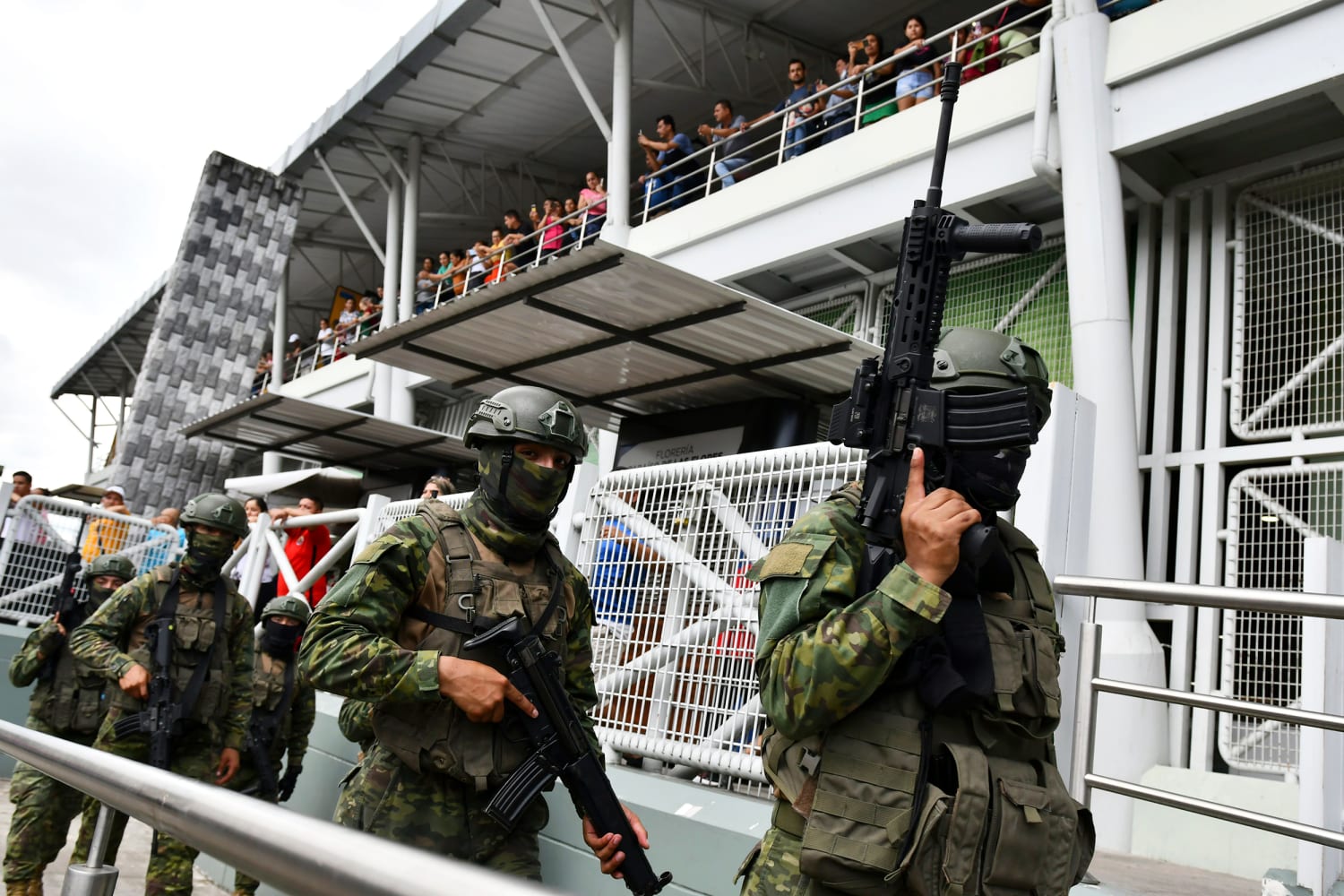
The United States has launched joint military operations with Ecuador targeting what officials describe as “designated terrorist organizations,” a move that is intensifying debate over whether Washington is broadening its long-running War on Drugs into a new phase in South America.
In a statement released by U.S. Southern Command, American forces confirmed they are working alongside Ecuador’s military in operations aimed at dismantling criminal networks tied to drug trafficking. While authorities have withheld specific tactical details, the announcement marks a significant moment: it is one of the clearest acknowledgments of U.S. military activity inside Ecuadorian territory in recent years.
At the center of the announcement was Marine Gen. Francis L. Donovan, commander of Southern Command, who praised Ecuadorian forces for their “courage and resolve” in confronting what he referred to as narco-terrorists. The language itself is notable. By framing powerful criminal gangs as terrorist organizations, the United States expands the legal and strategic tools available for intervention, surveillance, and potentially more aggressive action.
The backdrop to this development is Ecuador’s rapidly deteriorating security situation. Once considered one of the more stable countries in the Andean region, Ecuador has in recent years transformed into a major transit hub for cocaine trafficking. Its ports, strategic Pacific coastline, and proximity to Colombia and Peru — the world’s leading cocaine producers — have made it attractive to transnational criminal organizations.
The crisis escalated dramatically in January 2024, when armed gangs stormed a television station during a live broadcast, taking staff hostage in scenes that stunned the country and the world. In response, President Daniel Noboa declared a state of emergency and characterized the violence as an internal armed conflict. Since then, Ecuador has been locked in a low-level war against heavily armed gangs that control prisons, neighborhoods, and trafficking corridors.
Against this volatile backdrop, Washington’s involvement represents more than routine cooperation. The United States has long supported anti-narcotics efforts across Latin America through intelligence sharing, training, and maritime patrols. The U.S. Coast Guard, for example, has conducted interdiction missions in the eastern Pacific aimed at intercepting cocaine shipments before they reach Central America or North American shores. However, publicly acknowledged operations within Ecuador itself signal a deeper level of engagement.
Since returning to office, President Donald Trump has adopted an aggressive posture toward drug trafficking organizations across the hemisphere. His administration has emphasized rapid, forceful measures to disrupt smuggling routes, seize vessels, and target criminal leadership. Officials report dozens of maritime interdictions in recent months, reflecting what they describe as a renewed commitment to cutting off narcotics flows at their source.
What distinguishes the Ecuador operation is the framing. By labeling certain criminal groups as terrorist organizations, the U.S. government shifts the narrative from crime control to counterterrorism. This shift carries profound implications. Terrorism designations can unlock broader authorities for military involvement, sanctions, and intelligence operations. It also raises questions about sovereignty, escalation, and the long-term consequences of expanding military frameworks into domestic security crises in partner nations.
Supporters of the move argue that Ecuador’s government requested assistance and that the collaboration strengthens regional security. They contend that transnational drug networks operate across borders, launder billions of dollars, and undermine democratic institutions. From this perspective, coordinated military action is not interventionist but rather a form of strategic partnership aimed at stabilizing a country under siege.
Critics, however, warn of potential risks. Expanding U.S. military activity in Latin America has historically been politically sensitive. Some analysts caution that visible American operations could inflame nationalist sentiment or provide propaganda opportunities for criminal groups seeking to portray the government as dependent on foreign force. Others question whether militarized responses alone can resolve what are deeply rooted issues involving poverty, corruption, prison control, and institutional weakness.
Another concern centers on precedent. If Ecuador becomes a template for direct U.S. involvement against drug-linked groups labeled as terrorists, could similar operations follow elsewhere in the region? Mexico and Colombia, both central to the hemispheric drug trade, have long been focal points of U.S. anti-narcotics strategy. The Ecuador deployment may signal a willingness to expand that approach geographically and operationally.
For Ecuador, the stakes are immediate and existential. Homicide rates have surged in recent years, prisons have erupted in violence, and public confidence in security institutions has eroded. The Noboa administration has staked its political future on restoring order. International cooperation, particularly with Washington, is seen by his government as a critical pillar in that effort.
Yet the broader question remains: is this a limited tactical collaboration, or the beginning of a new phase in the hemispheric drug war? With details scarce and operations ongoing, clarity may not come quickly. What is clear is that Ecuador has become a focal point in Washington’s evolving strategy — a test of how far the United States is willing to go in confronting transnational narco-terrorism beyond its borders.
Whether this marks a temporary surge or a sustained expansion, the implications for regional security, sovereignty, and U.S.–Latin America relations could be profound.
How Vulnerable Is the Global Oil Market to Hormuz Disruption? | Maya