Kyiv Stands Firm on Borders as Moscow Pushes for Eastern Control
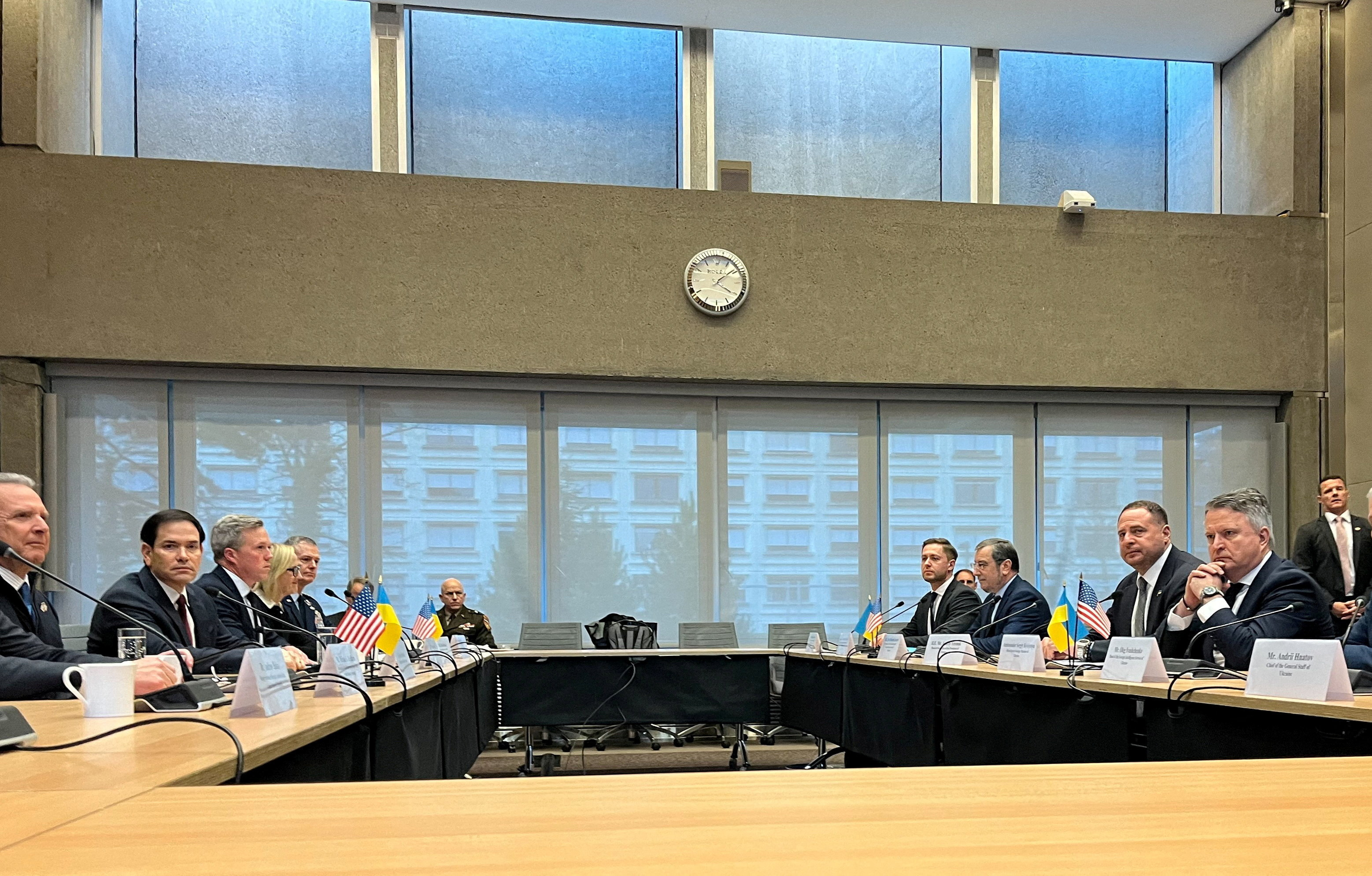
U.S.-mediated peace talks between Ukraine and Russia ended this week in Geneva with little sign of a breakthrough, underscoring the deep divide between Kyiv’s insistence on preserving its internationally recognized borders and Moscow’s determination to cement control over territory seized during nearly four years of full-scale war.
Ukrainian President Volodymyr Zelenskyy emerged from the two-day negotiations describing progress as “uneven,” accusing the Kremlin of dragging out discussions that he believes could move more quickly if Russia softened its demands. At the heart of the impasse lies the question that has defined the conflict from the outset: who controls Ukraine’s eastern regions, particularly the industrial heartland known as the Donbas.
For Kyiv, the answer is nonnegotiable. Zelenskyy has repeatedly stated that Ukraine will not formally cede any occupied territory as part of a peace settlement. While he has signaled openness to pragmatic steps — including the possibility of a troop withdrawal to create a neutral, internationally monitored buffer zone — he has drawn a firm line at recognizing Russian sovereignty over land taken by force.
“Security guarantees must come first,” Zelenskyy said in recent remarks, arguing that any territorial compromise without binding protections would leave Ukraine vulnerable to renewed aggression. In his view, a rushed land-for-peace deal could simply give Moscow time to regroup militarily before striking again.
On the Russian side, President Vladimir Putin has shown no willingness to abandon his demand that Ukraine formally and permanently relinquish control of territories currently occupied by Russian forces. The Kremlin has long framed its objectives as securing the entirety of the Donbas region and safeguarding what it calls Russian-speaking populations there. Critics, however, view the demands as an attempt to legitimize territorial conquest and redraw borders by force.
Kremlin spokesperson Dmitry Peskov told reporters that the “main issues” under discussion revolve around territory and the broader list of Russian security demands. Those demands have previously included limits on Ukraine’s military posture and constraints on its integration with Western institutions — proposals Kyiv considers incompatible with its sovereignty.
The Geneva meetings were the latest in a series of diplomatic efforts brokered by Washington. Former U.S. President Donald Trump has publicly urged both sides to reach a deal swiftly, suggesting that Ukraine may ultimately have to make difficult concessions to secure peace. His comments have sparked concern in Kyiv and among several European allies, who warn that rewarding territorial aggression could set a destabilizing precedent.
Zelenskyy, while welcoming American involvement, has stressed that European nations must also play a central role in shaping and guaranteeing any agreement. “Europe’s participation is critically necessary,” he said, arguing that long-term stability on the continent depends on a settlement that is both just and enforceable.
Behind the scenes, negotiators described the talks as professional but difficult. The Russian delegation, led by presidential aide Vladimir Medinskiy, characterized the discussions as “business-like,” indicating that further rounds are expected but offering no timeline. Ukraine’s chief negotiator, Rustem Umerov, acknowledged that some progress had been made, though he cautioned that aligning positions on the most contentious issues would take time.
The Donbas remains the symbolic and strategic centerpiece of the dispute. Fighting there first erupted in 2014 between Ukrainian forces and Russian-backed separatists, long before the full-scale invasion that began four years ago. Since then, towns and cities across the region have suffered repeated bombardment, shifting front lines, and severe humanitarian strain. For Moscow, control of the Donbas offers economic assets and a land corridor to other occupied territories. For Kyiv, relinquishing it would mean accepting a permanent wound to national identity and territorial integrity.
Public sentiment in Ukraine further constrains Zelenskyy’s negotiating room. Polls and anecdotal evidence suggest that many Ukrainians oppose ceding territory, even if it could bring an immediate halt to fighting. The memory of earlier ceasefire agreements that failed to deliver lasting peace looms large, reinforcing skepticism about deals that rely on Russian assurances without enforceable guarantees.
Despite the stalemate, limited areas of cooperation remain possible. Previous U.S.-brokered talks held earlier this year in Abu Dhabi resulted in a prisoner exchange — the first in several months — offering a rare tangible outcome amid otherwise entrenched positions. Zelenskyy has hinted that another swap could be forthcoming, a modest humanitarian step even as broader political questions remain unresolved.
For now, the path to peace appears constrained by fundamentally incompatible visions. Kyiv insists that sovereignty and security cannot be traded away. Moscow continues to press for formal recognition of territorial gains. As negotiations inch forward, the gap between those positions remains wide — and the fate of eastern Ukraine hangs in the balance.