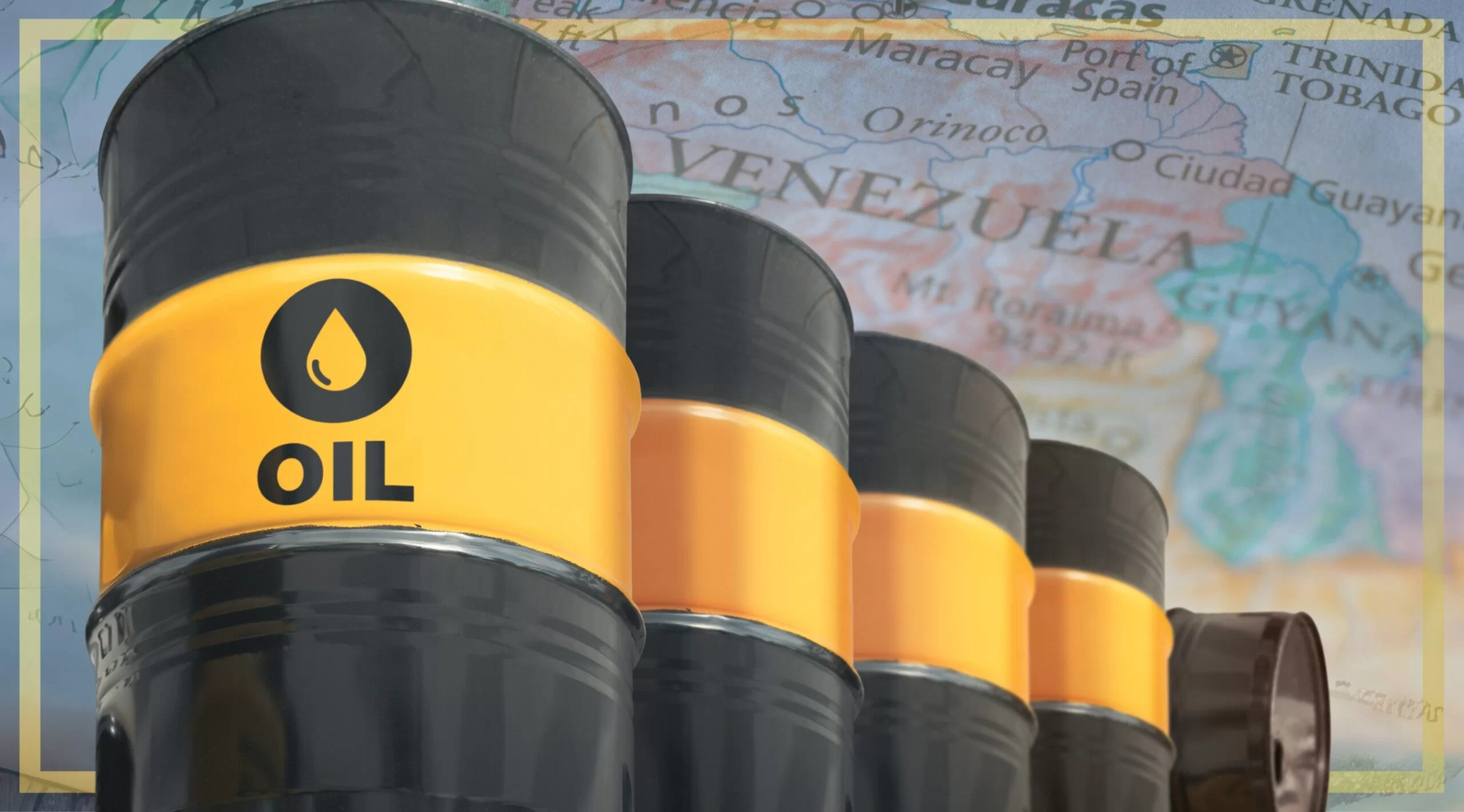
Low Prices, High Risk: Venezuela’s Oil Dilemma- The Trump administration has quietly begun exploring whether U.S. oil companies might consider returning to Venezuela if Nicolás Maduro is removed from power. Officials have reached out to industry leaders, seeking to gauge interest in tapping into Venezuela’s vast oil reserves. So far, the answer from the major players has been a firm “no,” underscoring the challenges that low oil prices and political instability pose to investment in the South American nation.
Venezuela, once one of the world’s largest oil producers, has struggled for years with collapsing infrastructure, mismanagement, and economic turmoil under the leadership of Hugo Chávez and his successor, Maduro. The country’s oil facilities, nationalized decades ago, are in desperate need of repair, with production at a fraction of its historical levels. While the U.S. sees a post-Maduro Venezuela as a potential source of crude for American refineries, the reality for investors is far more complicated.
The industry’s hesitancy is rooted in economics. U.S. benchmark oil prices recently hovered around $56 per barrel, the lowest level since January 2021. At these prices, the financial incentives to invest billions into Venezuela’s deteriorating oil infrastructure are limited. Companies can achieve better returns with projects in safer and more stable regions around the world. As one industry insider explained, “It’s not as straightforward to convince companies to risk capital in an uncertain political environment.”
Adding to the complexity is the issue of debt. Major oil firms such as Exxon and ConocoPhillips have outstanding claims from previous operations in Venezuela. In discussions facilitated by the administration, Venezuelan opposition representatives proposed granting control over additional oil fields as a way to offset these debts. While the gesture is promising, it has not been enough to sway companies already cautious about political and operational risks.
The outreach effort has involved high-level meetings in Washington. Energy Secretary Chris Wright led a session with Exxon, ConocoPhillips, and members of a Venezuelan opposition group. Former Venezuelan state oil executive Evanan Romero, now a Houston-based consultant, also played a role in bridging the conversation. Romero described the meeting as “positive” and noted that Wright’s presence was “very, very helpful.” Still, despite encouragement from U.S. officials, no commitments to return to Venezuela have been made.
From a strategic standpoint, the timing of the administration’s outreach is influenced by global oil markets. Low prices offer the U.S. flexibility to increase political and military pressure on Venezuela without triggering immediate spikes in gasoline costs at home. This is similar to how markets largely shrugged off U.S. and Israeli missile strikes on Iran earlier this year. Yet the same low prices that provide political leverage simultaneously make Venezuela less attractive to private companies that are evaluating return on investment in real dollars.
For Washington, a post-Maduro Venezuela represents a tantalizing opportunity: a country rich in oil that could supply U.S. refineries and reduce dependence on other foreign sources. For Exxon, ConocoPhillips, and other potential investors, it represents a high-risk gamble, requiring billions in investment and navigating a volatile political landscape. Until oil prices rise or political uncertainty diminishes, U.S. oil companies are likely to continue taking a cautious stance.
The administration’s outreach underscores a broader tension in U.S. energy policy: balancing geopolitical ambitions with economic realities. While the idea of reintegrating Venezuelan crude into the U.S. supply chain is appealing on paper, the practical obstacles—from infrastructure decay to unresolved debts and political risk—pose significant barriers.
For now, Venezuela’s oil dilemma remains: the potential is enormous, but the risks are too high for most investors. The U.S. may continue its diplomatic overtures, but without higher prices or a more stable political environment, the industry’s cautious “no” is likely to remain firm.
All About Boric Acid: A Natural Antiseptic for Health and Home | Maya