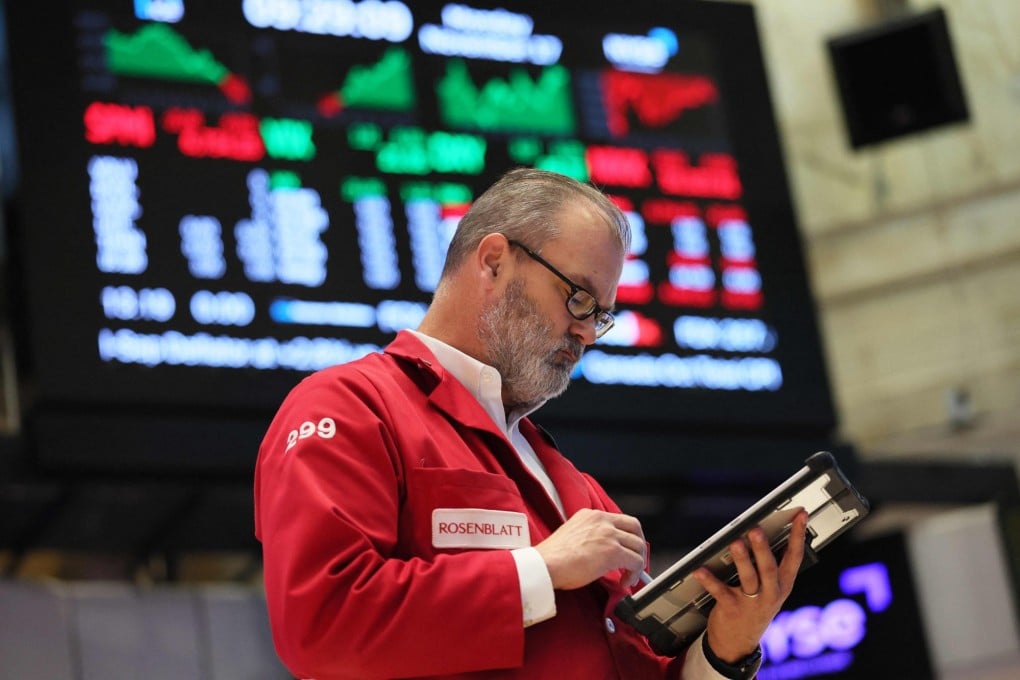
Market Mixed as Nvidia Becomes Center of AI Spending Fears- U.S. stocks showed a split performance on Wednesday, with investors keeping a close eye on Nvidia ahead of its highly anticipated quarterly earnings. While the S&P 500 climbed 0.5%, erasing earlier losses from the week, the Dow Jones Industrial Average rose a modest 69 points, or 0.1%, and the Nasdaq Composite gained 1% by mid-morning Eastern time.
The seemingly positive numbers masked a more nuanced market reality: more companies in the S&P 500 were declining than advancing, highlighting that gains were concentrated in a handful of dominant stocks, with Nvidia standing out as the primary driver. Shares of Nvidia jumped 1.7%, fueled by expectations that the chipmaker would deliver another blockbuster quarter. Analysts are projecting a nearly 70% jump in quarterly profit, with revenue estimated at $37.52 billion — translating to more than $400 million in daily earnings during the three months ending January 25.
Nvidia’s earnings report has evolved into a barometer for the broader market, not simply because of its size, but due to its central role in powering the AI revolution. Over the past few years, the rapid adoption of artificial intelligence has fueled a surge in tech stocks, as investors anticipated that AI would dramatically enhance productivity and reshape the economy. The company’s chips have become essential for AI systems deployed by tech giants and startups alike, making its performance a proxy for the health of the AI industry as a whole.
However, optimism has been tempered by growing concerns. Companies like Alphabet and Amazon are investing heavily in Nvidia chips and other AI hardware. Some investors worry that the sheer scale of these investments may not translate into proportional gains in efficiency or profitability. Should AI spending slow down or companies find returns on investment lower than expected, Nvidia could face direct repercussions, and the market could respond with heightened volatility.
Beyond Nvidia, the broader market is starting to factor in the impact of AI-driven disruption across industries. Sectors such as software, logistics, and even legal services have experienced sudden sell-offs as investors reassess companies vulnerable to AI competition. These trends are layered on top of other market pressures, including trade uncertainties and new tariffs announced by Donald Trump following the Supreme Court’s reversal of previous measures, creating a complex landscape for investors to navigate.
Yet despite these worries, there are counterbalancing trends that have been underappreciated. Darrell Cronk, chief investment officer for Wealth & Investment Management at Wells Fargo, suggests that investors would do well to weigh current concerns against ongoing positive developments in corporate earnings. Many U.S. companies have reported strong profits for the end of 2025, reinforcing pockets of market strength that had been overshadowed by AI hype and Big Tech dominance.
Evidence of this broader resilience is visible in smaller companies reporting above-expectation results. Cava Group, the Mediterranean fast-casual chain, soared 22% after posting revenue and profits that exceeded analyst forecasts. Its fiscal-year revenue surpassed $1 billion for the first time, representing a 22.5% increase from the prior year. Similarly, Axon Enterprise, known for Tasers and AI-enabled body cameras, jumped 20.4% after delivering earnings and revenue growth above expectations. These results highlight that robust performance is not confined to AI megacaps, and that smaller companies with strong fundamentals can still attract investor attention.
The market’s current state reflects a delicate balance. On one hand, the concentration of gains in AI-related giants like Nvidia underscores investor faith in the transformative potential of artificial intelligence. On the other, fears of overinvestment and AI disruption are prompting caution and selective selling across industries. How Nvidia performs in its upcoming earnings report could significantly influence sentiment, potentially tipping the scales for investors deciding whether to embrace or step back from AI-driven bets.
In short, the U.S. stock market remains in a phase of selective optimism: buoyed by strong earnings in some corners, yet tempered by uncertainty over AI spending and its broader economic impact. For now, all eyes remain on Nvidia, whose results may define the next chapter in Wall Street’s complex relationship with artificial intelligence.
Doctor Foster to Return for Final Series After Nine-Year Hiatus | Maya