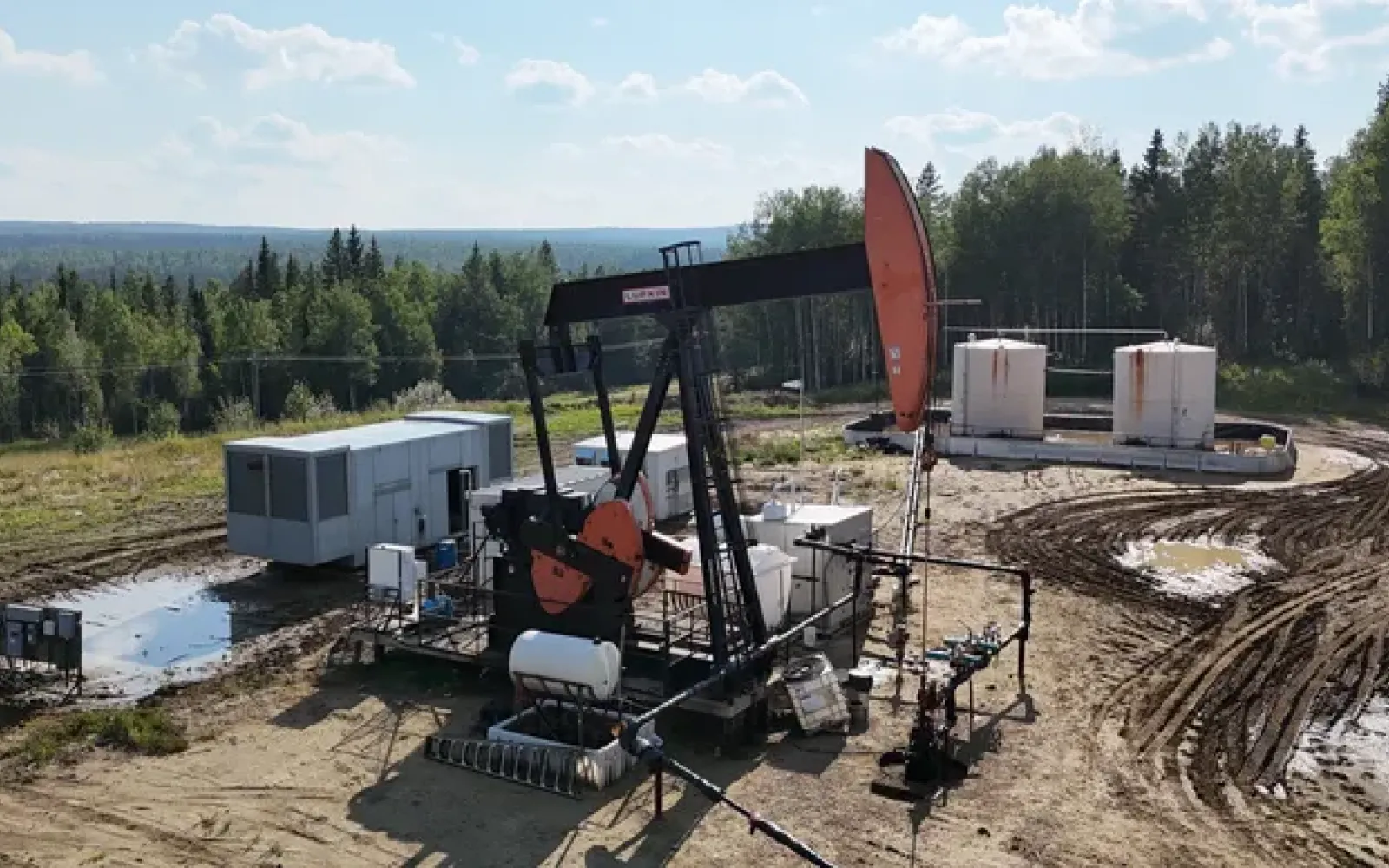
Meet the Company Mining Bitcoin With Gas Nobody Else Wants- In Alberta’s oil-rich landscapes, a quiet but unusual revolution is taking shape. On sites that many in the industry have long considered marginal or even abandoned, a Calgary-based company is turning a leftover fossil fuel problem into a profitable, high-tech operation: powering Bitcoin mining directly from stranded natural gas.
New West Data Corp., blending traditional oil and gas operations with cryptocurrency mining, has found a way to use fuel that would otherwise be wasted. The company targets wells where natural gas is uneconomical to transport due to limited infrastructure, and instead installs generators on-site to produce electricity. That electricity then powers Bitcoin mining computers around the clock, giving new life to wells that might otherwise be considered liabilities.
Stranded Gas: A Problem Waiting for a Solution
Alberta’s long-standing oil and gas industry has left behind a vast number of wells. Many of these sites still produce small amounts of natural gas, but without pipelines or processing facilities nearby, transporting that gas to market can be prohibitively expensive. As a result, producers often resort to venting or flaring it — releasing methane into the atmosphere or burning it off — both costly and environmentally undesirable practices.
The challenge is most pronounced at smaller, dry natural gas wells, where production volumes are low and market prices are modest. For many operators, continuing to produce the gas simply isn’t financially viable. Thousands of wells sit in this limbo, producing fuel that has no economic outlet.
New West Data’s approach turns that problem on its head. Rather than trying to move the gas to distant buyers, the company uses the fuel where it is produced, generating electricity on-site and using it to run Bitcoin mining rigs. This approach transforms what was previously a wasted resource into a source of revenue, while extending the life and value of older wells.
The Process: Electricity at the Source
The company’s model is both straightforward and innovative:
-
Acquire underperforming wells, focusing on those with limited gas transport options.
-
Install gas-fired generators on-site to convert natural gas into electricity.
-
Deploy Bitcoin mining equipment powered by the generated electricity.
-
Operate the mines continuously, 24 hours a day, seven days a week.
By owning both the energy source and the computing infrastructure, New West Data avoids the need for expensive connections to the electricity grid. This vertical integration reduces operational costs and makes marginal wells profitable.
Currently, the company operates more than two dozen wells across Alberta, producing hundreds of barrels of oil daily and generating electricity for its mining operations. Each site effectively becomes a small, self-contained energy and computing hub.
Fitting into Alberta’s Data Centre Strategy
New West Data’s operations also intersect with a broader economic trend in Alberta: the rapid expansion of the data centre sector. The provincial government has been actively courting investment in high-performance computing facilities, which support everything from cloud storage to artificial intelligence applications.
However, large-scale data centres demand significant amounts of electricity, raising questions about whether the province’s grid can handle the growth. Off-grid, site-specific solutions like New West’s could help fill some of that gap, particularly for operations where traditional grid connections are difficult or costly to implement. By converting stranded gas into electricity on-site, these operations can add capacity without putting additional strain on the provincial power system.
Environmental and Regulatory Considerations
Reducing venting and flaring is a long-standing goal for Alberta’s regulators. Flaring converts methane into carbon dioxide, while venting releases methane directly into the atmosphere — a much more potent greenhouse gas in the short term. By capturing gas that would otherwise be wasted and using it to generate electricity, companies like New West potentially reduce emissions compared with standard practices.
Other firms in Alberta and elsewhere are exploring similar approaches, using otherwise wasted or flared gas to power cryptocurrency mining or modular computing facilities. These initiatives highlight the potential for stranded energy to support technological operations while mitigating environmental impact.
At the same time, such projects must meet provincial regulatory requirements. Operators need permits, must adhere to emissions standards, and ensure that local communities are not adversely affected by noise, light, or industrial activity. Ensuring compliance remains critical for long-term success.
Unlocking Gigawatts of Potential
New West Data estimates that there are more than 10,000 wells in Alberta that could be candidates for this model. Collectively, these wells could produce tens of thousands of barrels of oil per day and generate gigawatts of electricity, representing significant untapped energy potential.
For context, Alberta’s growing data centre industry has already applied for thousands of megawatts of power capacity, much of which exceeds what the provincial grid can supply today. Distributed, off-grid power from stranded gas could become a niche solution to meet some of that demand while keeping older energy assets productive.
Challenges and Risks
While promising, this approach carries risks. Bitcoin mining is inherently volatile; profits fluctuate with cryptocurrency prices and network difficulty. When market conditions are unfavorable, margins can shrink quickly, putting operations at risk.
Environmental critics also point out that even using stranded gas produces emissions. While better than flaring or venting, it is not a zero-carbon solution. Operators may need to explore offsets or carbon-reduction strategies to balance economic gains with environmental responsibility.
Regulatory compliance and community relations remain essential. Proper permitting, emissions control, and attention to local impacts are key to ensuring that these projects can operate sustainably and without legal complications.
A New Path for Alberta’s Energy Sector
As Alberta navigates its transition from a traditional oil and gas hub to a modern tech and energy innovation centre, New West Data exemplifies a creative intersection of these industries. By converting stranded natural gas into electricity for Bitcoin mining, the company is proving that older energy assets can be repurposed for the digital age, creating economic value while mitigating some environmental concerns.
Whether this model becomes widespread or remains a niche experiment, it offers a glimpse into how legacy energy infrastructure can be leveraged in new ways. Alberta’s oilpatch, long viewed as a symbol of the province’s past, may yet play a central role in shaping its future in both energy and technology.
Trump Rattles Housing and Defense Stocks With New Investment Threats | Maya