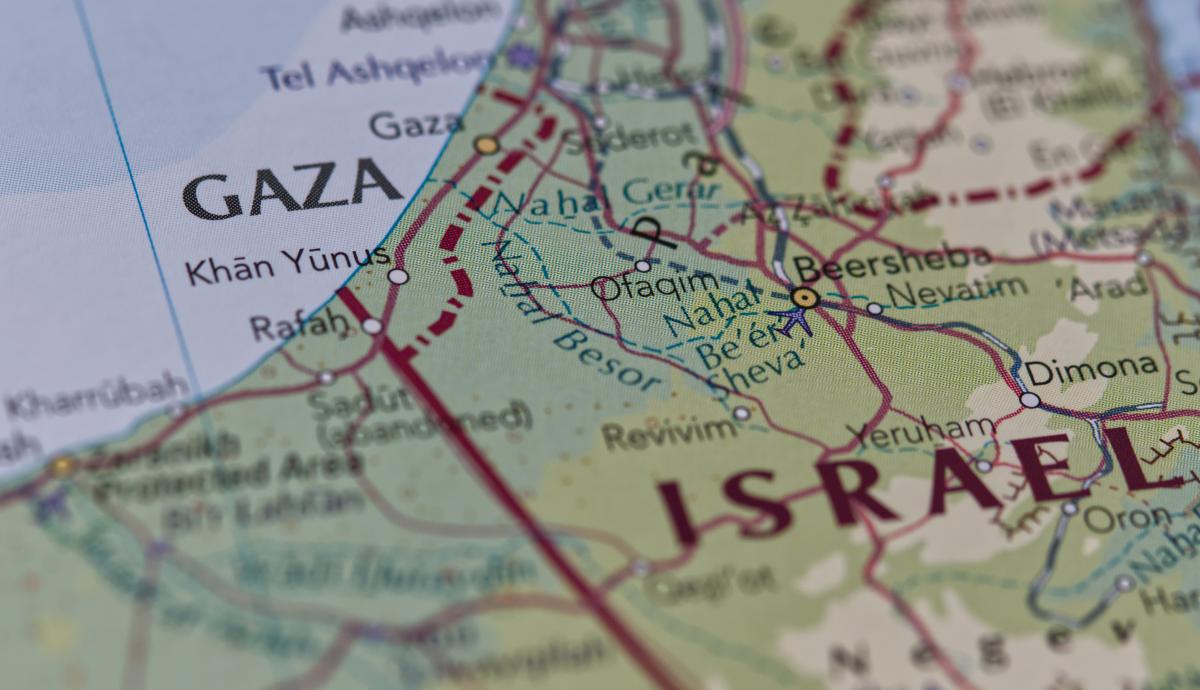
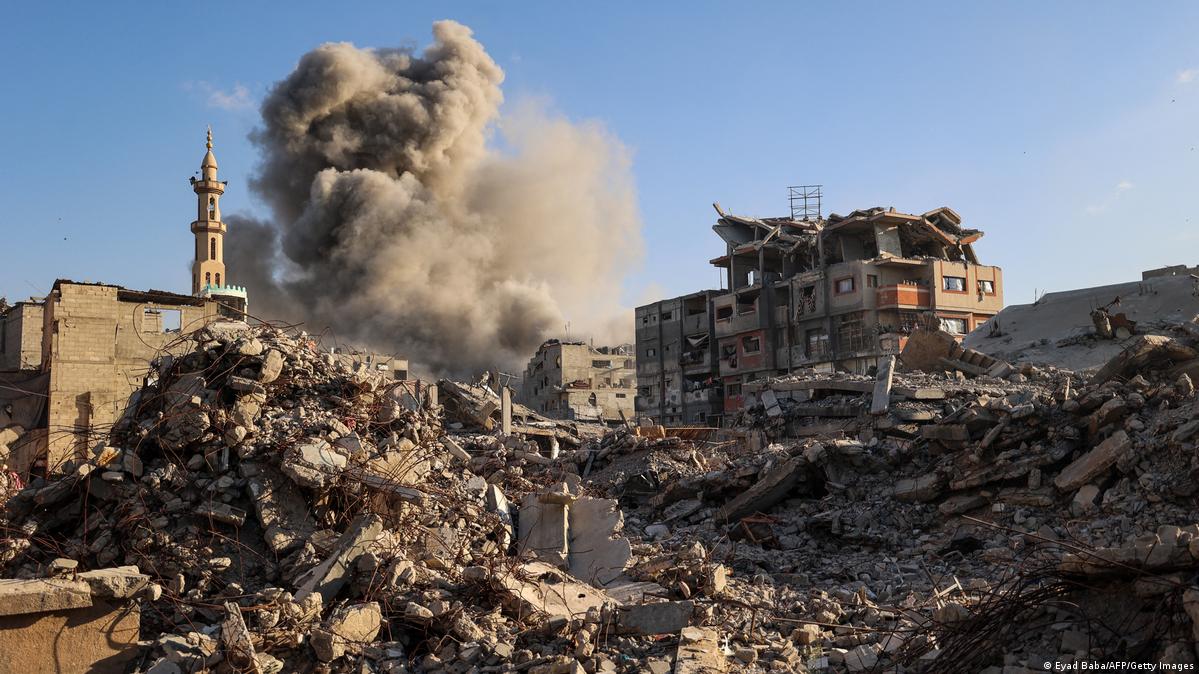
Middle East Row Erupts Over US Ambassador’s ‘Take It All’ Remark- More than a dozen Arab and Muslim-majority governments have issued a joint condemnation after the United States Ambassador to Israel, Mike Huckabee, suggested that Israel could be justified in controlling a vast swathe of the Middle East based on Biblical interpretation.
The controversy stems from an interview released on Friday in which Huckabee spoke with conservative American commentator Tucker Carlson. During the discussion, Carlson referenced a Biblical passage that he said described land stretching from the River Nile in Egypt to the Euphrates in present-day Syria and Iraq — a territory encompassing much of the modern Middle East.
Asked whether Israel had a right to such an expanse, Huckabee responded that “it would be fine if it took it all,” before clarifying that Israel was not actively seeking to do so. Instead, he said, Israel was focused on retaining and defending the land it currently occupies.
“It would be a big piece of land,” Huckabee acknowledged, adding that such a maximalist claim was not what was under consideration in present-day politics. He later characterized his remark about taking “all” the land as somewhat “hyperbolic.”
Joint Arab Response
The comments drew swift criticism. In a joint statement coordinated by the United Arab Emirates, a coalition of governments described Huckabee’s remarks as “dangerous and inflammatory.” Signatories included Jordan, Egypt, Saudi Arabia, Qatar, Kuwait, Oman, Bahrain, Lebanon, Syria, Indonesia, Pakistan and Turkey, along with the State of Palestine.
The statement was also endorsed by major regional organizations, including the Organisation of Islamic Cooperation, the Arab League, and the Gulf Cooperation Council.
Collectively, they expressed “strong condemnation and profound concern,” warning that such rhetoric threatens ongoing diplomatic efforts to end the war in Gaza and revive a broader political settlement to the Israeli–Palestinian conflict.
The statement said Huckabee’s remarks appeared to legitimize Israeli control over territory belonging to Arab states, including the occupied West Bank. It argued that such assertions violate international law and undermine the principle of state sovereignty.
Tensions Amid Gaza War
The backlash comes at a particularly sensitive moment. Regional governments are engaged in diplomatic initiatives aimed at halting the fighting in Gaza and establishing a political framework that would lead to a two-state solution — with an independent Palestinian state existing alongside Israel.
The joint statement explicitly referenced efforts backed by U.S. President Donald Trump to chart a path toward ending the war. It said Huckabee’s comments directly contradicted those goals, particularly proposals intended to create “a political horizon for a comprehensive settlement.”
The signatories reiterated that Israel “has no sovereignty whatsoever over the Occupied Palestinian Territory or any other occupied Arab lands.” They also rejected any attempts to annex the West Bank or separate it politically from the Gaza Strip.
Expansion of Israeli settlements in the West Bank — widely regarded by much of the international community as illegal under international law — was also cited as a point of strong opposition.
Broader Diplomatic Implications
Huckabee, a former governor of Arkansas and a longtime evangelical supporter of Israel, has often framed his views on the region in religious as well as political terms. His appointment as ambassador was welcomed by some pro-Israel groups but viewed cautiously by several Arab governments concerned about U.S. neutrality in peace negotiations.
While the ambassador attempted to walk back his remarks by describing them as exaggerated, regional leaders suggested that even rhetorical endorsements of territorial expansion could inflame tensions.
Jordan and Egypt — the first Arab states to sign peace treaties with Israel — were among the most prominent signatories of the condemnation. Both countries maintain diplomatic relations with Israel but have repeatedly warned against annexation of West Bank territory or changes to the status of Jerusalem.
The United Arab Emirates and Bahrain, which normalized relations with Israel under the Abraham Accords, also joined the criticism, signaling that normalization has not erased deep disagreements over Palestinian statehood and territorial sovereignty.
A Region on Edge
The notion of borders extending from the Nile to the Euphrates has long existed in certain religious and nationalist interpretations but has never been formal Israeli government policy. Still, such rhetoric carries symbolic weight in a region already marked by conflict, displacement and fragile ceasefires.
For Arab and Muslim-majority governments, the primary concern is that statements appearing to justify expansion beyond internationally recognized boundaries could embolden hardline positions at a time when diplomacy is urgently needed.
Whether Huckabee’s comments will have lasting diplomatic consequences remains to be seen. But the swift and unified response from across the Arab and Islamic world underscores how sensitive questions of territory and sovereignty remain — particularly as efforts continue to secure a ceasefire in Gaza and revive long-stalled negotiations over a Palestinian state.
If you’d like, I can also prepare a background explainer on the Biblical reference mentioned in the interview and how it has been interpreted historically in political discourse.