Minneapolis Meltdown: Law Enforcement and Protesters in Night of Turmoil
MINNEAPOLIS — Tensions erupted in Minneapolis Wednesday evening as federal immigration agents clashed with residents, leaving one man injured and sparking widespread demonstrations. The confrontation has intensified existing friction between federal authorities and local leaders, raising serious questions about enforcement methods, oversight, and the role of federal power in cities.
The events unfolded around 6:50 p.m. local time, when a federal officer attempted what authorities described as a “targeted traffic stop” of a Venezuelan national. According to the Department of Homeland Security (DHS), the man fled in his vehicle and crashed into a parked car before continuing on foot. When the officer caught up, a physical struggle ensued, during which the suspect allegedly attacked the officer.
The situation escalated further when two individuals emerged from a nearby apartment and joined the assault, reportedly wielding a snow shovel and a broom handle. During the chaos, the original suspect broke free and continued attacking the officer, who ultimately fired a “defensive shot” that struck the Venezuelan man in the leg. The three individuals then barricaded themselves inside the apartment before being taken into custody. Both the officer and the injured man were hospitalized.
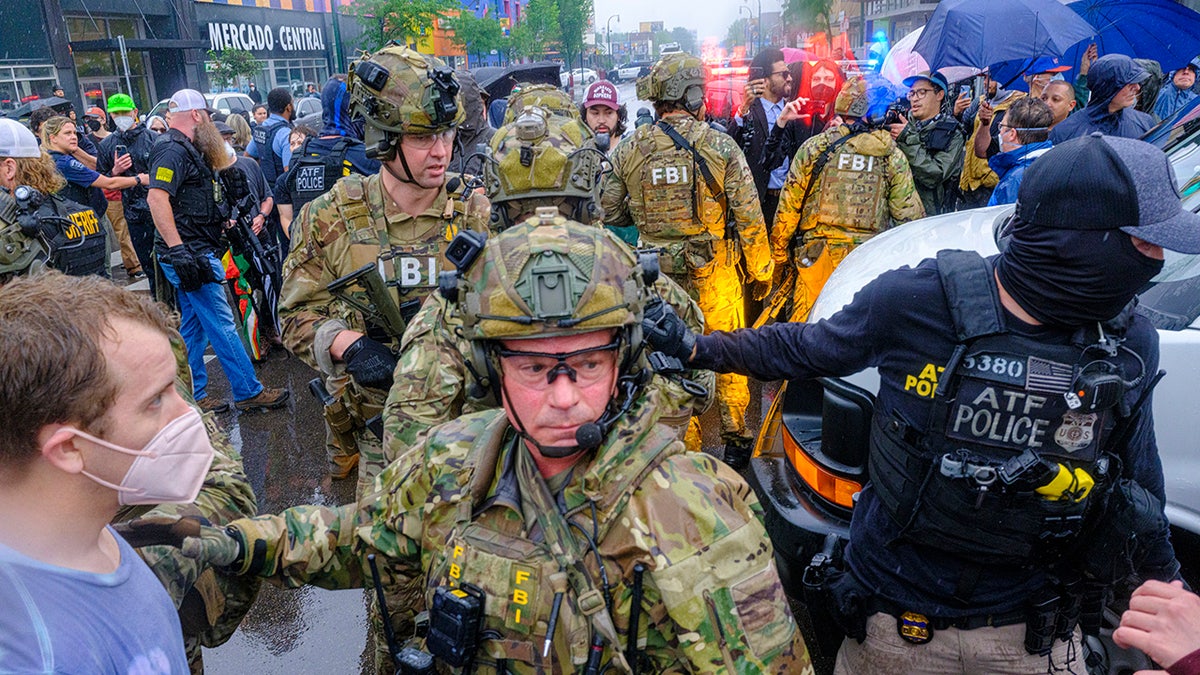
The confrontation quickly drew local residents, turning into a large-scale protest. Video from the scene showed demonstrators facing off against federal agents, who responded with tear gas and flash-bang devices to disperse the crowd. Officers formed barricades and attempted to maintain control, while tensions in the neighborhood remained extremely high.
This incident occurred just one week after Renee Good, a Minneapolis resident, was fatally shot by an ICE agent, an event that had already ignited nationwide protests. The recent clash has only intensified calls from local leaders and community members for greater protections and stricter oversight of federal operations.
Local officials urged residents to remain calm, though their efforts were met with mixed reactions. Minneapolis Mayor Jacob Frey praised peaceful protest while cautioning against actions that might escalate the situation. “For those who have peacefully protested, I applaud you,” Frey said. “But for those who are being provoked, you are not helping anyone, including undocumented immigrants who call this city home.”
Some local politicians criticized officials for not doing enough to protect residents. City Council member Robin Wonsley urged Governor Tim Walz to take stronger action, suggesting measures like an eviction moratorium to safeguard residents during federal operations. “Strong statements alone are not enough,” Wonsley said. “Residents are showing immense courage, and they deserve leadership that matches that courage.”
The federal presence in Minneapolis has become a flashpoint in the broader national debate over immigration enforcement. The Trump administration has deployed hundreds of additional agents nationwide, which local authorities have criticized as involving warrantless arrests and excessive force. Minnesota and the Twin Cities filed a lawsuit challenging these federal operations, but a judge recently denied a temporary restraining order, clarifying that the ruling should not be seen as a final judgment.
On the ground, demonstrators became increasingly confrontational. Vehicles were vandalized with anti-ICE messages, including phrases like “F*ck ICE” and “America, land of the obey or die,” while debris littered the streets. Federal agents worked to contain the crowd, but residents remained vocal in their opposition to both the recent shooting and the continued federal presence.
The escalating unrest has prompted President Donald Trump to suggest invoking a centuries-old law, likely the Insurrection Act, which would allow him to deploy U.S. troops to Minneapolis. Such a move would be highly unusual, granting the president authority to use the military in a domestic law enforcement role when local authorities are perceived as unable to maintain order.
For Minneapolis residents, these events have created a climate of fear and uncertainty. Community leaders are calling for both restraint and greater protections against aggressive federal operations. Nightly protests continue, reflecting both frustration at federal enforcement practices and solidarity with those affected by ICE actions.
Experts observe that Minneapolis serves as a microcosm of the national debate over immigration policy, federal authority, and civil liberties. The city’s unrest highlights the difficulties that arise when federal operations operate in tension with local governance and community safety.
While immediate tensions may eventually ease, the long-term effects are likely to resonate for months. Legal challenges, public debate over immigration policy, and ongoing community activism suggest that Minneapolis’s struggles are far from over. Officials and residents must navigate the difficult balance between maintaining public safety, enforcing law, and protecting vulnerable populations.
As the city faces this volatile period, it is clear that Minneapolis is at a crossroads. Federal agents, local authorities, and residents all play key roles in determining the outcome, and the stakes are high. The events of Wednesday night serve as a stark reminder of the fragile balance between law enforcement, civil rights, and community trust—and the consequences when that balance is disrupted.