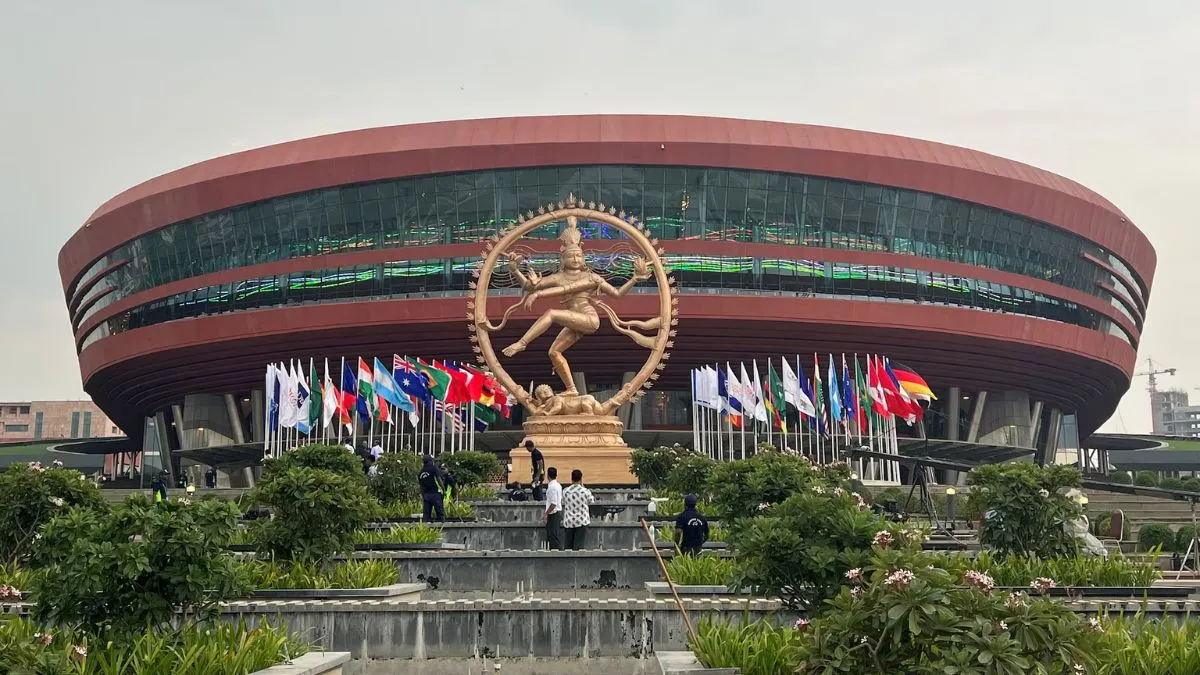
‘Mother of All Deals’: India, EU Finalise Historic Free Trade Pact
New Delhi: India and the European Union have concluded a sweeping Free Trade Agreement (FTA), marking a major milestone in bilateral relations and global economic diplomacy. Prime Minister Narendra Modi, announcing the agreement on Monday, hailed it as the “mother of all deals,” underscoring its scale, ambition and long-term impact on trade, investment and strategic cooperation.
The agreement was finalised during the 16th India-EU Summit held in New Delhi, attended by European Commission President Ursula von der Leyen and European Council President António Costa, who are on a state visit to India. Leaders on both sides described the pact as a transformative step that reflects the growing convergence of interests between India and Europe at a time of global economic uncertainty.
Prime Minister Modi said the FTA would give a significant boost to India’s manufacturing sector, while also opening up new avenues for growth in services, including IT, professional services and emerging digital industries. He added that the deal would enhance investor confidence and provide greater certainty to global businesses looking to expand operations in India.
“This agreement strengthens trust and creates a stable framework for long-term economic engagement,” Modi said, adding that it would encourage entrepreneurs, manufacturers and startups to tap into European markets while drawing fresh investments into India.
The India-EU FTA aims to lower tariffs, ease regulatory barriers and improve market access across a broad range of sectors. Officials familiar with the negotiations said the agreement balances trade liberalisation with safeguards for sensitive domestic industries, ensuring that economic opening is aligned with development priorities on both sides.
In addition to trade, the summit also delivered outcomes in technology and defence cooperation, signalling a deepening of strategic ties beyond commerce. Union Defence Minister Rajnath Singh confirmed that India and the EU have agreed to establish a technology and defence partnership, focused on collaboration in areas such as defence manufacturing, cybersecurity, space and emerging technologies.
The defence and technology initiative is expected to complement existing cooperation mechanisms and strengthen resilience in supply chains, particularly in critical and high-technology sectors. Officials said the partnership reflects shared concerns over regional and global security challenges, as well as the need for trusted partners in innovation and industrial capacity.
The FTA brings to a close negotiations that had extended over several years and faced repeated pauses due to differences over tariffs, standards, data protection and market access. Trade negotiators on both sides described the conclusion as a breakthrough achieved through sustained political engagement and compromise.
For India, the agreement is seen as a strategic move to diversify trade partnerships and integrate more deeply into global value chains. The European Union is already one of India’s largest trading partners, and the new pact is expected to significantly expand two-way trade in goods and services over the coming years.
European leaders, speaking at the summit, said the agreement reflects the EU’s commitment to strengthening economic ties with fast-growing economies and building partnerships based on shared values and mutual benefit. They also highlighted India’s role as a key partner in addressing global challenges ranging from climate change to supply-chain resilience.
Industry bodies and business groups in India welcomed the deal, calling it a major opportunity for exporters, manufacturers and service providers. Sectors such as engineering goods, pharmaceuticals, textiles, automotive components and digital services are expected to benefit from improved access to European markets.
At the same time, policymakers stressed that the agreement would be implemented in a phased manner, allowing domestic industries to adapt and enhance competitiveness. The FTA will undergo legal scrutiny and ratification processes on both sides before coming into force.
Analysts view the India-EU FTA as more than a trade pact, describing it as a strategic statement in an increasingly fragmented global economy. With supply chains being reshaped and geopolitical alignments evolving, closer cooperation between India and the EU is seen as a way to promote stability, growth and rules-based trade.
Once implemented, the agreement is expected to anchor India-EU relations for decades, deepen economic integration and reinforce both partners’ roles as key drivers of global growth. As Prime Minister Modi noted, the deal represents not just a commercial arrangement, but a shared vision for the future of India-EU engagement.
EU Launches Explosive Probe Into Elon Musk’s X Over AI Sex Images | Maya