NATO, the U.S., and Europe: Who Stands Where in the Gulf Conflict? The Gulf region has long been a focal point of global attention, not just for its oil reserves and strategic waterways, but for the complex web of alliances that define regional security. While Gulf states, Iran, and non-state actors like the Houthis dominate headlines, external powers—particularly the United States, NATO, and European countries—play decisive roles. Their involvement ranges from military presence and arms sales to diplomatic mediation and sanctions. Understanding where these external actors stand is key to making sense of the Gulf conflict today.
The United States: The Regional Anchor
The United States has been the most consistent external actor in the Gulf for decades. Its involvement began in earnest during the Iran–Iraq War of the 1980s and escalated during the 1990–91 Gulf War, when a US-led coalition liberated Kuwait from Iraqi occupation.
Today, Washington’s Gulf policy reflects a mix of deterrence, alliance management, and countering Iran:
-
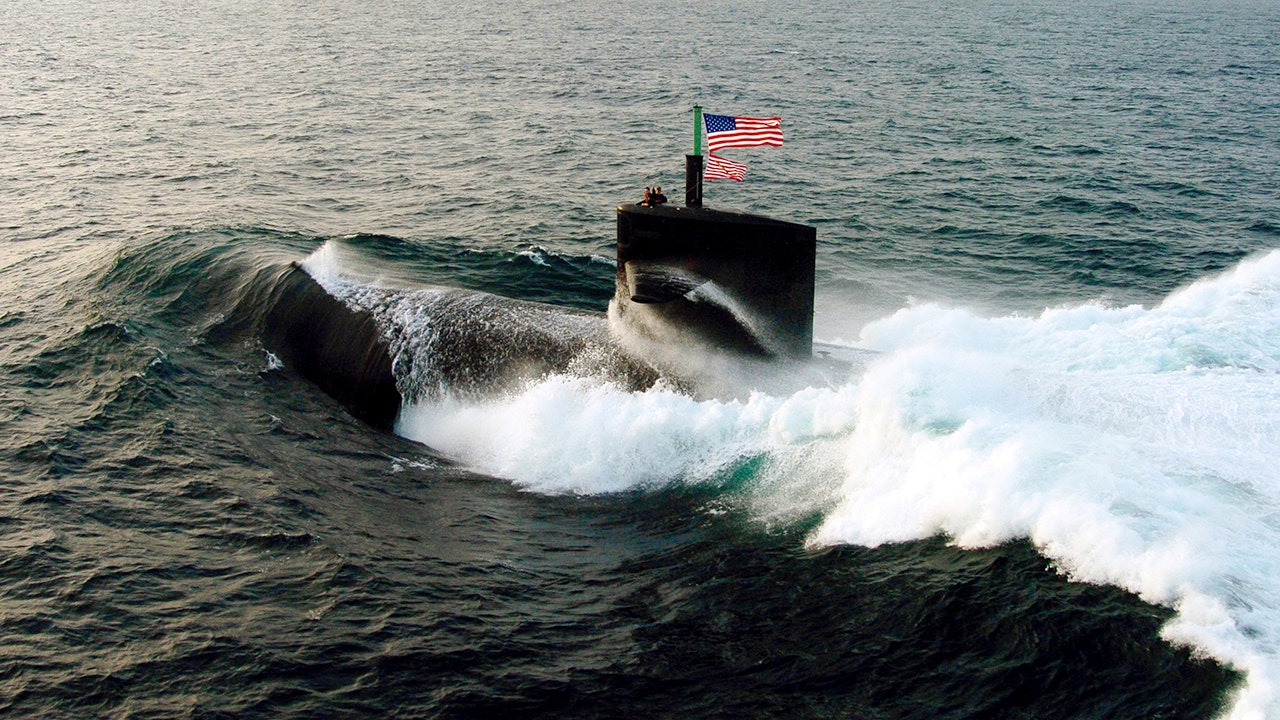
Military Presence: The US maintains bases in several Gulf states, including Bahrain (home to the Fifth Fleet), Qatar, Kuwait, and Saudi Arabia. These bases allow rapid deployment in case of crisis and reassure Gulf partners.
-
Defense Commitments: Washington supplies advanced weaponry to Saudi Arabia, the UAE, and other GCC members. Fighter jets, missile defense systems, and drones ensure Gulf states can defend themselves, particularly against Iranian-backed threats.
-
Diplomacy and Sanctions: The US plays a dual role—pushing for sanctions against Iran’s nuclear program while engaging in occasional diplomacy to reduce tensions.
Despite these commitments, US policy is not always predictable. Changes in administration can shift priorities, from negotiation-heavy approaches like the 2015 Iran nuclear deal under Barack Obama to the “maximum pressure” stance under Donald Trump. For Gulf states, this uncertainty sometimes drives them to diversify alliances, including closer ties with China and Russia.
NATO: Coordination Without a Unified Front
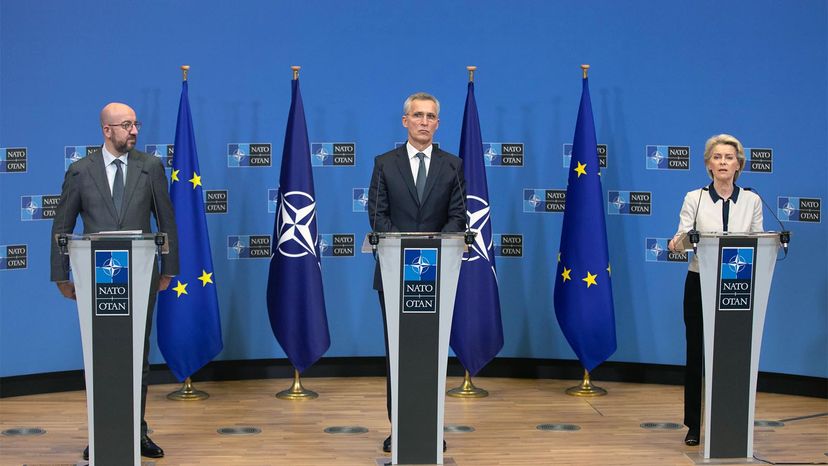
Unlike the United States, NATO does not have a formal, unified Gulf policy. However, the alliance engages indirectly through cooperation, intelligence sharing, and maritime security operations:
-
Maritime Security: NATO has participated in exercises and missions to protect shipping lanes, particularly near the Strait of Hormuz, a critical chokepoint for global oil supply.
-
Training and Capacity Building: Several European NATO members have provided military training and logistical support to Gulf forces, helping them maintain modernized militaries.
-
Political Alignment: NATO countries tend to support US-led initiatives and generally back Gulf states diplomatically in countering Iranian influence, though the alliance as a whole does not commit troops.
The key point is that NATO is a flexible instrument. Member states act according to national interest while often coordinating within NATO frameworks, creating a mix of influence without a formal “bloc” in the Gulf.
Europe: Economic Interests and Diplomatic Balance
European countries maintain a distinct approach that balances economic ties with the Gulf, security interests, and diplomatic engagement with Iran.
Germany and France
-
Defense and Security: France has long-standing military ties with the UAE and Saudi Arabia, supplying fighter jets, tanks, and missile systems. Germany also engages in arms sales but with stricter export regulations.
-
Diplomacy: Both countries have pushed for dialogue with Iran, supporting nuclear deal negotiations while encouraging restraint in regional military escalations.
-
Energy Security: Europe relies on Gulf oil and gas, particularly from Saudi Arabia and Qatar, making stability a top priority.
The UK
-
Military Engagement: The UK maintains naval assets in the Gulf and conducts joint exercises with GCC states.
-
Political Mediation: London often positions itself as a mediator, particularly in crises involving Iran or regional disputes.
-
Arms Trade: The UK is a major arms supplier to Saudi Arabia and other Gulf states, balancing economic interests with human rights scrutiny.
Italy, Spain, and the Nordics
-
Economic Focus: These countries emphasize trade, investment, and energy partnerships rather than direct military involvement.
-
Diplomatic Channels: They support EU initiatives for dialogue between Iran and the Gulf, often advocating restraint over confrontation.
Europe’s approach contrasts with Washington’s military-first stance. European states prioritize a mix of diplomacy, economic leverage, and selective military support, aiming to reduce regional tensions while safeguarding energy and trade interests.
Divergences Within the Western Camp
While the US, NATO, and Europe broadly support Gulf states against Iranian expansionism, there are notable differences:
-
Military vs. Diplomatic Focus: The US is more willing to threaten force or deploy troops, whereas Europe prefers sanctions, negotiations, and dialogue.
-
Economic Leverage: European states often use trade and investment as tools of influence, while the US relies more on military superiority.
-
Iran Relations: European countries generally favor maintaining diplomatic channels with Tehran, while US policy has oscillated between engagement and “maximum pressure.”
These divergences can complicate coordinated action. For example, when the US tightens sanctions on Iran, European companies sometimes struggle to comply without jeopardizing contracts in the Gulf, creating a delicate balancing act.
Crisis Management and Mediation
External actors are not only involved militarily—they also help mediate disputes in the region:
-
The 2015 Iran Nuclear Deal (JCPOA): European powers played a critical role in negotiating limits on Iran’s nuclear program, demonstrating that diplomacy can complement military deterrence.
-
Saudi-Iran Rapprochement (2023): China mediated talks that led to a restoration of diplomatic relations between Riyadh and Tehran, but European nations monitored and endorsed the process, signaling support for stability without direct intervention.
-
Yemen Conflict: NATO and European countries provide humanitarian support and pressure parties toward ceasefires, illustrating that the West often balances military support with soft power.
Key Takeaways
-
The US is the anchor: Its military presence, arms sales, and strategic partnerships dominate Gulf security architecture.
-
NATO acts selectively: It contributes mainly through maritime security, training, and intelligence sharing but does not have a unified policy for direct military intervention.
-
Europe focuses on diplomacy and trade: European states emphasize dialogue, sanctions, and economic engagement with both Gulf countries and Iran, seeking to reduce the risk of escalation.
-
Coordination is flexible but sometimes fragile: Differences in approach—military vs. diplomatic priorities, Iran policy, and economic interests—mean Western powers often act independently rather than as a single bloc.
In short, the Gulf conflict is not just a regional struggle—it is a stage for global powers to project influence, protect energy interests, and manage strategic risk. While Gulf states navigate their own rivalries, external actors like the US, NATO, and Europe shape the rules of engagement, determine deterrence capabilities, and occasionally steer conflicts toward negotiation rather than escalation.
Do Canada and the USA Share Similar Cultural Traditions? | Maya