
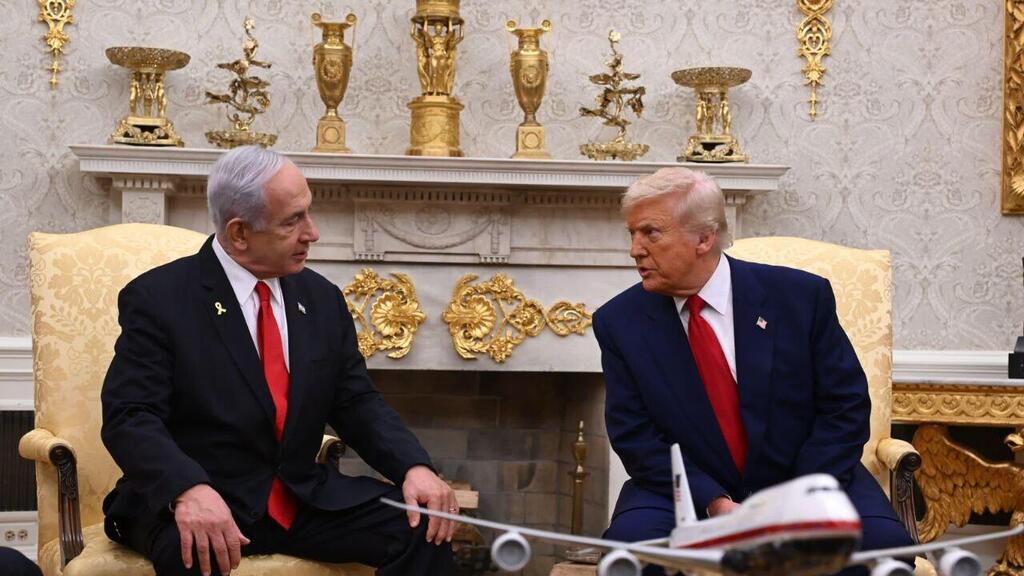
Netanyahu Moves Up Washington Visit as U.S.–Iran Nuclear Talks Gain Momentum- Israeli Prime Minister Benjamin Netanyahu is accelerating his diplomatic engagement with Washington, advancing a planned visit to the White House amid renewed U.S. negotiations with Iran over its nuclear program. Netanyahu is now expected to meet President Trump on Wednesday, according to a statement from the prime minister’s office, signaling heightened urgency and concern in Jerusalem over the direction of the talks.
The decision to move up the visit comes just days after senior U.S. envoys Steve Witkoff and Jared Kushner held direct discussions with Iran’s foreign minister in Oman. Those talks, described by Trump as “very good,” appear to mark the most serious diplomatic engagement between the two countries since last year’s brief but intense 12-day conflict in the region. Trump has publicly suggested that Iran’s current posture is more flexible than it was prior to that fighting, raising the possibility of progress toward a new nuclear agreement.
For Netanyahu, that prospect carries both opportunity and risk. While Israel has long supported efforts to prevent Iran from acquiring a nuclear weapon, the Israeli government has repeatedly warned against agreements it views as too limited in scope. Netanyahu’s office hinted that this concern is a driving force behind the sudden scheduling change, suggesting the prime minister wants to personally influence Trump before any framework solidifies.
In a statement, Netanyahu emphasized that Israel believes any agreement with Iran must go beyond uranium enrichment limits. He argued that negotiations should also impose restrictions on Iran’s ballistic missile program and include firm commitments to halt Tehran’s support for allied militant groups across the Middle East. Those issues, Israeli officials argue, pose immediate and existential threats to Israel’s security, even if a nuclear deal temporarily slows Iran’s atomic ambitions.
Originally, Netanyahu’s White House meeting had been set for February 18. According to a White House official, it was Netanyahu himself who requested on Friday that the visit be moved up by a week. The revised schedule places him in Washington at a critical moment, just as U.S. diplomats are assessing Iran’s intentions and weighing next steps.
The timing also carries domestic implications for the Israeli leader. By arriving early in Washington, Netanyahu will avoid attending a Gaza Board of Peace leaders meeting scheduled for February 19 — an event that has become politically sensitive at home. Participation in that forum could have sparked backlash within his governing coalition, particularly among hardline factions opposed to concessions related to Gaza or broader regional diplomacy.
Meanwhile, the U.S. is underscoring its diplomatic push with a visible show of military readiness. Over the weekend, Kushner and Witkoff visited the aircraft carrier USS Abraham Lincoln, currently deployed in the Arabian Sea within striking distance of Iran. They were accompanied by Adm. Brad Cooper, commander of U.S. Central Command, who also took part in Friday’s negotiations in Oman.
The visit to the carrier was widely interpreted as a deliberate signal. The USS Lincoln and its strike group would play a central role in any U.S. military action against Iran, should diplomacy collapse. A source familiar with the visit said the message to Tehran was unmistakable: while Washington is prepared to negotiate, it retains other options if talks stall or fail.
That dual-track approach — diplomacy backed by force — has long defined U.S. policy toward Iran, and it now forms the backdrop for Netanyahu’s hastily arranged meeting with Trump. Israeli officials are keenly aware that even a narrowly focused nuclear agreement could ease international pressure on Iran, potentially allowing it to expand missile development and regional influence.
Trump, for his part, has framed the Oman talks as constructive while stopping short of outlining what a final deal might look like. His assertion that Iran’s stance has improved since last summer’s conflict suggests a belief that U.S. leverage, including military pressure and economic sanctions, is producing results.
As Netanyahu prepares to arrive in Washington, the stakes are high on multiple fronts. For the United States, the challenge lies in translating promising talks into a durable agreement without alienating key allies. For Israel, the concern is that a deal focused narrowly on nuclear issues could leave broader security threats unresolved.
The coming days may reveal whether Netanyahu’s direct intervention can shape U.S. negotiating priorities — or whether Washington is prepared to move forward even amid Israeli reservations. What is clear is that the accelerated visit reflects a moment of flux in Middle East diplomacy, with decisions made this week likely to reverberate far beyond Washington and Tehran.


