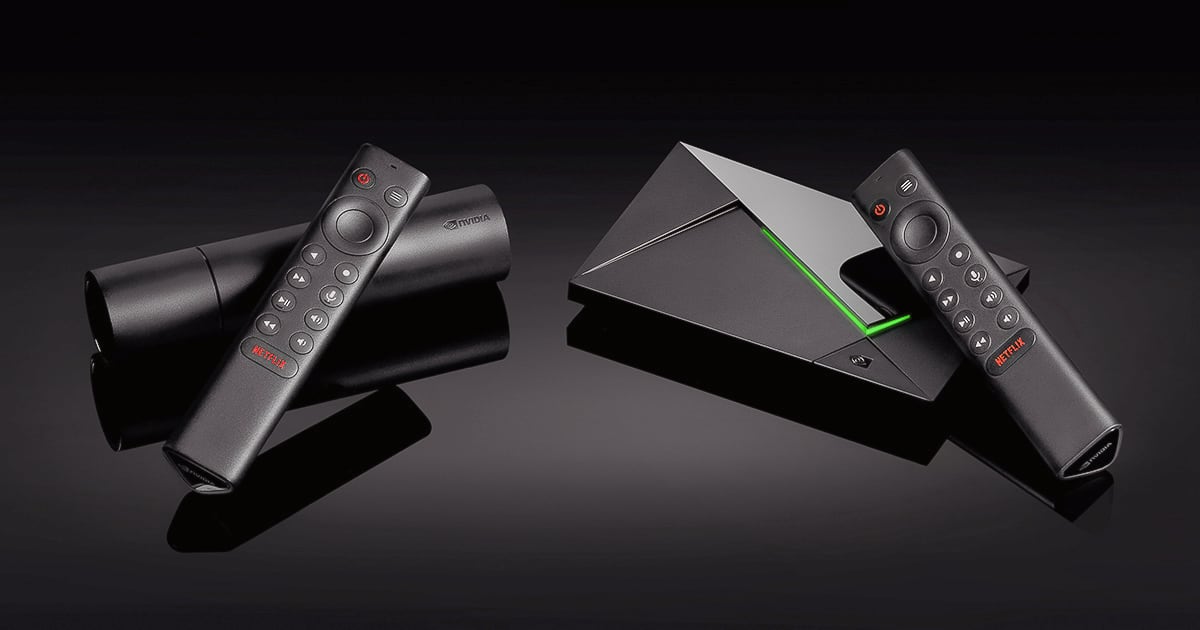
NVIDIA SHIELD TV Enters Its Second Decade With No End in Sight: In an industry defined by fast product cycles and even faster obsolescence, NVIDIA’s SHIELD TV stands out as a rare anomaly. Nearly ten years after its original debut in 2015, the Android TV-based streaming box is not only still alive—it’s still actively supported, still being sold, and still backed by NVIDIA with a level of commitment that feels almost unheard of in modern consumer electronics.
The SHIELD TV launched at a time when most streaming devices were treated as disposable hardware. New models appeared yearly, updates were short-lived, and consumers were expected to upgrade often. NVIDIA took a very different approach. From the earliest days of development, the company decided SHIELD TV wouldn’t be a short-term experiment but a long-term platform.
That philosophy was recently reinforced in an interview with Ars Technica, where Andrew Bell, NVIDIA’s senior vice president of hardware engineering, reaffirmed that SHIELD TV isn’t going anywhere. According to Bell, NVIDIA has no plans to abandon the device and intends to keep delivering updates well into the future. The decision, he explained, was rooted in frustration with the limited lifespan of phones and tablets, which often receive just a few years of meaningful support before being left behind.
Bell recalled an early conversation with NVIDIA CEO Jensen Huang about how long SHIELD TV should be supported. Huang’s response was simple, bold, and very on-brand: support it “for as long as we shall live.” That statement has effectively become the guiding principle behind SHIELD TV’s unusually long life.
As NVIDIA enters the second decade of SHIELD TV support, the company is still manufacturing and selling the 2019 revision of the device. While many competitors have gone through multiple hardware refreshes, NVIDIA has stuck with a single, well-optimized design. The current SHIELD TV is powered by the Tegra X1+ processor, paired with 3 GB of RAM and 16 GB of internal storage. On paper, those specifications may seem modest by today’s standards, but in practice they remain more than sufficient for high-end streaming, AI upscaling, media playback, and cloud gaming.
Much of SHIELD TV’s longevity can be traced back to its origins. Interestingly, the device wasn’t initially built with mass-market success in mind. Bell openly admitted that SHIELD TV started as something of a passion project inside NVIDIA. Engineers wanted a premium, high-performance TV streaming experience that wasn’t locked into Apple’s ecosystem. At the time, they simply couldn’t find a product that met their standards.
So they built one themselves.
Early prototypes were created primarily for internal use, but excitement quickly spread within the company. The hardware was powerful, flexible, and capable of far more than basic streaming. Seeing the potential, Jensen Huang reportedly suggested taking the internal project and turning it into a consumer product. That decision gave birth to SHIELD TV as the world would come to know it.
Along the way, NVIDIA briefly flirted with an even more ambitious idea: building a full-fledged gaming console. Bell confirmed that many engineers in NVIDIA’s early days wanted to take that leap. The challenge, however, was the sheer complexity involved. A console isn’t just a GPU—it requires a custom CPU, an operating system, a polished user interface, and, most importantly, a deep and compelling library of games. For NVIDIA, the scale of that undertaking ultimately proved too large.
Instead, SHIELD TV became a middle ground—a powerful entertainment device with gaming DNA. Through features like GeForce NOW, local game streaming, and controller support, SHIELD TV managed to satisfy some of those early console ambitions without the burden of building an entire gaming ecosystem from scratch.
What’s perhaps most remarkable is that SHIELD TV’s sales have remained steady over the years. According to Bell, the device continues to sell today at roughly the same rate it did during its launch period. That kind of consistency is almost unheard of for a piece of consumer hardware, especially one that hasn’t undergone frequent redesigns or spec bumps.
The SHIELD TV’s continued relevance highlights a growing appetite for long-lasting technology. Rather than chasing yearly upgrades, NVIDIA focused on software updates, performance optimizations, and feature improvements that extended the value of existing hardware. It’s a strategy that has earned the company an unusually loyal user base—one that trusts NVIDIA to keep its promises.
As streaming platforms evolve and cloud gaming becomes more mainstream, SHIELD TV remains well-positioned to adapt. Its second decade isn’t about reinvention, but refinement. In a market obsessed with what’s next, NVIDIA’s SHIELD TV proves there’s still room for something built to last—and supported with no clear end in sight.
SanDisk Rides AI Wave to Blockbuster Quarterly Results | Maya