
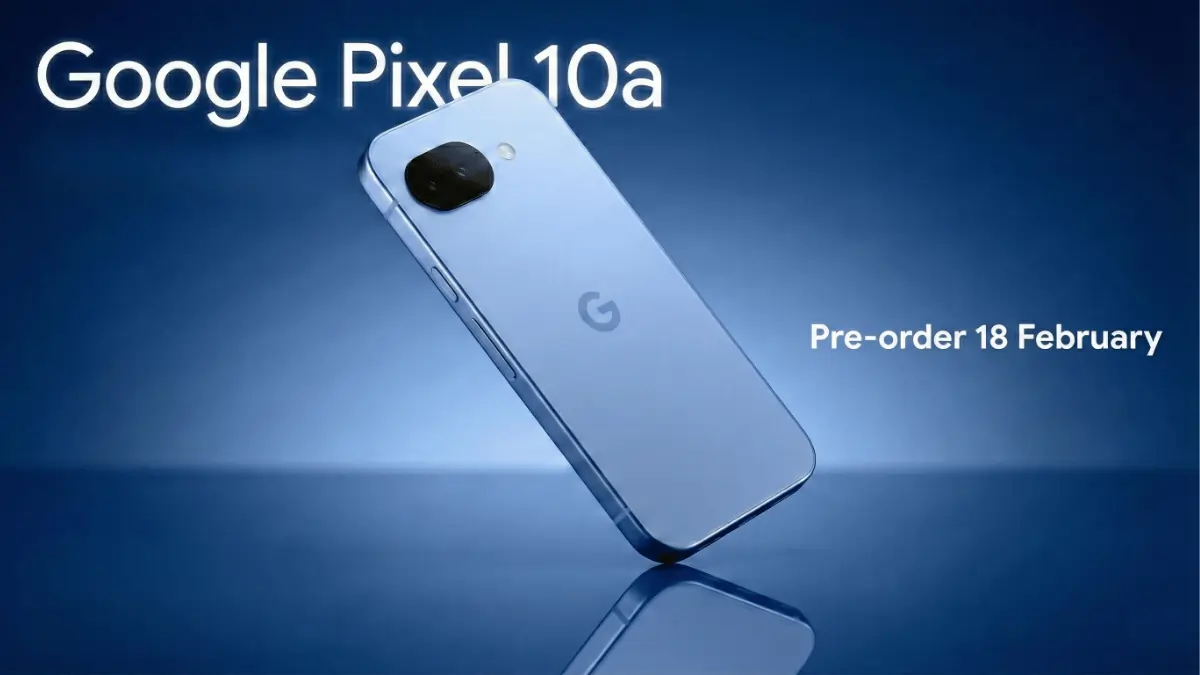
Pixel 10a Leak Sparks Big Buzz: Is Google Finally Ditching the Camera Bump? Google may have just pulled off one of the least subtle “teasers” in recent smartphone history. With no keynote, no countdown, and no warning, the company dropped a short 15-second YouTube video previewing its next midrange phone: the Pixel 10a, expected to launch on February 18. And while the clip was brief, it may have revealed one of the most talked-about design shifts in Pixel history.
The camera bump — long a defining (and polarizing) feature of Pixel phones — might be gone.
A Design That Says More by Doing Less
From the preview footage and screenshots circulating online, the Pixel 10a is shown clearly from multiple angles, leaving very little to speculation. At first glance, it looks familiar: flat edges, minimalist styling, and Google’s signature understated aesthetic. But the back of the device tells a different story.
Unlike the Pixel 9a, which already featured a nearly flat camera bar, the Pixel 10a appears to push the idea further. The rear camera housing looks almost completely flush with the back panel — possibly eliminating the raised camera bump altogether. If accurate, this would be a meaningful shift not just for Google, but for smartphone hardware design more broadly.
A flush camera means no table wobble, cleaner lines, and potentially improved durability. It also signals that Google may be prioritizing practical design refinements over flashy visual statements, especially in the midrange market where usability matters more than status.
Familiar Hardware, Smart Tradeoffs
Internally, the Pixel 10a is expected to follow Google’s established A-series strategy: deliver a Pixel experience that feels premium, while making calculated compromises under the hood to keep pricing in check.
Leaks suggest the phone will run on the Tensor G4 chip, the same processor used in the Pixel 9 lineup, rather than the newer Tensor G5 found in the flagship Pixel 10, 10 Pro, 10 Pro XL, and 10 Pro Fold. While that may sound like a downgrade on paper, the G4 is still more than capable of handling Google’s AI-driven features, photography processing, and everyday multitasking.
In other words, most users are unlikely to notice a meaningful performance gap.
Expected memory and storage options mirror last year’s Pixel 9a:
-
8GB RAM with 128GB storage
-
12GB RAM with 256GB storage
That’s a solid configuration spread for a midrange device, especially one expected to lean heavily on Google’s software optimization rather than raw specs.
Pricing Pressure and Component Shortages
Pricing is where things get a bit more complicated. The Pixel 9a launched with a $500 price tag but is currently selling for closer to $400 through Google’s own store. The Pixel 10a is widely expected to debut in the same $500 range — but external factors could influence that plan.
The ongoing global memory and flash storage shortage continues to affect the entire consumer electronics industry. Rising component costs may limit how many configurations Google offers at launch or push higher-storage models into slightly higher price brackets. While Google has historically been aggressive with A-series pricing, the company may have less flexibility this time around.
Software and the Pixel Advantage
As always, hardware is only half the Pixel story. The Pixel 10a will ship with the latest version of Android and immediate access to Google’s newest AI features, camera enhancements, and security updates. Historically, Pixel A-series devices have received the same software experience as their flagship counterparts — a major selling point for buyers who care more about longevity and clean Android than cutting-edge silicon.
Photography, too, remains a wild card. Even if the Pixel 10a doesn’t introduce new sensors, Google’s computational photography has consistently allowed its midrange phones to punch far above their weight. A flush camera design doesn’t necessarily mean weaker imaging — it could simply reflect better sensor optimization and internal engineering.
Why the Buzz Matters
The excitement around the Pixel 10a isn’t just about specs or pricing. It’s about direction. If Google truly eliminates the camera bump on a widely accessible midrange phone, it could influence how other manufacturers approach design tradeoffs in future devices.
Instead of chasing ever-larger camera islands, Google seems to be asking a different question: What actually improves the day-to-day experience?
If the Pixel 10a delivers a flush design, reliable performance, strong cameras, and long-term software support at a competitive price, it could quietly become one of the most practical smartphones of the year — not by doing more, but by doing just enough.
Now the only thing left is confirmation. February 18 can’t come soon enough.


/industry-wired/media/post_attachments/wp-content/uploads/2023/07/Meta-Teams-Up-with-Microsoft-for-its-Open-Source-AI-Model-Llama.jpg "Llama 4 on AWS: Meta’s Bold Move to Challenge AI Giants")