Post‑Globalization: What Comes After 30 Years of Integration? For the last 30 years, globalization was the dominant force shaping the world economy. Trade liberalization, cross‑border investment, global supply chains, and the rapid flow of information transformed how nations interacted with each other. From Silicon Valley to Shanghai, markets were interlinked, companies sourced inputs from around the globe, and consumers enjoyed products produced by complex international networks.
Today, that era of near‑universal integration is being tested by geopolitical tensions, conflict, and strategic competition. Modern wars — from Russia’s invasion of Ukraine to the rapidly escalating Iran–USA–Israel conflict and broader Gulf crisis — are prompting a reevaluation of how and why nations integrate with the rest of the world. The question now is: Are we entering a post‑globalization era? And if so, what comes next?
I. The Peak of Global Integration
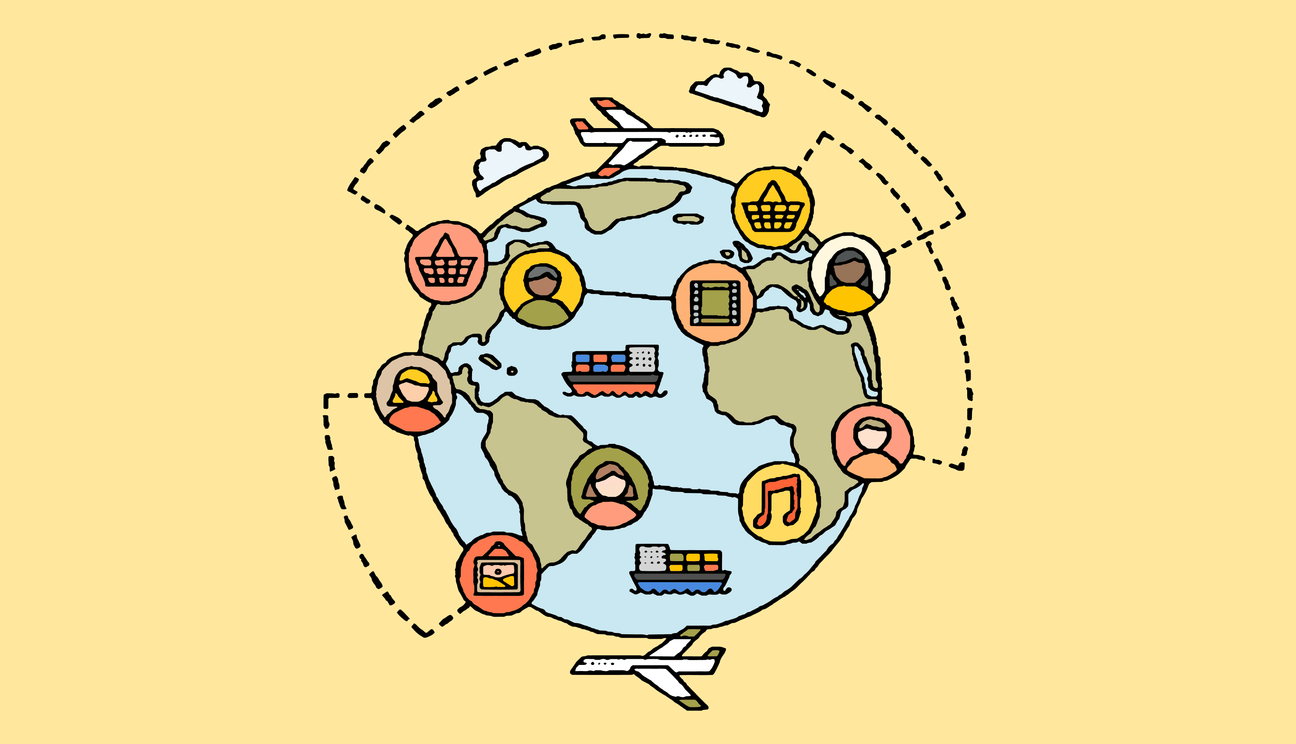
From the early 1990s to the late 2010s, globalization was characterized by:
-
Expanding trade networks, with tariffs falling and trade agreements spreading across continents.
-
Multinational production, where parts and final products moved seamlessly between countries.
-
Digital connectivity, enabling real‑time information exchange and global collaboration.
-
Investment flows, linking financial markets from New York to Mumbai to São Paulo.
Economists and policymakers spoke of a “flat world,” where distance mattered less, and economic ties fostered political stability. Yet that picture began to change in the late 2010s when nationalism, technological competition, and strategic rivalries started to reshape global priorities.
II. The Force of Contemporary Conflict
1. Europe’s Long Shadow: Russia and Ukraine
Russia’s full‑scale invasion of Ukraine in 2022 was a major blow to the globalization paradigm. Energy markets were disrupted, agricultural exports were hampered, and nations were forced to diversify away from Russian resources. Beyond economics, the war underscored the reality that strategic alliances and political risk now play a central role in economic planning.
2. The Middle East in 2026: A New Epicenter of Conflict
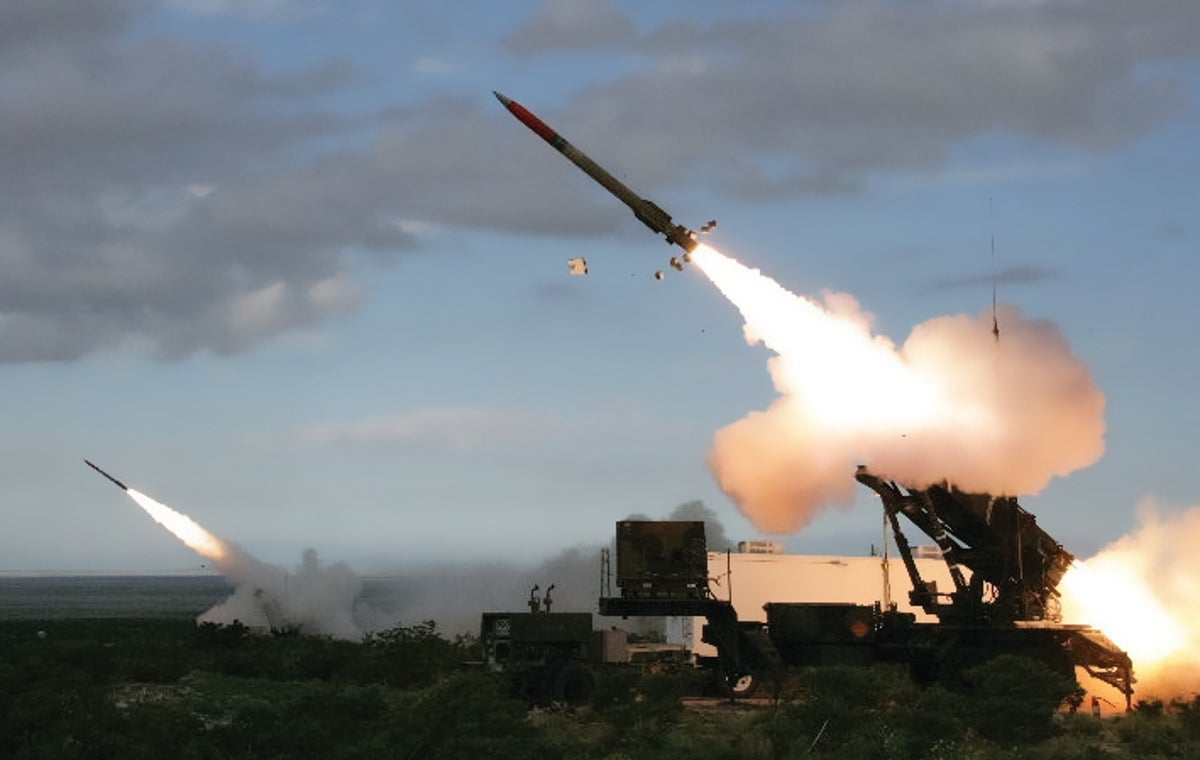
Today, the most destabilizing conflict influencing the global order is unfolding in the Middle East. In early 2026, coordinated military strikes by the United States and Israel on Iran ignited one of the most significant wars in the region in decades. This conflict has rapidly broadened, with Iran firing missiles and drones not only at Israeli territory and U.S. bases but also across the Gulf region — including into Kuwait, Qatar, Jordan, Oman, and the United Arab Emirates — dramatically raising tensions throughout the Arabian Peninsula.
The destruction and disruption extend beyond battlefield boundaries. Key oil and gas facilities across the Gulf have been damaged or closed, shipping through the Strait of Hormuz has slowed almost to a halt, and global energy prices have spiked sharply as a result.
The conflict has also widened to involve Hezbollah attacks from Lebanon and spillovers into other frontier areas, creating a broader regional war rather than isolated hostilities.
III. How Conflict Is Reshaping Global Integration
These conflicts have profound implications for the future of globalization:
1. Strategic Realignment of Trade Routes
The disruption of critical maritime corridors like the Strait of Hormuz — through which nearly one‑fifth of the world’s oil exports typically pass — has immediate and long‑term effects. Global carriers, insurers, and shippers are reconsidering routes, increasing costs, and questioning the reliability of once‑routine trade arteries.
In a world where goods move not just thousands of miles but through volatile regions, countries are looking for alternative routes and partners — ones that promise security as much as volume.
2. Energy Markets Under Stress
Energy dependency remains one of the starkest examples of globalization’s fragility. In the Middle East today, oil terminals, pipelines, and liquefied natural gas facilities have faced disruption or shutdowns due to conflict pressures.
Higher energy prices ripple through every part of the global economy. Consumer goods become more expensive, manufacturing costs rise, and countries with heavy energy import bills face greater inflationary pressure.
3. National Security Over Economic Efficiency
No longer can globalization be seen only through the lens of economic optimization. Nations increasingly prioritize security and resilience over efficiency in sectors like technology, energy, pharmaceuticals, and critical infrastructure. Supply chains that were once designed solely for cost reductions are now being rewired for diversification and redundancy — even if that means higher costs.
4. Regional Blocs Instead of Global Blocs
Rather than a single global system, economic integration may now take on a multi‑blocs structure:
-
European nations strengthen ties based on shared values and security agreements.
-
Asian economies deepen intra‑regional supply chains.
-
North America collaborates under strategic economic frameworks.
-
Middle Eastern countries look both to Western partners and intra‑regional cooperation.
Global cooperation still exists, but its shape and intensity vary depending on political alignment and strategic trust.
IV. Social and Human Consequences Affecting Globalization
The human impact of conflict also shapes globalization:
-
Millions of people displaced by war reduce labor mobility and weaken international cultural exchange.
-
Economies dependent on cross‑border labor flows and remittances suffer sudden shocks.
-
Civil society networks, academic collaboration, and joint research initiatives face disruptions.
In many populations, public sentiment shifts toward caution, with citizens prioritizing national stability over far‑flung integration.
V. The Post‑Globalization World: What Comes Next?
If the trends set in motion by recent and ongoing conflicts continue, the world may shift toward a post‑globalization phase defined by several features:
✔ Regional Integration with Strategic Focus
Instead of uniformly distributed, global trade flows, the world could see stronger intra‑regional links and selective global connections, emphasizing reliability and shared strategic interests.
✔ Security‑First Economic Models
Countries may increasingly encode national security into economic policy, favoring domestic capabilities for essential goods and services.
✔ Digital Connectivity as the New Frontier
Even as physical trade and travel face greater risks, the digital world — information flows, cloud services, online platforms — remains a place where borders matter less. In the long run, digital integration may outlast physical economic integration, keeping societies connected even if trade networks contract.
VI. A Final Thought: A Scary but Possible Scenario
In the most extreme version of a post‑globalization world — where conflict, rivalry, and strategic competition remain high — the physical movement of goods and people could shrink significantly. Trade might be limited to essential commodities, and international travel for commerce might become infrequent, expensive, or fraught with geopolitical risk.
In that scenario, the Internet may become the de facto backbone of globalization:
-
Digital communication, remote work, and virtual collaboration could keep businesses and societies connected.
-
Data, services, and information might become the dominant “global currency,” even in a world where physical goods move less freely.
-
A few carefully planned visits and shipments might suffice for vital trade, but the vast, open supply chains of the past could be a relic.
This is not a guaranteed future — globalization will likely adapt rather than vanish — but it highlights how conflict and insecurity can reshape the world’s economic architecture in profound ways.
Final Thoughts: From Integration to Strategic Interdependence
After three decades of broad economic integration, the world is transitioning to a new phase. Conflicts like the U.S.–Israel–Iran war and expanding Gulf tensions are accelerating this shift, forcing nations to reassess the balance between openness and security. Globalization is not ending, but it is evolving into a more cautious, strategic, and regionally nuanced system.
Understanding this shift helps clarify not just what globalization was, but what it could become — a network defined not by frictionless integration, but by strategic interdependence anchored in stability and resilience.