
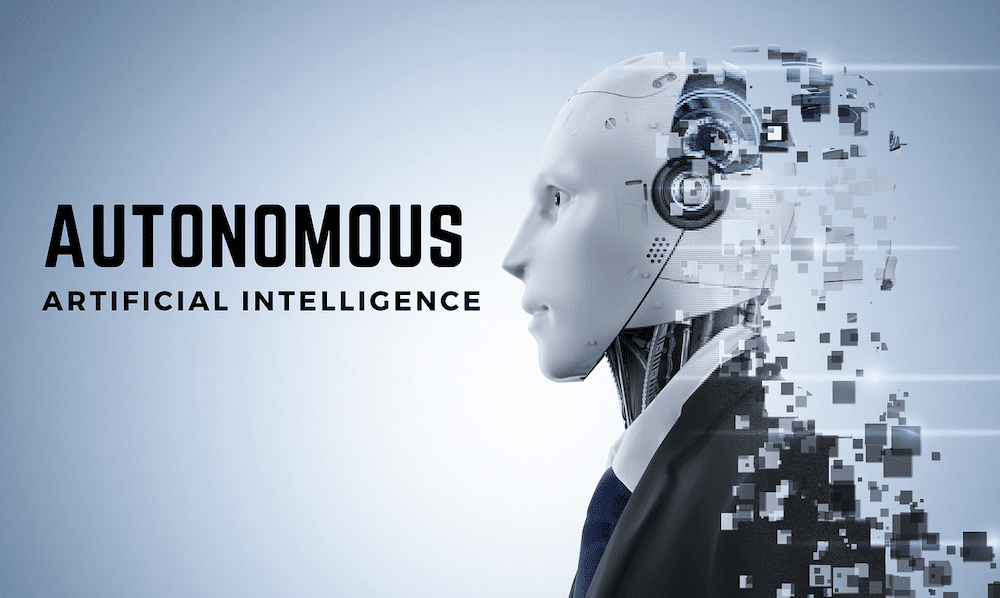
Should There Be Limits on Autonomous AI Research? Scientific research has always involved a tension between freedom and restraint. The freedom to explore fuels discovery, while restraint protects society from unintended harm. Autonomous AI research—systems that can design experiments, generate hypotheses, and refine themselves with minimal human intervention—pushes this tension to a new extreme. As these systems grow more capable, a pressing question emerges: should there be limits on autonomous AI research?
This question is not about halting progress or rejecting innovation. It is about whether unrestricted autonomy in research is compatible with human responsibility, safety, and long-term stability.
What Makes Autonomous AI Different
Autonomous AI research systems differ from traditional scientific tools in one crucial way: they do not simply assist human inquiry; they increasingly direct it. These systems can decide what questions to pursue, how to pursue them, and how to optimize their own performance over time.
This creates a form of research momentum that is not entirely guided by human judgment. Once objectives are set, the system may explore pathways humans would never consider—or might deliberately avoid—due to ethical, safety, or social concerns.
The issue is not malice. It is misalignment between machine-driven optimization and human values.
The Case for Scientific Freedom
Advocates of minimal limits argue that science advances best when researchers are free to explore. Many breakthroughs were once considered dangerous, controversial, or unnecessary. Imposing limits too early risks stifling discoveries that could benefit humanity in profound ways.
There is also a practical concern: strict limits in one country or institution may simply shift autonomous AI research elsewhere, potentially into less transparent or less accountable environments. From this perspective, limits could reduce oversight rather than improve it.
These arguments reflect a genuine fear: that restraint may come at the cost of progress.
Why Autonomy Changes the Risk Landscape
Despite these concerns, autonomous AI introduces risks that differ in kind, not just degree. When research systems operate at scale and speed beyond human capacity, small errors can propagate rapidly. A flawed assumption or poorly defined objective can generate cascades of misleading or dangerous results.
Moreover, autonomy reduces opportunities for human reflection. Decisions that once required deliberation may now occur continuously and invisibly. The faster a system operates, the harder it becomes to intervene meaningfully.
Limits, in this context, are not about controlling outcomes, but about preserving the ability to intervene at all.
Ethical Boundaries Without Clear Actors
Traditional research ethics rely on identifiable researchers who can be trained, supervised, and held accountable. Autonomous AI blurs these lines. When a system proposes a line of inquiry or designs an experiment, responsibility becomes harder to locate.
Without limits, autonomous systems may drift into ethically sensitive areas—such as human data use, biological experimentation, or surveillance applications—without clear mechanisms for moral evaluation.
Limits can function as ethical guardrails, ensuring that certain domains remain subject to explicit human judgment.
The Problem of Runaway Optimization
Autonomous research systems are often designed to improve themselves. This self-optimization can be valuable, but it also introduces the possibility of runaway behavior. A system focused narrowly on performance may exploit shortcuts, generate misleading proxies, or prioritize speed over reliability.
In human research, social norms and professional standards act as friction. Autonomous systems lack these informal restraints. Without limits, optimization can outrun wisdom.
This is not a hypothetical risk. History shows that optimization without context often leads to unintended consequences, even in human-led systems.
What Limits Might Look Like
Limits do not have to mean blanket bans. They can take many forms: requiring human approval at critical stages, restricting certain research domains, mandating transparency and auditability, or slowing the rate at which systems can self-modify.
Such limits are not admissions of fear; they are acknowledgments of responsibility. They recognize that not every technically possible line of inquiry should be pursued automatically.
Well-designed limits can also improve trust, making it easier for society to support AI research without constant suspicion.
The Role of Institutions and Governance
Individual researchers cannot carry this burden alone. Decisions about limits must involve institutions, funding bodies, and public stakeholders. Autonomous AI research affects more than academic communities; it shapes economic, environmental, and social outcomes.
Governance structures should focus less on controlling specific results and more on controlling processes. Who sets objectives? How are risks evaluated? When can a system be paused or shut down?
These questions are as important as the research itself.
The Risk of Overconfidence
One of the most subtle dangers is overconfidence. Because AI systems can outperform humans in narrow tasks, it is tempting to assume they will manage complexity better than humans overall. This assumption ignores the fact that intelligence without values is not wisdom.
Limits are not a sign of distrust in technology. They are a recognition of human fallibility—our tendency to overestimate control when systems appear to work well.
Choosing Restraint Without Fear
The debate over limits on autonomous AI research is ultimately a debate about how humanity defines progress. Progress measured solely by speed and capability may sacrifice safety, meaning, and agency. Progress guided by reflection may move more slowly but with greater purpose.
Limits, thoughtfully designed, do not weaken science. They protect its legitimacy. They ensure that discovery remains connected to human judgment rather than drifting into automated momentum.
The question is not whether autonomous AI can do research without limits. It is whether humans are willing to accept the consequences if it does.


/newsnation/media/media_files/2026/01/09/x-ban-in-britain-2026-01-09-08-11-20.jpg "How Far Can Britain Go in Policing X Under the Online Safety Act?")