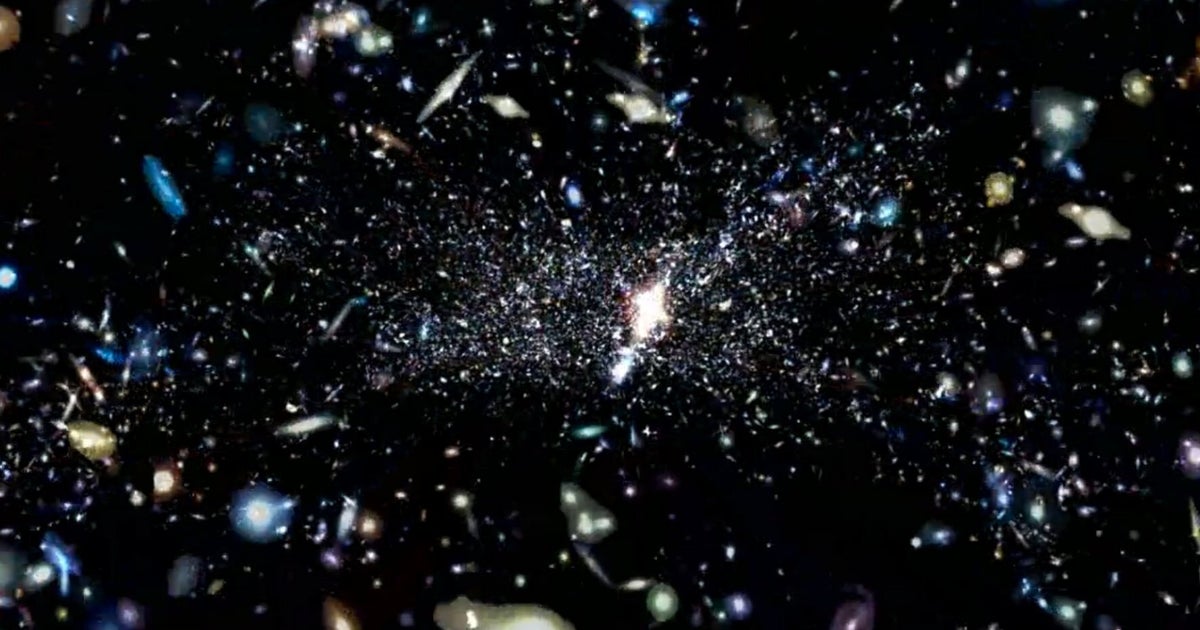
Right now, as you read these words, you’re being pulled, pushed, and influenced by forces you cannot see, hear, or touch- The Science Behind Invisible Forces in the Universe.
Gravity anchors you to Earth while simultaneously orchestrating the ballet of planets around the sun. Electromagnetic forces bind every atom in your body together. Nuclear forces rage inside each atomic nucleus, holding matter itself together against incredible pressures. And beyond these, stranger forces we’re only beginning to understand shape the cosmos on the grandest scales imaginable.
The invisible forces governing our universe represent one of science’s most profound mysteries and greatest triumphs. We cannot see them directly, yet we’ve learned to measure, predict, and harness them with extraordinary precision. This is the story of how humanity discovered the invisible architecture of reality.
Gravity: The Weakest Force That Shapes Worlds
Gravity is perhaps the most familiar yet most enigmatic of all forces. Every human who has ever lived has felt its pull, yet we still don’t fully understand what it fundamentally is. Isaac Newton gave us the first mathematical description in 1687, showing that any two masses attract each other with a force proportional to their masses and inversely proportional to the square of the distance between them.
Newton’s law was remarkably accurate, predicting planetary motions with stunning precision. Yet Newton himself was troubled by the idea of “action at a distance”—how could the sun reach across 93 million miles of empty space to pull on Earth without any physical connection?
Albert Einstein resolved this puzzle in 1915 with general relativity, revealing that gravity isn’t really a force at all—it’s the curvature of spacetime itself. Massive objects bend the fabric of space and time around them, and other objects simply follow the straightest possible paths through this curved geometry. Earth doesn’t orbit the sun because it’s being “pulled”—it’s following a straight line through curved spacetime, which appears to us as an elliptical orbit.
Imagine spacetime as a stretched rubber sheet. Place a bowling ball (the sun) on it, and the sheet sags. Now roll a marble (Earth) nearby, and it spirals around the depression created by the bowling ball. This analogy, while imperfect, captures gravity’s essence: mass tells spacetime how to curve, and spacetime tells matter how to move.
Despite its profound effects—holding galaxies together, bending light, even creating black holes where spacetime curves so sharply that nothing can escape—gravity is actually the weakest of all fundamental forces. The electromagnetic force holding atoms together is roughly 10³⁶ times stronger. Yet gravity dominates at cosmic scales because it’s always attractive, never repulsive, and because massive objects accumulate this weak force across immense quantities of matter.
Electromagnetism: The Force of Everyday Experience
Nearly every phenomenon you experience in daily life traces back to electromagnetism. The solidity of objects, the colors you see, the chemistry of life, the stickiness of adhesives, the friction that stops your car—all electromagnetic in origin.
This force operates between electrically charged particles. Like charges repel, opposite charges attract, and moving charges create magnetic fields. These seemingly simple rules generate breathtaking complexity.
James Clerk Maxwell unified electricity and magnetism in the 1860s, showing they’re two aspects of a single electromagnetic force. His equations predicted that oscillating electric and magnetic fields could propagate through space as waves—and calculated that these waves would travel at the speed of light. This wasn’t coincidence: light itself is electromagnetic radiation.
The electromagnetic spectrum spans an enormous range. Radio waves, microwaves, infrared, visible light, ultraviolet, X-rays, and gamma rays are all electromagnetic radiation at different frequencies. Your eyes evolved to detect the narrow slice of this spectrum where the sun emits most intensely, which we call visible light.
At the atomic level, electromagnetism governs everything. Electrons orbit nuclei because opposite charges attract. Chemical bonds form when atoms share or exchange electrons through electromagnetic interactions. When you touch a table, you’re not really touching it—the electrons in your fingers electromagnetically repel the electrons in the table’s surface, creating the sensation of solidity.
Even friction, which seems purely mechanical, is electromagnetic at its core. The resistance you feel when pushing a heavy box across the floor comes from electromagnetic forces between atoms at the microscopic level where the surfaces meet.
The Strong Force: Holding the Atom’s Heart Together
Journey into an atomic nucleus and you’ll encounter conditions where electromagnetism alone would tear matter apart. Protons, all positively charged, pack together at incredibly close quarters. Electromagnetic repulsion should blast them apart with tremendous force. Yet nuclei remain stable. Why?
The answer is the strong nuclear force, the most powerful of all fundamental forces. Operating only at distances smaller than an atomic nucleus (about 10⁻¹⁵ meters), the strong force binds quarks together to form protons and neutrons, and binds those protons and neutrons together to form atomic nuclei.
This force is roughly 100 times stronger than electromagnetism and 10³⁸ times stronger than gravity at nuclear scales. It’s the nuclear equivalent of super-glue, holding matter together against incredible pressures.
The strong force has a peculiar property called asymptotic freedom. Quarks held close together barely interact, moving almost freely. But try to pull them apart, and the strong force grows stronger, like stretching a rubber band. Pull hard enough, and rather than separating quarks, you create new quark-antiquark pairs from the energy you’re adding. This is why we never observe isolated quarks—they’re always bound together in composite particles.
When atomic nuclei undergo fusion or fission, tiny amounts of strong force binding energy convert to other forms according to E=mc². This binding energy powers the sun, enables nuclear reactors, and unfortunately, also powers nuclear weapons. The strong force, invisible and operating at incomprehensibly small scales, literally lights up our solar system.
The Weak Force: The Subtle Transformer
If the strong force is nature’s super-glue, the weak nuclear force is nature’s transformer. This force is responsible for radioactive decay and enables the nuclear fusion reactions that power stars.
The weak force operates at even shorter ranges than the strong force—about 10⁻¹⁸ meters—and despite its name, it’s actually stronger than gravity, just much weaker than electromagnetism and the strong force.
What makes the weak force special is its ability to change particle identity. It can convert a neutron into a proton, electron, and antineutrino through a process called beta decay. This transmutation ability is unique among the fundamental forces.
In the sun’s core, the weak force enables the first step of the fusion chain that converts hydrogen to helium. Two protons must fuse, but this requires one proton to convert into a neutron through weak force interactions. This process is incredibly slow—a given proton in the sun’s core might wait billions of years before successfully undergoing this transformation. This slowness is actually fortunate; if the weak force were stronger, the sun would burn through its fuel in mere moments rather than billions of years.
The weak force also plays a crucial role in creating the matter-antimatter asymmetry that allows our universe to exist. If matter and antimatter had been produced in exactly equal amounts during the Big Bang, they would have annihilated completely, leaving only radiation. Subtle asymmetries in weak force interactions created a tiny excess of matter over antimatter—about one extra matter particle for every billion matter-antimatter pairs—which became everything we see today.
Dark Matter: The Invisible Scaffolding
Beyond the four fundamental forces lies one of modern physics’ deepest mysteries. Astronomers observing galaxy rotation in the 1970s noticed something impossible: outer regions of galaxies were spinning too fast. According to the visible matter present, they should fly apart. Yet they remained stable.
The evidence for invisible mass became overwhelming. Gravitational lensing—the bending of light around massive objects—revealed far more mass than visible matter could account for. Galaxy clusters showed similar discrepancies. Computer simulations of cosmic structure formation couldn’t reproduce observed galaxy distributions without including substantial invisible matter.
We call this mysterious substance dark matter, and it apparently makes up about 85% of all matter in the universe. “Dark” doesn’t mean black—it means completely invisible, neither emitting nor absorbing electromagnetic radiation at any frequency.
Dark matter doesn’t interact through electromagnetism or the strong force at all. It only reveals itself through gravity and possibly weak force interactions. Imagine a material that can pass through ordinary matter like a ghost, affected only by gravity. Dark matter particles might be passing through your body right now without interaction.
Various candidates have been proposed: Weakly Interacting Massive Particles (WIMPs), axions, sterile neutrinos, even primordial black holes. Despite decades of increasingly sensitive experiments, we haven’t directly detected dark matter particles yet. But their gravitational influence on visible matter is undeniable.
Dark matter provides the gravitational scaffolding upon which galaxies form. In the early universe, dark matter clumped together first, creating gravitational wells into which ordinary matter fell, eventually forming stars and galaxies. Without dark matter’s invisible framework, the universe would look completely different—galaxies as we know them might not exist at all.
Dark Energy: The Mysterious Repulsion
If dark matter is mysterious, dark energy is utterly baffling. In the late 1990s, astronomers measuring distant supernovae made a shocking discovery: the universe’s expansion isn’t slowing down as gravity should dictate—it’s accelerating.
Something is pushing the universe apart, overwhelming gravity’s attractive pull on cosmic scales. We call this mysterious influence dark energy, and it apparently comprises about 68% of all energy in the universe.
Dark energy behaves unlike any substance we know. Its density remains constant even as space expands—more space means more dark energy. It’s as if empty space itself possesses energy that drives cosmic expansion.
The simplest explanation is Einstein’s cosmological constant, representing an inherent energy density of empty space itself. Quantum field theory predicts that even “empty” space seethes with virtual particles constantly appearing and disappearing, and this quantum vacuum might possess energy. However, theoretical calculations for vacuum energy density exceed astronomical observations by an absurd factor of 10¹²⁰—the worst prediction in physics history.
Alternative theories propose that dark energy might be a dynamic field that changes over cosmic time, or that our understanding of gravity breaks down at cosmic scales. We simply don’t know. Dark energy represents perhaps the deepest mystery in contemporary physics.
Quantum Fields: The Fundamental Fabric
Modern physics suggests that all forces arise from underlying quantum fields pervading space. These fields aren’t made of anything—they’re fundamental aspects of reality itself. What we call particles are actually localized excitations or vibrations in their respective fields.
The electromagnetic field mediates electromagnetic forces through photons—quantized vibrations of the field. The strong force operates through the gluon field. The weak force acts through W and Z boson fields. Even matter particles like electrons and quarks are excitations in their own quantum fields.
This quantum field perspective reveals forces as fundamentally different from how we intuitively imagine them. When two electrons repel, they’re not physically pushing each other. Rather, each electron’s presence excites the electromagnetic field, and these field excitations interact in ways that manifest as repulsive force.
The Higgs field deserves special mention. Unlike other fields associated with particles and forces, the Higgs field’s non-zero value throughout space is what gives particles mass. Particles that interact strongly with the Higgs field have large masses; those that don’t interact remain massless, like photons.
The Quest for Unification
Physics’ holy grail is unifying all forces into a single theoretical framework. We’ve made progress: electromagnetism and the weak force unified into the electroweak force at high energies. The electroweak and strong forces appear to unify at even higher energies in “grand unified theories,” though experimental confirmation remains elusive.
Gravity stands apart, stubbornly resisting unification. Quantum mechanics and general relativity—our best descriptions of small and large scales—remain mathematically incompatible. String theory, loop quantum gravity, and other approaches attempt to bridge this gap, suggesting that at the smallest scales, space and time themselves might emerge from something more fundamental.
Perhaps all forces are aspects of a single unified force that split apart as the universe cooled after the Big Bang, like water separating into liquid and gas at different temperatures. The infant universe might have experienced only one force, which fractured into the four distinct forces we observe today.
Living in an Invisible Universe
The profound lesson from studying invisible forces is humbling: the universe we can see and touch represents a tiny fraction of what exists. Ordinary matter—everything made of atoms—comprises only about 5% of the cosmos. The rest is dark matter and dark energy that we detect only through their effects.
The forces governing reality operate at scales both too small and too large for direct human perception. We’ve never seen an electromagnetic field, felt spacetime curvature, or touched a quark. Yet through mathematics, experimentation, and reason, we’ve mapped these invisible territories with remarkable precision.
These unseen forces aren’t abstract curiosities. They determine whether stars can form, whether atoms can exist, whether life is possible. The precise strengths of fundamental forces appear fine-tuned for complexity and consciousness. Change gravity or electromagnetism by even a small percentage, and the universe becomes barren—no stars, no chemistry, no life.
The Frontier Continues
We stand at an exciting moment in physics. Gravitational wave detectors now let us observe spacetime ripples from colliding black holes. Particle accelerators probe force unification at unprecedented energies. Dark matter experiments grow ever more sensitive. Quantum computers might soon simulate quantum field behaviors impossible to calculate classically.
Each discovery about invisible forces reveals deeper mysteries. Why are there four fundamental forces and not three or five? Why do they have their particular strengths? What is dark matter made of? What is dark energy? Can we finally unify gravity with quantum mechanics?
The invisible forces shaping our universe remain partly mysterious, and that’s precisely what makes physics exciting. We’ve learned enough to know these forces exist and how they generally behave, but profound questions remain. The universe still guards its deepest secrets, written in invisible ink across the cosmos, waiting for curious minds to decipher them.
As you sit reading this, remember: you’re held together by forces you cannot see, living on a planet held in orbit by curved spacetime, made of atoms bound by invisible fields, in a universe dominated by dark matter and dark energy we’ve barely begun to understand. The invisible universe is the real universe, and we’re only just learning to see it.