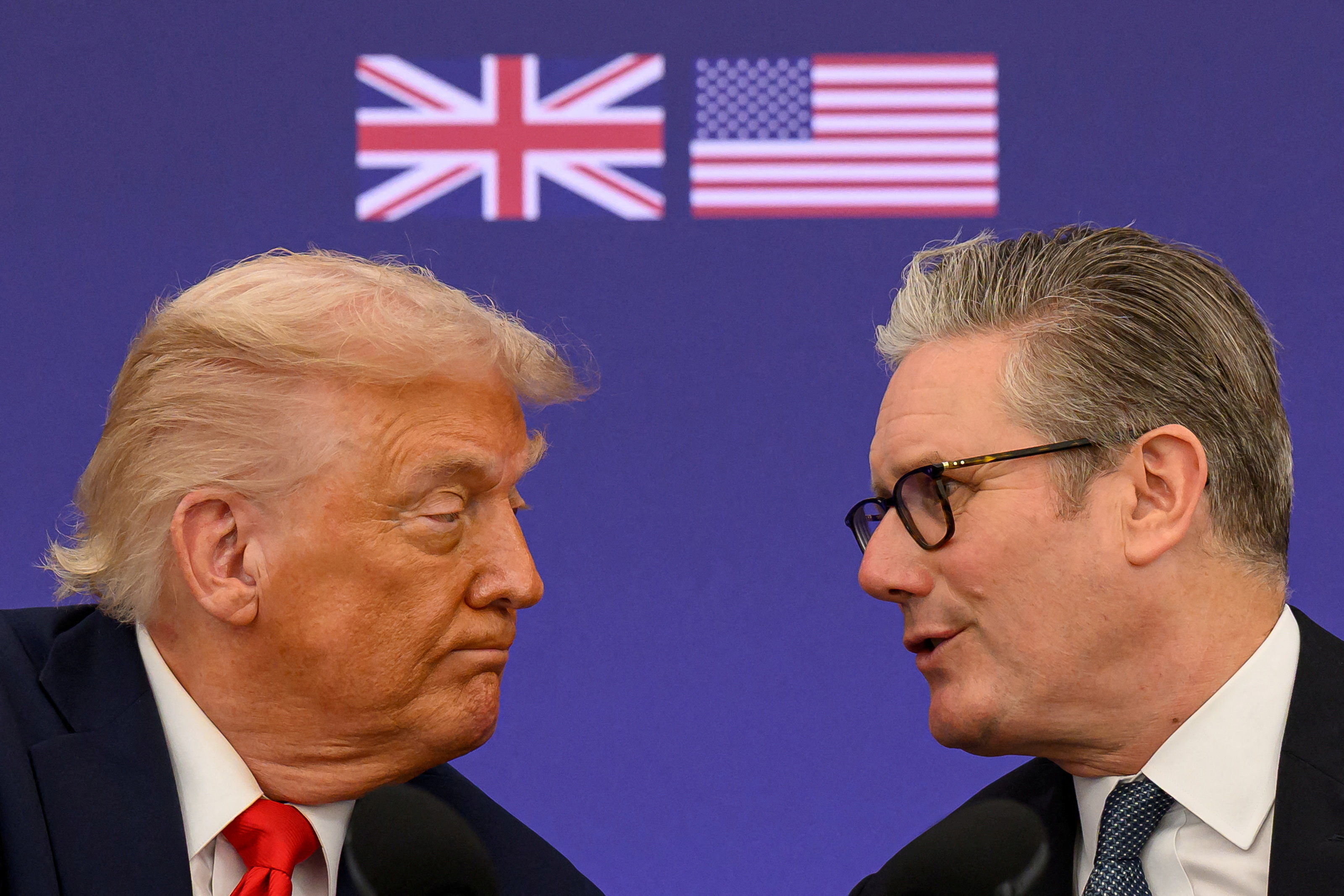
Trump Starmer Call Highlights UK Distance From US–Israel Strikes- A brief phone conversation between U.S. President Donald Trump and British Prime Minister Keir Starmer has underscored the delicate diplomatic balancing act facing the United Kingdom amid escalating tensions in the Middle East.
According to officials familiar with the exchange, the call was initiated by the White House and lasted only a short time. Downing Street’s official summary offered few specifics, stating simply that the two leaders “discussed the situation in the Middle East.” The carefully worded statement reflected the sensitivity of Britain’s position as conflict intensifies following U.S. and Israeli military actions against Iran.
Notably, the United Kingdom — along with France and Germany — was not involved in the joint U.S.–Israeli strikes and has not formally endorsed them. British officials have been keen to draw a distinction between supporting regional stability and participating in offensive operations.
That nuance is central to Sir Keir’s approach. While he has consistently condemned Iran’s actions — particularly Tehran’s recent retaliatory strikes targeting Israel and Gulf states hosting American military bases — he has stopped short of offering explicit backing for Washington’s military strategy.
Over the weekend, Iran launched missile and drone attacks aimed at Israeli territory and at sites in Gulf nations where U.S. forces are stationed. The developments have heightened fears of a broader regional conflict, placing European allies in a complex diplomatic position.
In public remarks, the Prime Minister reiterated Britain’s long-standing criticism of Iran’s destabilising activities, including its support for proxy groups across the region. At the same time, he stressed that any British military presence in the area is strictly defensive.
UK warplanes currently deployed in the region are operating, Downing Street emphasised, in accordance with international law and are tasked with protecting allied assets and personnel facing potential attack. The message was clear: Britain’s role is to deter and defend, not to escalate.
The distinction matters domestically and internationally. At home, there is political sensitivity around entering another Middle Eastern conflict. Abroad, the UK must maintain its close security partnership with Washington while preserving working relationships with European allies who have adopted a more cautious stance.
The brevity of the Trump–Starmer call may reflect that careful calibration. While the United States has framed its actions as necessary to counter Iranian threats, European governments have focused on preventing further escalation and safeguarding regional stability.
Diplomatic sources suggest London is prioritising de-escalation efforts behind the scenes, maintaining contact with Gulf partners and European counterparts. The UK government has also reiterated calls for restraint from all sides, even as it condemns direct attacks on Israel and on countries hosting U.S. forces.
For Sir Keir, the moment presents an early test of his foreign policy leadership: balancing the “special relationship” with the United States against the need for strategic autonomy and adherence to international norms.
For President Trump, the call offered an opportunity to brief a key ally amid fast-moving developments. But Britain’s measured response signals that while it remains aligned with Washington on security concerns about Iran, it is not automatically aligned on tactics.
As tensions simmer and the risk of further retaliation looms, the UK appears determined to project steadiness — supportive of allies under threat, firm in its criticism of Iran, yet cautious about being drawn directly into a widening conflict.
The coming days will reveal whether that tightrope can be maintained.
What Does This Blockbuster Merger Mean for Viewers and Investors? | Maya