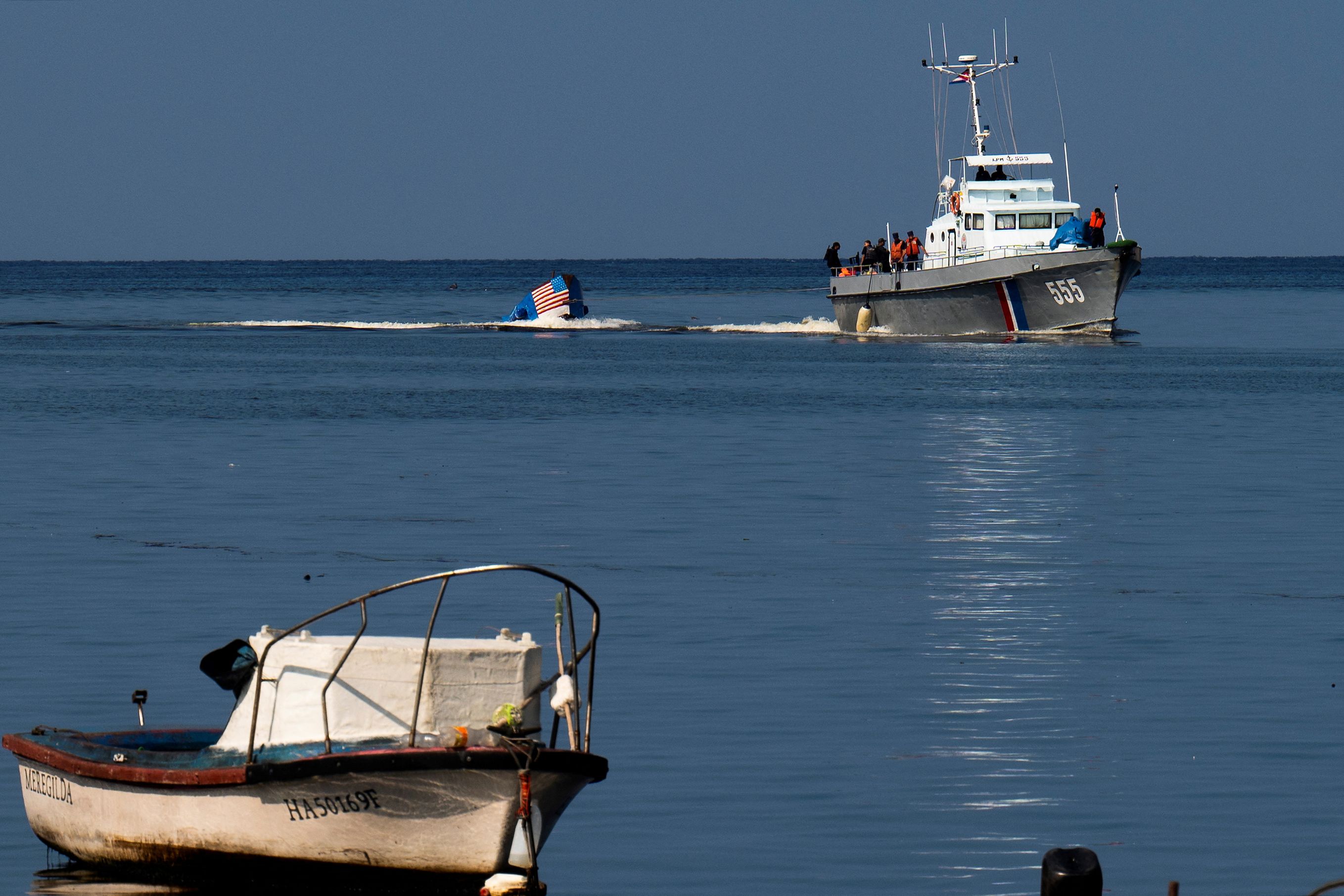
U.S.-Registered Boat Incident Leaves Four Dead in Cuban Waters- Four people were killed and six others wounded after a U.S.-registered speedboat allegedly entered Cuban territorial waters and exchanged gunfire with Cuban border forces, according to authorities in Havana. The confrontation, which Cuban officials described as an attempted armed incursion, has drawn scrutiny from both governments and renewed tensions between the island nation and segments of the Cuban exile community in the United States.
Cuba’s Interior Ministry said the vessel, registered in Florida, was carrying 10 Cuban nationals who reside in the U.S. Officials alleged the group was heavily armed and intended to carry out a violent attack on the island. Weapons reportedly found aboard included assault-style rifles, handguns, Molotov cocktails, ammunition, bulletproof vests, telescopic sights and camouflage clothing.
According to the government’s account, Cuban border patrol units intercepted the speedboat after it crossed into the country’s waters. Authorities said the occupants of the vessel opened fire as patrol boats approached. Cuban forces returned fire, killing four of the passengers. The remaining six were injured in the exchange and taken into custody, where they received medical treatment, officials said.
The Cuban government described the group as having “a known history of criminal and violent activity,” though it did not immediately release detailed records to support that claim. Officials framed the incident as a deliberate and organized attempt to destabilize the country.
President Miguel Díaz-Canel said in a message posted on social media that Cuba would defend its sovereignty “with determination and firmness” against what he called terrorist and mercenary aggression. His statement underscored the government’s position that the confrontation was not accidental, but part of a broader pattern of hostility directed at the island.
Relatives of at least one of the men who died offered a different perspective, describing a deeply personal and ideological motivation behind the ill-fated journey. Misael Ortega Casanova told The Associated Press that his brother, Michael Ortega Casanova, had become consumed by the idea of overthrowing Cuba’s communist government.
“He fell into an obsessive and diabolical mindset,” Ortega Casanova said, describing what he viewed as a dangerous fixation. “They became so obsessed that they didn’t think about the consequences or even their own lives.”
For decades, opposition to Cuba’s government has been a defining issue among some Cuban Americans, particularly in Florida. Many in the diaspora have long accused Havana’s leadership of political repression and human rights violations. While most activism takes the form of protests, advocacy and political lobbying, Cuban authorities have historically accused exile groups of supporting or organizing armed plots against the state.
It remains unclear how the group organized the trip, how long they had been planning it, or whether U.S. officials were aware of any potential threat beforehand. The U.S. government has not confirmed the Cuban account of the confrontation.
Secretary of State Marco Rubio said Wednesday that American authorities were still gathering information and had no independent details beyond statements released by Cuban officials. He added that the Department of Homeland Security, the U.S. Coast Guard and other relevant agencies were reviewing the circumstances surrounding the incident.
“We are aware of the reports,” Rubio said, noting that the situation remains under examination.
The episode raises complex legal and diplomatic questions. If the vessel did indeed depart from Florida with weapons onboard, it could prompt investigations into possible violations of U.S. law, including arms trafficking or neutrality statutes that prohibit launching armed expeditions against foreign states from American soil. At the same time, the lack of independently verified details makes it difficult to assess the full scope of what transpired on the water.
Maritime boundaries around Cuba have long been sensitive areas, particularly given the proximity to the United States and the history of migration attempts by sea. Encounters between private vessels and Cuban authorities are not uncommon, but fatal armed clashes are rare.
For families of those involved, the outcome has been devastating. Ortega Casanova said that while he did not support his brother’s alleged actions, he believes the drive to change Cuba’s political system had overtaken rational judgment.
The six surviving passengers remain in Cuban custody. Authorities in Havana have not yet announced specific charges, but officials indicated that further legal proceedings are expected.
As investigations continue on both sides of the Florida Straits, the incident stands as a stark reminder of the enduring political passions surrounding Cuba — and the potentially deadly consequences when those passions spill beyond rhetoric into armed confrontation.