“We’re Not Afraid of Boots on the Ground”: Trump Signals Deeper U.S. Role in Venezuela
Former President Donald Trump on Saturday signaled a dramatic expansion of U.S. involvement in Venezuela, openly suggesting that American troops could be deployed on the ground as part of what he described as a temporary U.S. effort to run the country. The comments came amid Trump’s extraordinary claims that U.S. forces had captured Venezuelan leader Nicolás Maduro and launched a sweeping military operation aimed at reshaping the nation’s future.
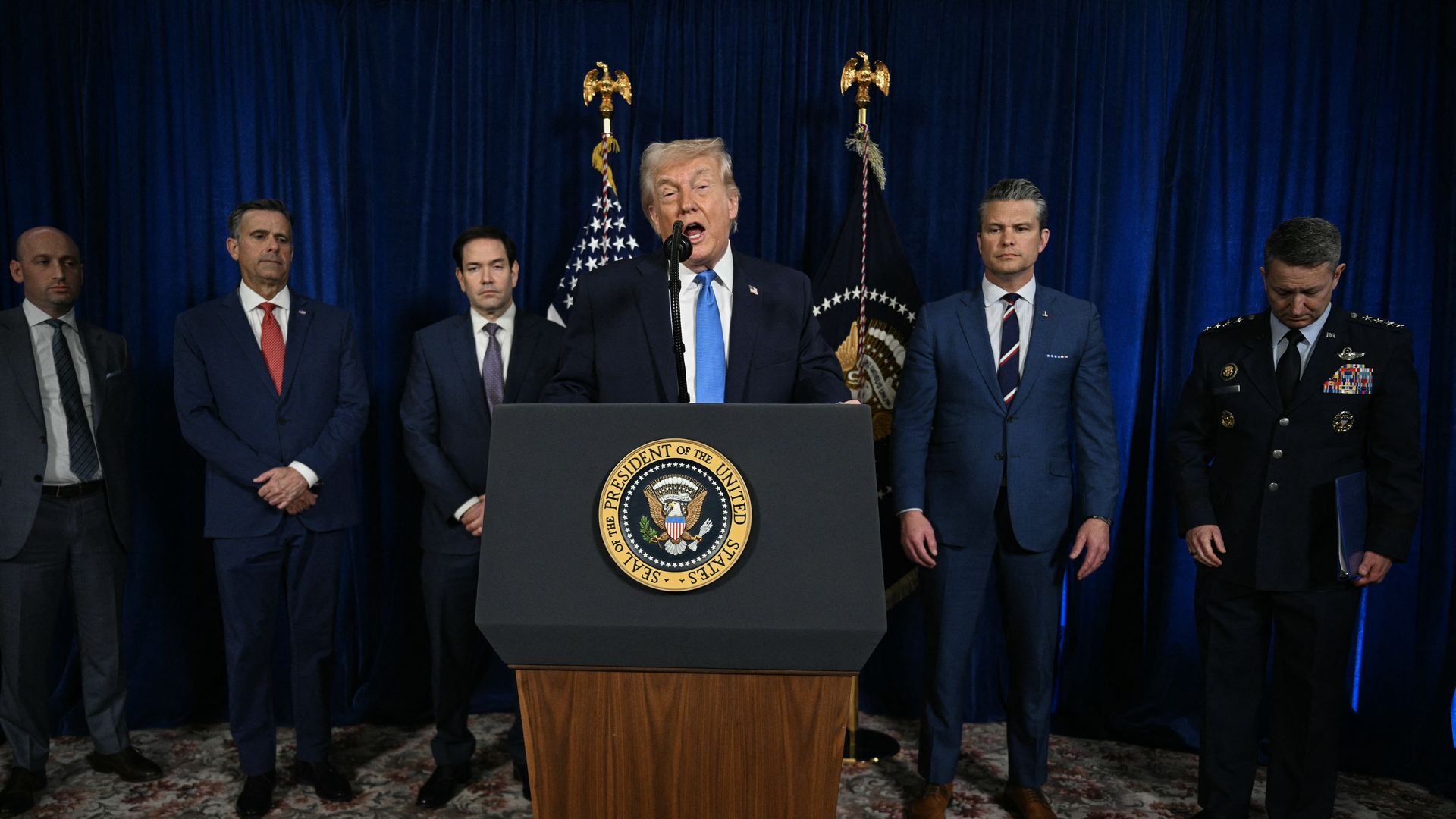
Speaking to reporters in Florida, Trump framed the situation as unfinished business, making clear that the United States was prepared to escalate militarily if necessary. “We’re not afraid of boots on the ground,” he said when asked whether U.S. control of Venezuela would involve American troops. “We’re going to make sure that that country is run properly. We’re not doing this in vain.”
The remarks marked one of Trump’s clearest indications yet that the U.S. role in Venezuela could go far beyond targeted strikes or diplomatic pressure. Instead, his comments suggested a willingness to consider sustained military presence and direct oversight — a stance that has immediately raised alarms among foreign policy experts and international observers.
Trump also warned that the military option remains firmly on the table. He said U.S. forces were ready to carry out a second and much larger wave of attacks if conditions on the ground demanded it. While he argued that the initial operation was highly successful, the threat of further strikes underscored a strategy rooted in deterrence and overwhelming force rather than limited engagement.
At the center of Trump’s claims is the assertion that Nicolás Maduro and his wife have been captured and transported to the United States to face charges. Trump portrayed the operation as both a security action and a corrective measure against what he described as years of misrule, corruption, and economic collapse under Maduro’s government. However, independent verification of all operational details remains limited, and international organizations have yet to provide full confirmation.
Beyond the military dimension, Trump emphasized governance. He said the U.S. would temporarily “run” Venezuela until a leadership transition could be carried out safely and responsibly. According to Trump, the goal is to prevent the emergence of another government that would replicate the failures of the past. He did not outline how long U.S. control would last or what legal framework would guide it, saying only that a group of officials would be appointed to oversee the process.
Venezuela’s oil reserves featured prominently in Trump’s comments. He suggested that U.S. involvement could help revive production and stabilize the country’s battered economy, an argument that has drawn skepticism from critics who see resource control as a central motivation behind the intervention.
Reaction to Trump’s statements has been swift and sharply divided. Supporters view the rhetoric as decisive leadership and a long-overdue response to instability in Venezuela. Critics, however, warn that the language of occupation — particularly the openness to “boots on the ground” — risks inflaming regional tensions and violating international norms governing sovereignty and the use of force.
Legal experts have also questioned the authority under which such an operation would proceed, noting the absence of clear congressional authorization or international approval. A prolonged U.S. military presence, they argue, could entangle American forces in a complex political and humanitarian crisis with no clear exit strategy.
For Venezuelans, the uncertainty is acute. While some oppose Maduro and may welcome change, others fear that foreign military control could deepen instability and lead to civilian suffering. The prospect of further strikes or a ground presence raises concerns about safety, displacement, and long-term governance.
What remains clear is that Trump’s language signals readiness for deeper involvement rather than restraint. Whether his statements reflect an imminent shift in U.S. policy or serve as a pressure tactic is still unfolding. As events develop, the international community is watching closely to see whether these declarations translate into sustained action — and what consequences that action may bring.