Why Saturn’s Rings Are More Mysterious Than You Think
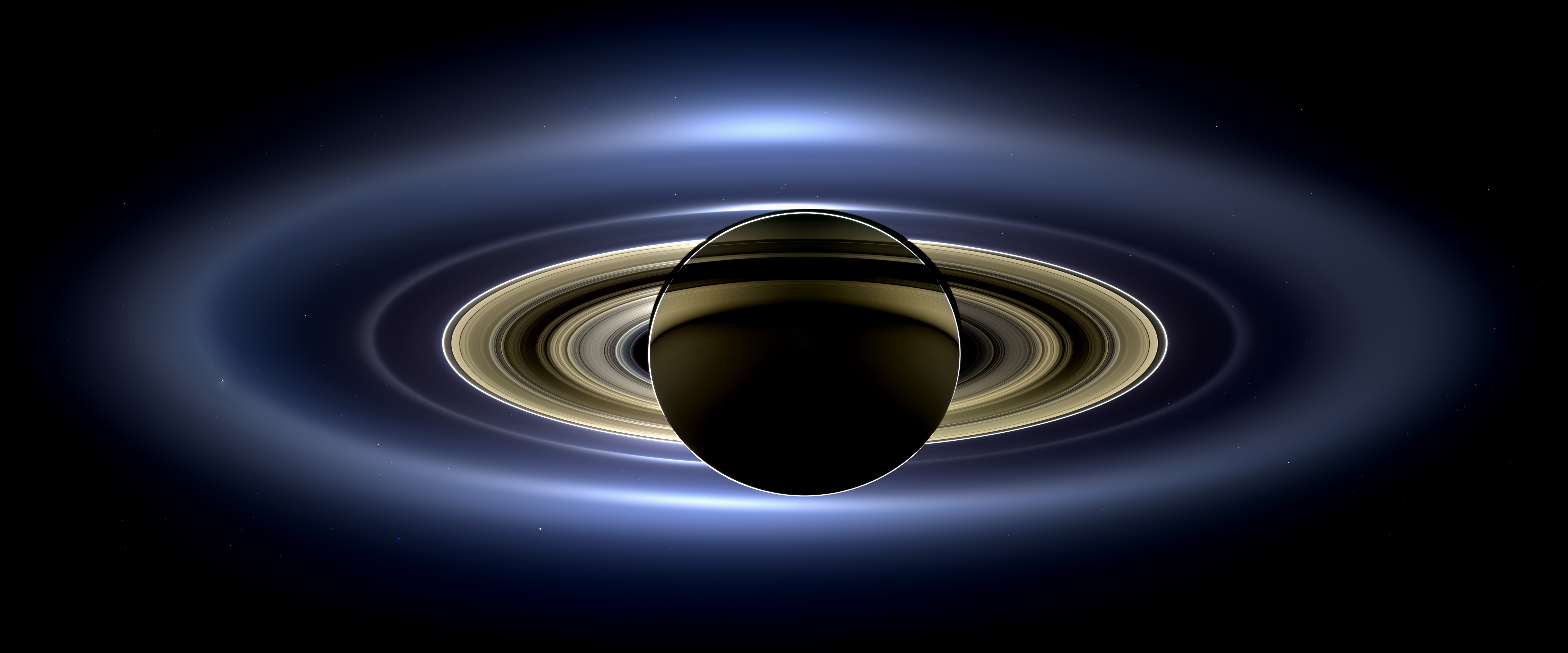
Saturn, the sixth planet from the Sun, is famous for its breathtaking rings. Visible even through small telescopes, these rings are more than just a spectacular sight—they are one of the most puzzling features in our solar system. Despite decades of observation and spacecraft missions, including the groundbreaking Cassini spacecraft, Saturn’s rings continue to pose questions about their origin, composition, and longevity.
The Structure of Saturn’s Rings
Saturn’s rings are composed of countless ice and rock particles, ranging in size from tiny grains to chunks several meters across. These particles are organized into several main rings—labeled A, B, and C—with faint outer rings and gaps like the Cassini Division.
The rings’ incredible thinness is another mystery. Despite spanning over 280,000 kilometers in diameter, they are only about 10 meters thick in some regions. This flatness, combined with the dynamic interactions of particles, creates patterns that challenge our understanding of celestial mechanics.
Theories About Their Formation
Scientists have debated for decades how Saturn’s rings formed. Two primary theories dominate:
-
Primordial Rings: Some researchers suggest that Saturn’s rings formed along with the planet itself, more than 4 billion years ago. If true, this would make them ancient relics of the early solar system.
-
Catastrophic Event: Others argue that the rings are much younger, perhaps only 100 million years old, formed from the breakup of a moon or a captured comet that was torn apart by Saturn’s gravity.
Recent data from Cassini spacecraft suggest that the rings may be younger than Saturn itself, but the exact origin remains a subject of debate.
Unexplained Phenomena Within the Rings
Saturn’s rings are far from static—they are alive with movement, resonances, and unusual behaviors:
Ring “Spokes”
In 1980, the Voyager spacecraft observed dark radial features across Saturn’s B ring, called “spokes.” These features, thought to be clouds of tiny dust particles levitated by electromagnetic forces, appear and disappear unpredictably. Their exact mechanics remain a mystery even decades later.
Shepherd Moons and Ring Gaps
Tiny moons, called “shepherd moons,” orbit near ring edges, maintaining sharp boundaries. For instance, Pan orbits within the Encke Gap of the A ring. These moons create gravitational waves in the rings, producing patterns that scientists still study to understand particle dynamics.
Changing Ring Brightness
Saturn’s rings appear to change brightness and color depending on viewing angle and sunlight, suggesting complex interactions between ice, dust, and solar radiation. These subtle variations hint at processes we do not yet fully understand.
Mysteries About Longevity
One of the most puzzling questions is how long Saturn’s rings will last. Calculations indicate that they are losing mass at a rate that could eventually cause them to vanish in 100–300 million years. If the rings are indeed that young, it raises questions about why they formed relatively recently in the solar system’s history. Are we witnessing a rare event? Or do Saturn-like rings form and dissipate cyclically?
Rings Beyond Saturn
Saturn is not the only planet with rings—Jupiter, Uranus, and Neptune also have ring systems. However, none are as massive, bright, or complex as Saturn’s. This uniqueness raises further questions about why Saturn alone developed such a spectacular ring system.
Scientific and Cultural Fascination
Beyond scientific study, Saturn’s rings have captured human imagination. They symbolize cosmic beauty and complexity, inspiring artwork, literature, and popular culture. Missions like Cassini have provided unprecedented views, revealing rings that ripple like waves and interact dynamically with Saturn’s moons, showcasing a planetary feature that is simultaneously beautiful and scientifically baffling.
Why Studying the Rings Matters
Studying Saturn’s rings helps scientists understand planetary formation, orbital dynamics, and the behavior of dust and ice in space. They serve as a natural laboratory for physics and astronomy, offering insights that extend far beyond the Saturn system.
The Future of Ring Exploration
Future missions, advanced telescopes, and simulations promise to uncover more about Saturn’s rings. Questions remain about their origin, age, and ultimate fate, ensuring that these rings will continue to be a source of wonder and discovery for decades.
Saturn’s rings remind us that even in a solar system we have explored extensively, mysteries remain. They challenge our understanding of physics, planetary formation, and celestial mechanics, proving that beauty in the cosmos often comes hand-in-hand with enigma.
AI Health Advice Under Scrutiny After Oxford Study Flags Safety Concerns | Maya