Will Donald Trump Strike Iran if Hormuz Deadline Expires? A tense countdown is underway as the deadline set by U.S. President Donald Trump approaches its final hours, raising a critical question for the world: will Washington escalate from warnings to direct military action if Iran does not comply?
At the heart of the crisis lies the Strait of Hormuz, a narrow but vital waterway through which a large share of the world’s oil supply flows. Any disruption in this corridor has immediate global consequences, affecting fuel prices, trade routes, and economic stability far beyond the Middle East. Trump’s ultimatum demands that Iran ensure the smooth passage of shipping through this route—or face serious consequences.
What makes this moment particularly volatile is the nature of the threat. Trump has not limited his warnings to conventional military targets. Instead, he has openly suggested that the United States could strike Iran’s core infrastructure, including power grids and transportation networks. Such a move would represent a sharp escalation, expanding the conflict into the economic foundations of the country rather than focusing solely on defense capabilities.
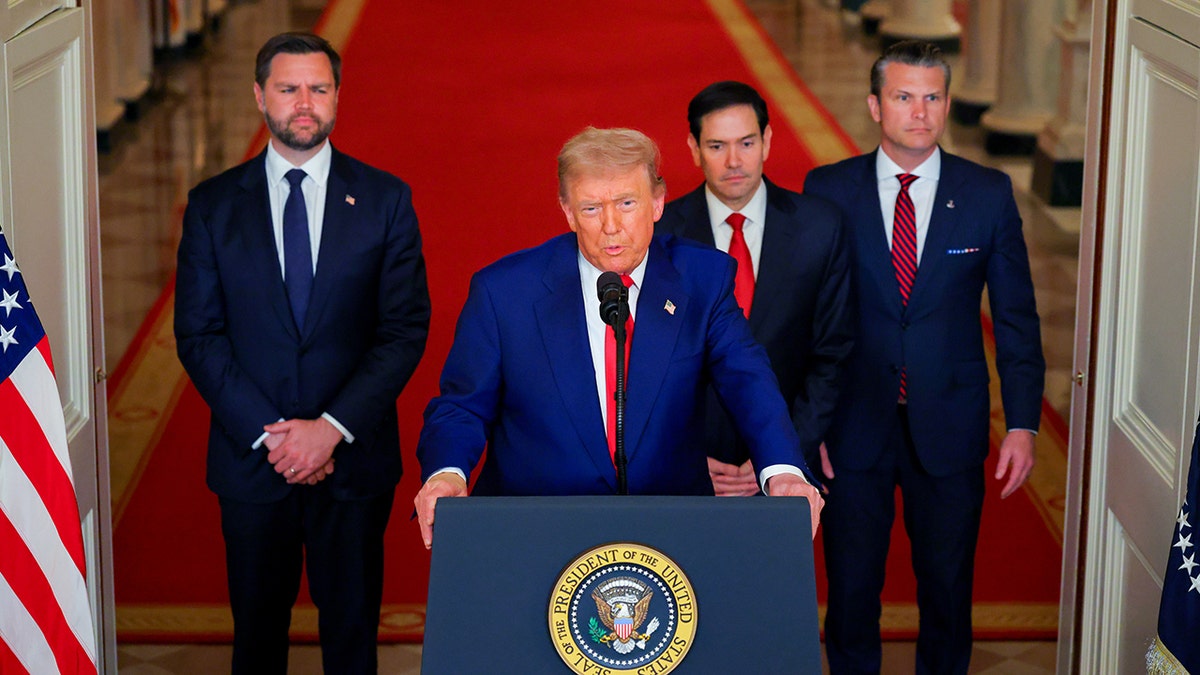
Despite the aggressive tone, the situation remains fluid. Diplomatic efforts are still unfolding behind closed doors. Senior U.S. officials, including JD Vance, have been involved in indirect discussions with Iranian representatives. These talks, reportedly facilitated by Pakistan, signal that Washington is keeping a diplomatic channel open—even as it applies pressure.
This dual-track approach—combining threats with negotiation—has created uncertainty about how firm the deadline truly is. Deadlines in geopolitical conflicts often serve as leverage rather than fixed points of action. In this case, Trump’s ultimatum may be designed to force Iran into concessions without necessarily triggering immediate military engagement. However, the risk lies in misinterpretation: if either side misreads the other’s intentions, escalation could happen quickly.
From Tehran’s standpoint, the stakes are equally high. Iranian leaders have rejected external pressure and warned that any attack on their infrastructure would provoke a strong response. Iran has demonstrated in the past that it can project power across the region, whether through direct means or allied groups. If targeted, it could retaliate in ways that extend the conflict beyond its borders, potentially drawing in other nations and destabilizing an already fragile region.
The global implications of such a scenario are significant. The Strait of Hormuz is not just a regional asset—it is a cornerstone of the global energy system. Even the possibility of conflict in this area has already introduced volatility into oil markets. A full-scale disruption could drive prices sharply higher, affecting everything from transportation costs to inflation in major economies.
There is also a broader concern about the evolving nature of warfare. Targeting infrastructure like energy facilities and transport systems reflects a shift toward economic pressure as a strategic tool. While such tactics can weaken an opponent without prolonged ground conflict, they also blur the line between military and civilian impact. Damage to these systems can have far-reaching humanitarian and environmental consequences, raising questions under international law.
Another layer of complexity comes from international reactions. While some allies may quietly support a tougher stance on Iran, others are urging restraint. Many governments are wary of a wider conflict that could disrupt global markets and lead to long-term instability. This divergence in perspectives adds pressure on Washington to balance strength with caution.
So, will Trump actually order a strike if the deadline passes?
The answer likely depends on several unfolding factors. If diplomatic talks show progress—even at the last minute—the U.S. may choose to delay action, allowing negotiations more time. Similarly, if Iran takes even partial steps toward easing tensions, it could create space for de-escalation.
On the other hand, if the deadline expires without any visible movement and tensions continue to rise, the pressure on the U.S. administration to act could intensify. In such a scenario, even a limited strike could serve as a signal of resolve—but it would also carry the risk of triggering a cycle of retaliation.
Ultimately, this moment is defined by uncertainty. The rhetoric is strong, the stakes are high, and the margin for error is dangerously thin. A single miscalculation could shift the situation from a tense standoff to an open confrontation.
For now, the world remains on edge, watching closely as the deadline approaches. Whether this crisis ends in diplomacy or conflict will depend not just on decisions made in Washington or Tehran, but on how both sides interpret each other’s intentions in these final, decisive hours.
Urgent Security Alert for WhatsApp Users as Microsoft Flags Advanced Cyber Threat | Maya