10 Facts That Show How the World Power Ranking Is Changing in 2026
The global hierarchy of power has never stayed still for long, but 2026 stands out as a year where several long-building trends are converging at once. Economic rankings are being rewritten by currency swings and growth gaps, defense budgets have hit historic highs, and the line between “great power” and “regional power” keeps blurring as smaller, more agile nations punch above their weight in specific areas. Here are ten facts that capture how the global power picture is being redrawn this year.
1. Worldwide military spending has pushed past $2.7 trillion
Total global defense spending has now crossed the $2.7 trillion mark, a record level that reflects how seriously countries are treating preparedness, even ones that aren’t directly involved in active fighting. Analysts note that old-school measures like troop counts and equipment numbers are increasingly taking a back seat to how well a nation can integrate new technology and how its forces actually perform in real combat.
2. NATO has agreed to a dramatic new spending target
In one of the bigger shifts for the alliance in years, NATO members have pledged to push defense spending to 5% of GDP by 2035. Described by some as a generational leap in collective defense, this single commitment is expected to reshape European military budgets for the next decade.
3. The US still leads militarily, but the conversation has shifted
The United States continues to top global military strength rankings in 2026, with a defense budget north of $895 billion. What’s notable, though, is that the real story this year isn’t about who’s in first place. It’s about how quickly the gap between the US and rising challengers is narrowing.
4. The world is settling into a three-way military balance
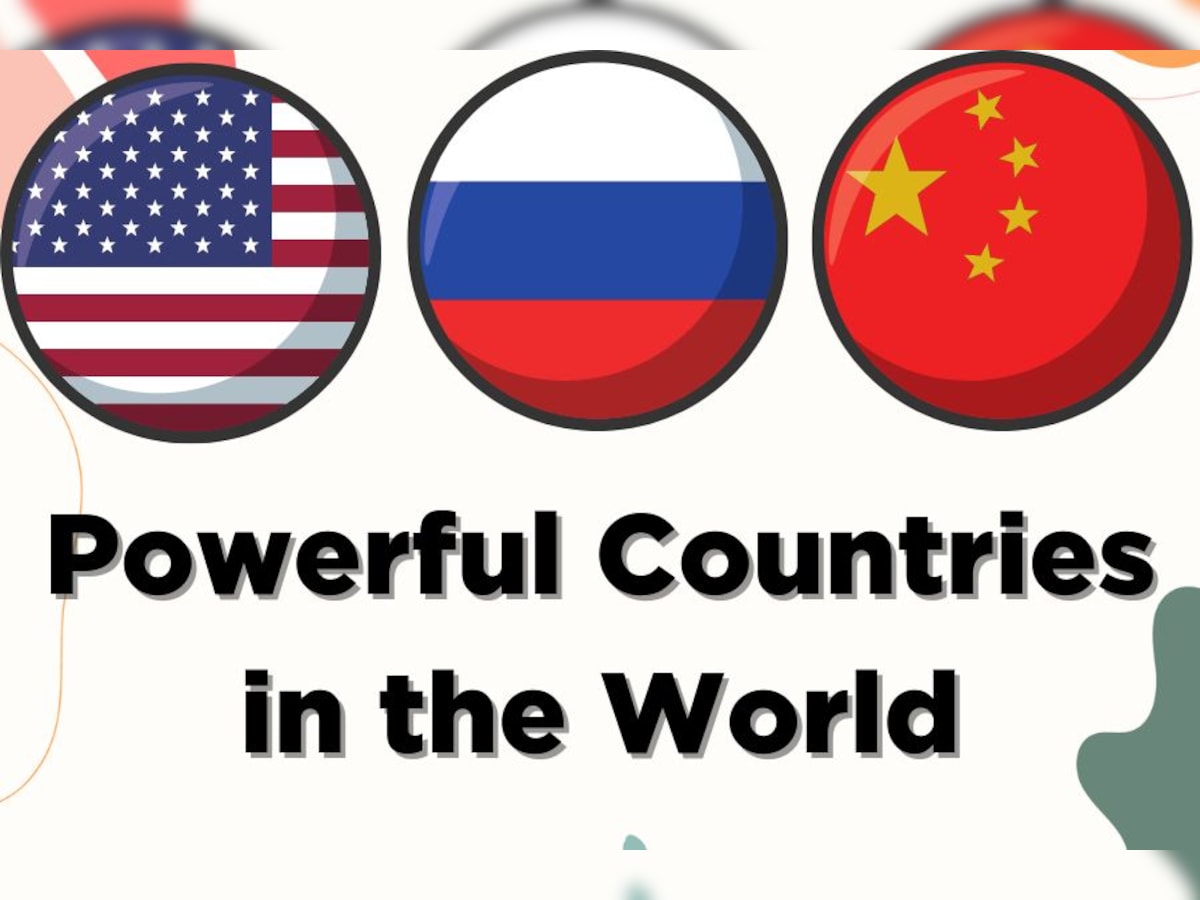
Rather than a simple two-way rivalry, 2026 looks more like a tri-polar arrangement: the US holds onto its edge in advanced, expeditionary capability, China is racing to build the largest navy by sheer numbers, and Russia leans on full-scale wartime mobilization and its nuclear arsenal to stay relevant on the world stage.
5. Mid-tier powers are becoming indispensable suppliers
South Korea has quietly become one of the most important defense suppliers for Western militaries, stepping in to refill NATO stockpiles that ran low after years of conflict-related demand. Meanwhile, Turkey has carved out a reputation as a global leader in drone technology and home-grown fighter jet development, two areas that matter enormously in modern warfare.
6. India keeps growing faster than any other major economy
Whatever its exact GDP ranking, India remains the fastest-growing major economy in the world, with growth running close to 6.5% in 2026. That kind of sustained pace is one of the clearest signs of a long-term economic shift toward South Asia.
7. India’s exact economic rank has turned into a genuine debate
Oddly enough, where India sits among the world’s largest economies has become a real point of disagreement in 2026. Some estimates put India’s GDP at roughly $4.15 trillion, placing it sixth, just behind the UK and Japan. Other IMF figures put it closer to $4.3 trillion, which would rank it fourth. The gap mostly comes down to currency depreciation and statistical revisions rather than any real change in how the economy is actually performing.
8. A second tier of military powers is rising fast
Beyond the traditional heavyweights, countries like France, Germany, Israel, and South Korea are all strengthening their militaries through modernization and new technology. These nations are becoming far more consequential to regional security balances than they were just a few years back.
9. A short war last year changed how everyone thinks about missile defense
The 12-day Israel-Iran conflict in June 2025 has turned into a defining moment for military planners. It showed just how critical layered missile defense systems are, while also exposing how vulnerable even highly advanced militaries can be to large-scale drone attacks. That single conflict is still influencing how budgets are being allocated across the world in 2026.
10. Allied tech-sharing is accelerating
Among allied nations, the next phase of the AUKUS partnership is speeding up the sharing of advanced technology like AI and quantum computing between partner countries. This suggests that future power rankings might depend as much on access to shared tech ecosystems as on what any single country can build on its own.
The bigger picture: What stands out across these ten facts isn’t one dramatic reshuffling at the top, but a more fragmented, multi-dimensional power landscape overall. Military strength, economic size, and technological access are increasingly decoupling from each other, making old-fashioned “top 5” lists less useful than they used to be. A country can be a major military power, a mid-sized economy, and a global leader in one specific technology, all at the same time, and 2026 is the year that complexity has become too significant to ignore. Dubai-Inspired Chocolates: The Rise of Exotic Flavors | Maya