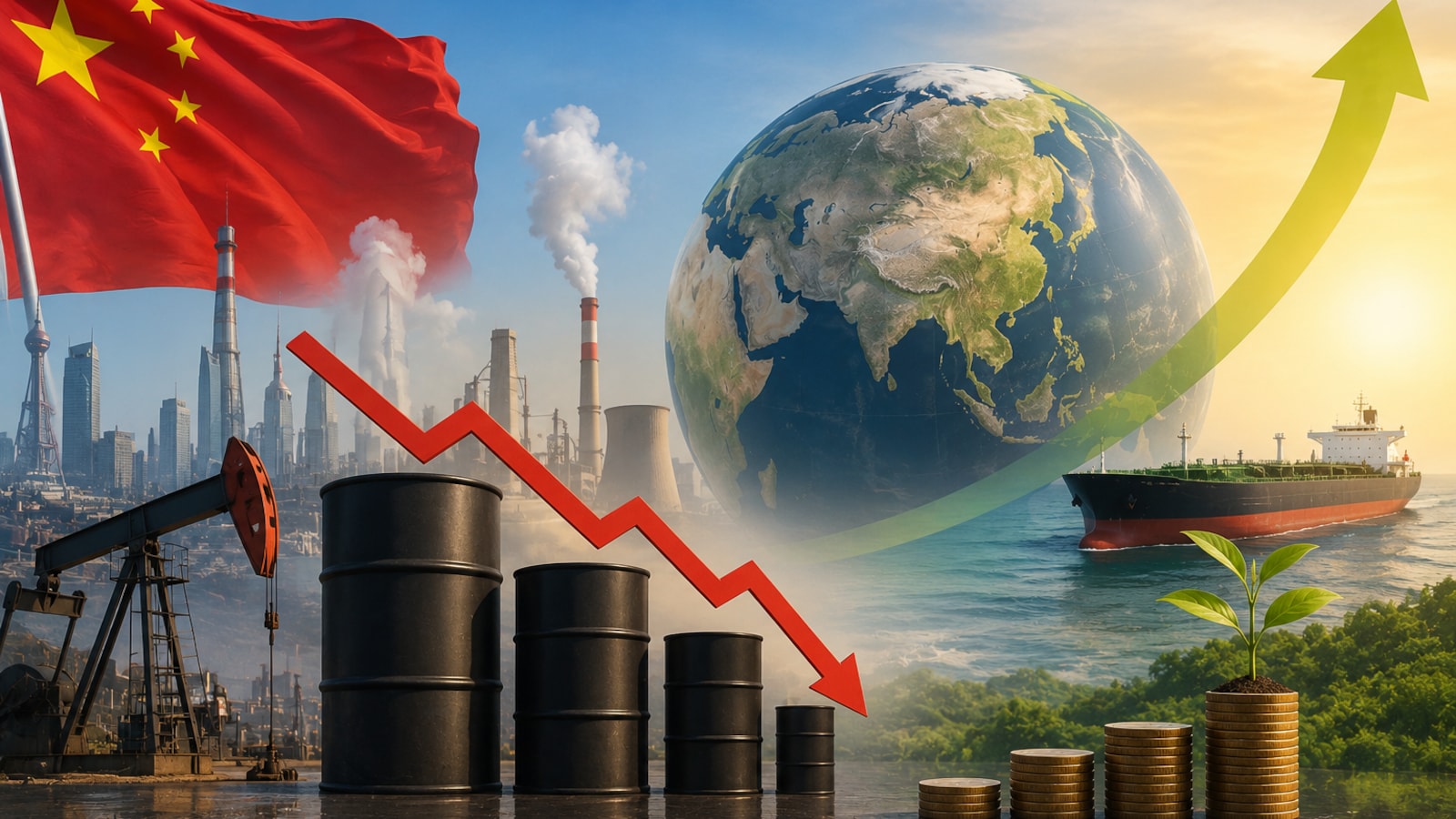
Oil Market Enters New Era as Demand Falls Amid China Slowdown and Energy Shift -Global oil demand is heading for its first annual decline since the COVID-19 pandemic, as high prices, supply disruptions, and changing energy habits reshape the world’s oil market.
According to a report from the International Energy Agency (IEA), global oil consumption is expected to fall by around 1 million barrels per day in 2026, marking the first significant decline since the economic slowdown caused by the pandemic in 2020.
The drop comes after months of uncertainty in global energy markets, driven by geopolitical tensions, disrupted crude shipments, and weaker consumption in major economies. However, the impact has not been evenly distributed, with some regions experiencing sharper declines than others.
Middle East Supply Disruptions Shake Oil Markets
One of the biggest factors affecting global oil flows has been the conflict between the United States and Iran, which disrupted shipping activity in the Persian Gulf.
For more than three months, vessels carrying crude oil remained stranded as security concerns around the Strait of Hormuz prevented normal movement through one of the world’s most important energy routes.
The Strait of Hormuz is a critical passage for global energy supplies, with a significant portion of the world’s oil and natural gas shipments passing through the narrow waterway.
Jim Burkhard, vice president and head of crude oil research at S&P Global Energy, said uncertainty around the route remains higher than before the conflict began.
Iran has continued attempting to influence activity around the strait, while the United States has struggled to fully restore normal shipping conditions. Analysts believe a complete return to previous market conditions may be difficult in the near term.
China Drives the Global Demand Decline
The biggest contributor to falling oil consumption has been China, the world’s largest importer of crude oil.
The IEA report showed global oil demand averaged 97.9 million barrels per day in May, down significantly from the previous year. Much of the decline came from Asian markets, which depend heavily on Middle Eastern energy supplies.
China alone reduced consumption by around 1.5 million barrels per day, representing nearly a 9% decline compared with earlier levels.
Energy analysts say Beijing’s response to rising oil prices played a major role in limiting global demand growth. Instead of aggressively buying crude during the price surge, China reduced purchases from international markets.
The country also temporarily slowed the expansion of its strategic petroleum reserves, which had previously been increasing at a pace of nearly 1 million barrels per day, according to analysts.
Electric Vehicles Add Pressure on Oil Demand
China’s growing adoption of electric vehicles has also accelerated the decline in transportation fuel consumption.
As more drivers shift away from gasoline-powered cars, demand for traditional road fuels has weakened. Analysts estimate China’s gasoline and diesel consumption could fall by 500,000 to 600,000 barrels per day due to changing transportation patterns.
The trend highlights a broader challenge facing the oil industry: even during periods of geopolitical instability, long-term shifts in energy technology are beginning to influence consumption patterns.
Why Oil Prices Have Not Surged Despite Tensions
Despite fears that conflict between Washington and Tehran could trigger a major energy crisis, oil prices have not reached the extreme levels many analysts initially expected.
A temporary ceasefire allowed some vessels to pass through the Strait of Hormuz in June, increasing available supplies and easing pressure on global markets.
Even after tensions increased again, prices moved only moderately higher.
Analysts say the market reaction has been different from earlier shocks because investors now view the conflict as a prolonged period of uncertainty rather than an immediate disruption to global oil supplies.
“This gray zone conflict is not really a shock to the oil market,” Burkhard said, noting that current tensions may move prices by a few dollars but have not created the same panic seen during earlier stages of the crisis.
A Changing Future for Global Energy Markets
The expected decline in oil demand represents a major shift for an industry that has historically depended on continuous consumption growth.
While temporary factors such as geopolitical conflicts and price increases have contributed to the slowdown, longer-term trends are also becoming increasingly important. Electric vehicle adoption, energy efficiency improvements, and changing consumer behavior are reshaping global fuel demand.
For oil-producing nations, weaker demand growth could create new challenges, particularly for economies heavily dependent on petroleum exports.
At the same time, energy security remains a major concern as governments continue balancing traditional fuel supplies with investments in renewable energy and alternative technologies.
The latest forecast suggests the global oil market is entering a new phase — one where geopolitical conflicts still have the power to disrupt supply, but changing consumption patterns are becoming equally influential in determining the future of energy. Facts That Show Why Semiconductor Control Decides Global Power | Maya
How do scientists turn raw space images into real colors? | Maya