US Hits Iran HARD! Dozens of IRGC Targets Destroyed After Alleged Surprise Missile Attack
July 30, 2026
The United States has carried out one of its most significant military operations against Iran in recent months, dramatically escalating tensions in the Middle East. U.S. Central Command (CENTCOM) confirmed that it launched what it described as a “heavy wave” of precision strikes against military targets inside Iran after an alleged surprise ballistic missile attack on American forces stationed in the region.
The operation, which reportedly lasted around two hours, targeted dozens of sites linked to Iran’s Islamic Revolutionary Guard Corps (IRGC). According to U.S. officials, the strikes focused on military infrastructure used to support missile and drone operations, marking Washington’s latest effort to deter future attacks against its personnel and regional allies.
Why the U.S. Struck Iran
The military action came after the United States accused Iran of attempting a surprise missile strike on American bases in the Middle East. U.S. military officials said multiple ballistic missiles were launched toward American positions but were successfully intercepted before reaching their targets. No U.S. casualties were reported.
Despite the failed attack, Washington viewed the incident as a serious escalation. President Donald Trump had previously warned that any attack on U.S. forces would be met with an immediate and overwhelming response. Within hours, American forces launched coordinated airstrikes on key Iranian military facilities.
Dozens of Military Targets Hit
CENTCOM said the operation was directed exclusively at military objectives associated with the IRGC. The targets reportedly included:
- Ballistic missile launch and storage facilities
- Drone production and operational centers
- Military command and control headquarters
- Coastal surveillance installations
- Air defense systems
- Maritime military infrastructure
U.S. officials stated that the objective was to significantly reduce Iran’s ability to conduct further missile and drone attacks while avoiding civilian infrastructure wherever possible.
Although Washington has not released a detailed battle damage assessment, military officials described the mission as a successful operation that struck dozens of strategic IRGC facilities across Iran.
A Carefully Planned Military Operation
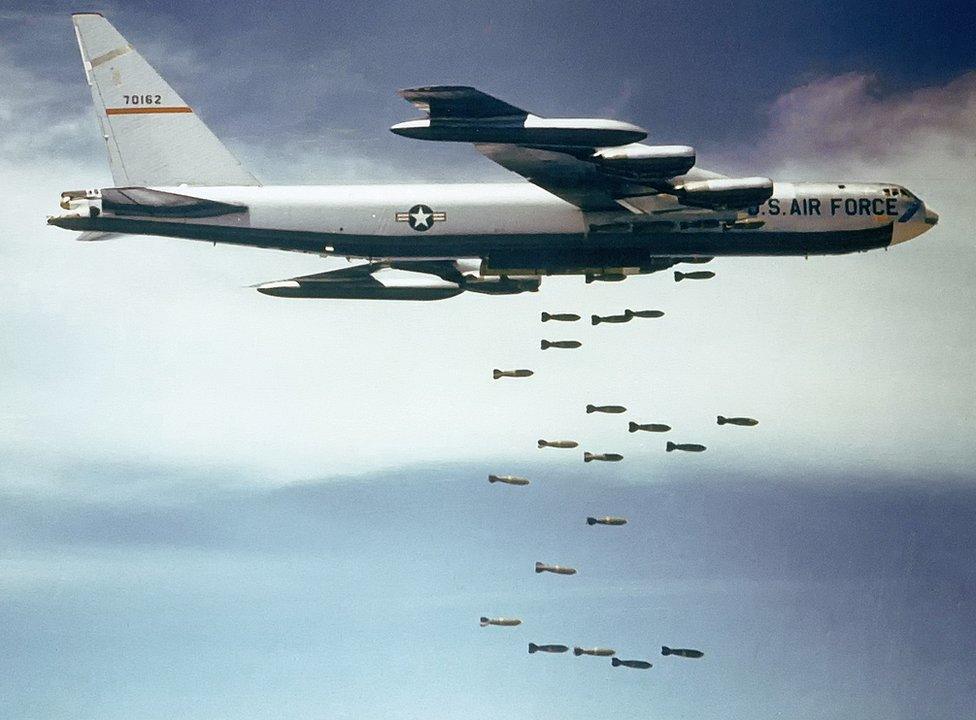
American defense officials said the strikes were the result of extensive planning and intelligence gathering. Multiple aircraft and long-range precision weapons were reportedly used during the mission, which unfolded over approximately two hours.
The Pentagon has not disclosed the exact number of aircraft involved or the types of weapons used, but officials characterized the strikes as one of the largest direct military responses against Iranian targets in recent months.
Trump Administration Sends a Clear Message
Following the operation, U.S. officials emphasized that the strikes were intended as a defensive response rather than the beginning of a broader military campaign.
President Trump reiterated that the United States would continue to protect its personnel wherever they are deployed and warned that any future attacks on American forces would receive a similarly decisive response.
The administration maintains that demonstrating military strength is essential to preventing additional attacks by Iran or groups aligned with Tehran.
Iran Faces a Difficult Choice
Iranian authorities have acknowledged explosions in several areas but have yet to release a full assessment of the damage. State media has provided limited details, while the IRGC is expected to evaluate the impact of the strikes before announcing its next steps.
Iranian officials have condemned the U.S. operation and vowed that the country will respond to what it describes as aggression against its sovereignty. However, analysts say Tehran must now decide whether to retaliate directly, rely on allied groups across the region, or pursue diplomatic channels to avoid a wider conflict.
Tensions Across the Middle East Continue to Rise
The latest exchange has placed the entire Middle East on heightened alert.
American military bases across the region have increased their security posture, while neighboring countries are closely monitoring developments. Jordan has continued intercepting missiles and drones passing through its airspace, highlighting growing concerns that the conflict could spread beyond Iran and the United States.
Regional governments are also watching the Strait of Hormuz, one of the world’s most important maritime trade routes. Any disruption in the area could have significant consequences for global oil supplies and international shipping.
Global Markets Watching Closely
Financial markets and energy traders are closely following the unfolding situation. A prolonged military confrontation between Washington and Tehran could drive oil prices higher, disrupt global supply chains, and create further uncertainty for the world economy.
Diplomatic efforts by regional and international powers are expected to intensify in an attempt to prevent additional military escalation, though prospects for immediate de-escalation remain uncertain.
What Happens Next?
As of July 30, 2026, U.S. forces remain on heightened alert throughout the Middle East, while Iran has signaled that it will respond to the latest strikes. The coming days will be crucial in determining whether the confrontation remains a limited exchange of military action or develops into a broader regional conflict.
For now, Washington insists the operation was a direct response to an attempted attack on its troops rather than the start of a wider war. However, with both sides exchanging threats and military activity increasing across the region, the risk of further escalation remains high. The next move by Tehran could shape the course of one of the most serious U.S.-Iran confrontations in recent years.