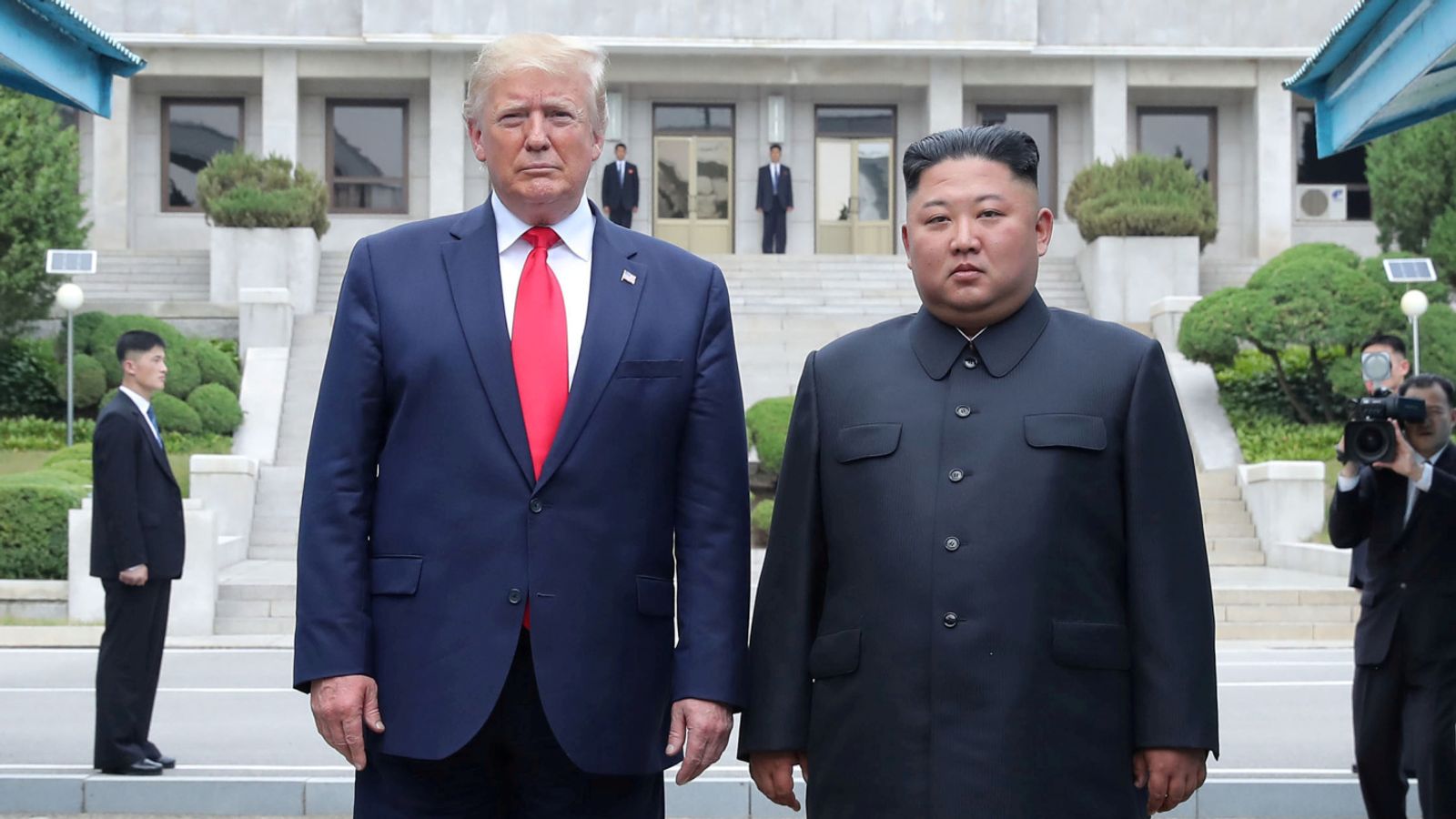
Trump Balances Alliance Commitments with Renewed North Korea Outreach- President Donald Trump has once again placed the Korean Peninsula at the center of U.S. foreign policy after announcing that Washington will substantially reduce joint military exercises with South Korea. The decision reflects Trump’s long-standing belief that diplomacy with North Korean leader Kim Jong Un can be more effective than military pressure, even as critics argue that such a move could weaken deterrence in one of the world’s most volatile regions.
The announcement came just as the annual Ulchi Freedom Shield exercises were set to begin. These drills have long been viewed as a cornerstone of the U.S.-South Korea alliance, designed to improve military coordination and prepare both nations for potential threats from North Korea. While Trump stopped short of canceling the exercises entirely, he instructed the Pentagon to scale them back, calling them expensive and unnecessarily hostile toward Pyongyang.
Trump justified the move by highlighting his “very good relationship” with Kim Jong Un. During both his first and second terms, Trump has emphasized personal diplomacy with the North Korean leader, arguing that direct engagement lowers the risk of conflict. His administration believes reducing the scale of military exercises could help create an environment more favorable for future negotiations over North Korea’s nuclear weapons program.
However, the decision has raised difficult questions about the balance between diplomacy and deterrence. For decades, joint military exercises have demonstrated the strength of the U.S.-South Korea security partnership. The drills reassure allies, improve operational readiness, and send a clear signal that any military aggression from North Korea would face a coordinated response. Security experts warn that reducing these exercises could be interpreted by Pyongyang as a weakening of allied resolve.
The timing is particularly significant. North Korea has continued advancing its missile and nuclear capabilities while strengthening military cooperation with Russia. Western officials believe Pyongyang has supplied weapons and troops to support Moscow’s war efforts in Ukraine, giving North Korean forces valuable battlefield experience and access to modern military tactics. These developments have increased concerns among defense planners in both Washington and Seoul.
Despite Trump’s directive, South Korean officials have indicated that the exercises will proceed largely as scheduled, although the final scope may be adjusted depending on Pentagon guidance. Seoul has consistently maintained that the exercises are defensive in nature and are essential for maintaining readiness against potential North Korean aggression.
The move also reflects Trump’s broader foreign policy philosophy. Throughout his political career, he has often questioned the cost of America’s overseas military commitments and encouraged allies to assume greater responsibility for their own defense. His administration has repeatedly sought to reduce U.S. military spending abroad while using diplomacy and economic leverage to pursue strategic objectives.
At the same time, Trump appears eager to reopen dialogue with Kim Jong Un after years of stalled negotiations. Earlier summit meetings between the two leaders produced historic images but failed to achieve lasting progress on denuclearization. Even so, Trump continues to argue that maintaining open communication reduces the chances of military confrontation and creates opportunities for future agreements.
The decision is likely to generate mixed reactions across the Indo-Pacific. Japan and other regional partners closely monitor changes in the U.S.-South Korea alliance because they influence the broader security architecture in Northeast Asia. Any perception that Washington is reducing its military commitment could encourage adversaries to test regional stability, while supporters of diplomacy argue that lowering military tensions may create space for renewed negotiations.
Ultimately, Trump’s latest policy illustrates the complex challenge of balancing alliance obligations with diplomatic outreach. His administration believes that reducing military exercises could strengthen the prospects for engagement with North Korea without abandoning America’s commitment to South Korea. Whether that calculation succeeds will depend largely on Pyongyang’s response and whether diplomatic momentum can produce meaningful progress where previous efforts fell short.
For now, the Korean Peninsula remains one of the world’s most strategically sensitive regions. Trump’s decision marks another chapter in Washington’s evolving approach—one that seeks to preserve its alliance with Seoul while leaving the door open for renewed diplomacy with one of its most challenging adversaries. Only time will reveal whether this strategy leads to greater regional stability or introduces new uncertainties into the Indo-Pacific security landscape.