
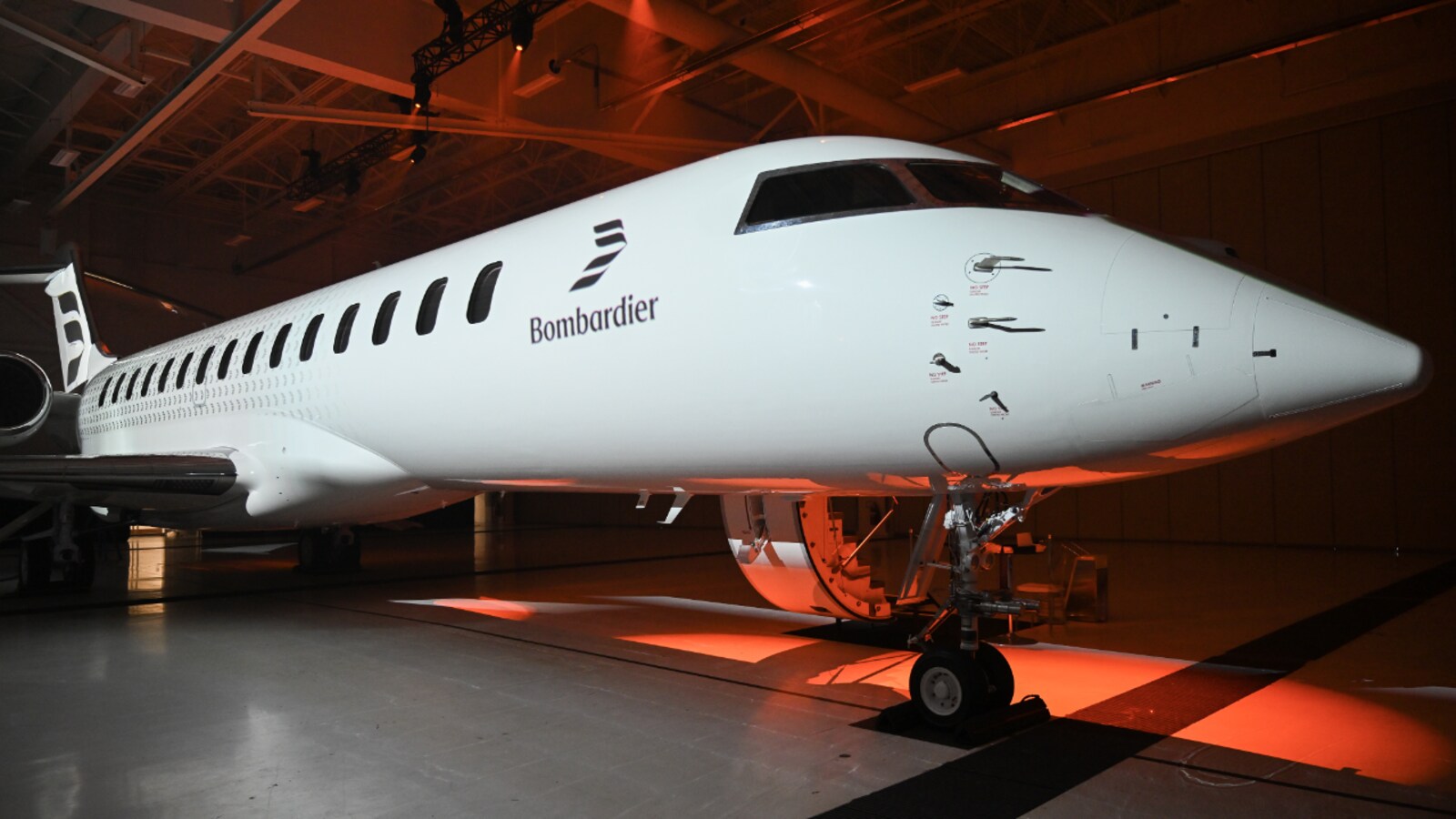
Trump Softens Stance on Bombardier, Easing Fears of U.S. Sales Ban –U.S. President Donald Trump has softened his stance toward Canadian aircraft manufacturer Bombardier, stepping back from an earlier threat to block the company from selling its planes in the United States. The shift has offered some relief to the aerospace industry, which had been facing growing uncertainty amid escalating trade tensions, higher tariffs and increasingly strained relations between Washington and Ottawa.
“I’m going to be helping a certain air company get themselves straightened away,” Trump told the audience, signalling a more conciliatory approach toward the manufacturer. The comments marked a notable departure from his earlier threat to restrict Bombardier aircraft sales in the American market.
The president’s latest statements have eased immediate concerns across the aerospace sector, where businesses had been watching the dispute closely. A prolonged confrontation involving one of the world’s prominent business jet manufacturers could have affected aircraft deliveries, disrupted supply chains and complicated commercial relationships between companies operating on both sides of the border.
Bombardier has a substantial presence in the United States, including facilities and employment operations that contribute to the country’s aerospace manufacturing ecosystem. The company employs approximately 1,500 workers in the Wichita area, making it an important participant in a region closely associated with aircraft production and aviation services.
Wichita has long been recognised as a major centre for American aviation manufacturing, with a workforce and industrial network supporting aircraft assembly, engineering, maintenance and related activities. Trump’s decision to address Bombardier’s situation while speaking in the area brought additional attention to the local economic interests potentially affected by the dispute.
His remarks also highlighted the complicated relationship between trade policy and domestic employment. Although Bombardier is headquartered in Montreal, its American operations provide jobs and support businesses that form part of the wider U.S. aerospace industry. Restrictions targeting the company could therefore have consequences extending beyond Canada.
The controversy developed against the backdrop of a broader trade dispute between the two neighbouring countries. Tariffs and retaliatory measures have increased pressure on businesses operating across the border, raising concerns about production costs, investment decisions and the stability of established commercial partnerships.
The aerospace sector is particularly exposed to such uncertainty because aircraft manufacturing depends on specialised components, international suppliers and long-term customer relationships. Manufacturers often make substantial investments years before an aircraft is delivered, meaning sudden changes in trade rules can complicate planning and affect the economics of existing contracts.
For companies such as Bombardier, access to the American market is especially significant. The United States represents an important market for business aviation, with demand from corporations, private operators and other customers supporting sales of high-value aircraft. Any attempt to restrict those sales could create challenges for the manufacturer while also affecting customers seeking aircraft and related services.
Trump’s comments suggest that he is reconsidering the implications of treating Bombardier exclusively as a foreign competitor. The company’s operations in Kansas provide a visible example of how international manufacturers can become closely integrated into local economies through employment, investment and industrial partnerships.
However, his remarks do not necessarily mean that all trade-related concerns have been resolved. The president’s earlier threat and subsequent change in tone illustrate how quickly policy signals can shift during a trade dispute. Businesses may welcome the apparent retreat while remaining cautious about the possibility of further changes to tariffs or restrictions.
For aerospace companies, predictability is essential. Manufacturers must coordinate production schedules, secure components, manage large workforces and meet delivery commitments to customers. Uncertainty surrounding market access can make these responsibilities more difficult, particularly when decisions made by governments affect the cost and availability of goods moving across international borders.
Bombardier‘s position also reflects a wider challenge facing multinational manufacturers: balancing their national identity with the international nature of their operations. While the company remains headquartered in Canada, its workforce, suppliers and commercial relationships extend across multiple markets. This interconnected structure means that trade restrictions aimed at one country can also affect workers and businesses elsewhere.
Trump’s latest comments have consequently provided a measure of reassurance to an industry that had been concerned about the potential consequences of a deeper confrontation. His willingness to discuss helping Bombardier suggests that local employment and economic considerations may influence how the dispute develops.
For now, the immediate threat of a ban appears to have receded, giving the aerospace sector some breathing room after weeks of heightened tensions. Whether that relief develops into a more durable improvement in trade relations will depend on the administration’s subsequent decisions and the direction of negotiations between the United States and Canada.
The episode serves as a reminder that trade disputes can have consequences far beyond the countries directly involved, affecting workers, manufacturers, suppliers and customers throughout interconnected industries. For Bombardier and the wider aerospace sector, Trump’s shift in tone offers a welcome pause, but lasting certainty will require greater clarity on the future of cross-border trade policy.

