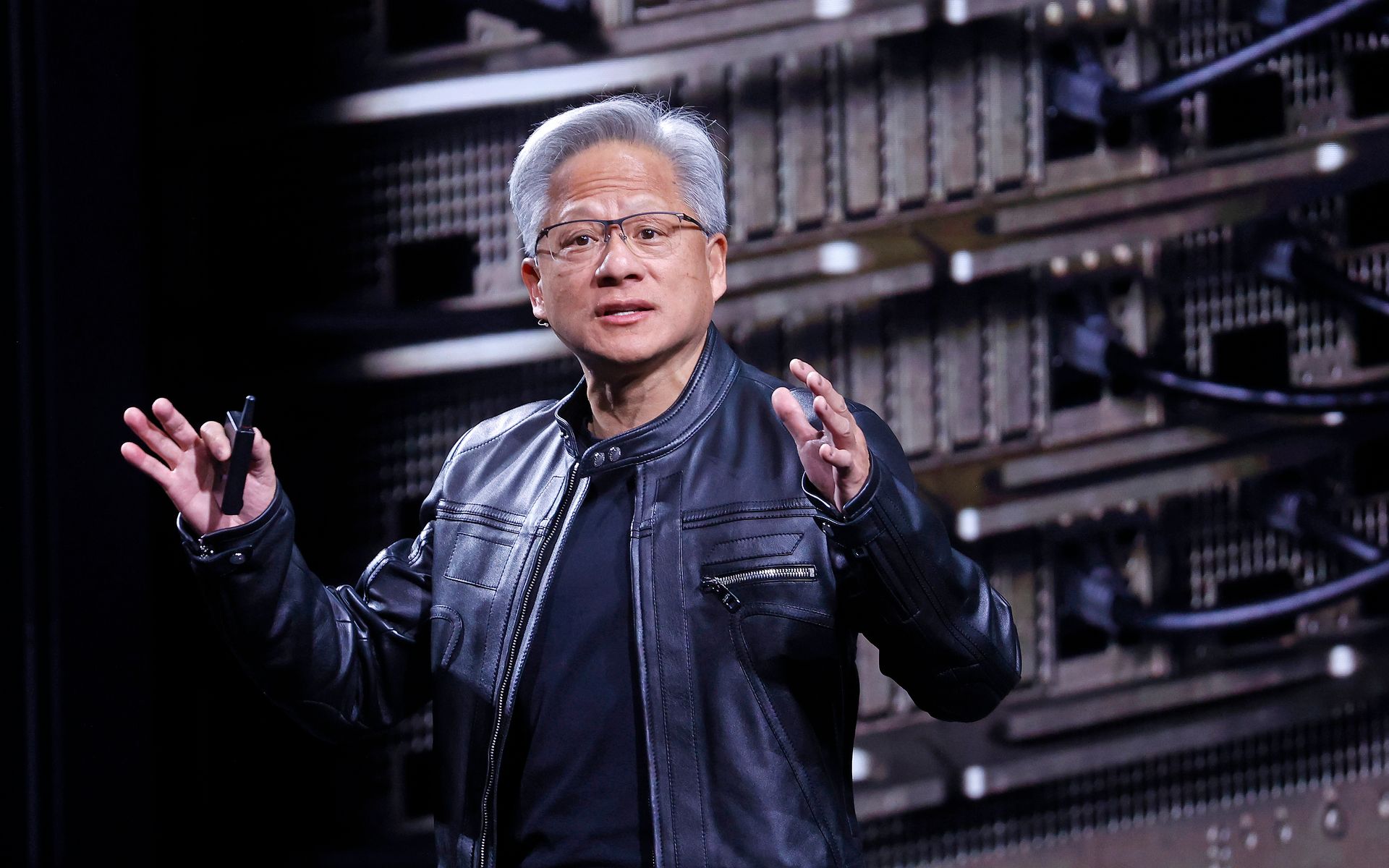
The controversy has attracted considerable attention across the technology industry, not least because Nvidia occupies a central position in the global artificial intelligence revolution. Under Huang’s leadership, the company transformed itself from a graphics chip manufacturer into one of the most influential suppliers of AI computing technology.
Now, with the company’s leadership transition under scrutiny, supporters are questioning whether Nvidia can maintain its momentum without the executive who helped build its position in the AI economy.
Musk’s intervention has added another dimension to the controversy, turning an internal corporate leadership issue into a much wider debate about Nvidia’s future and the direction of the global AI industry.
Why Is Elon Musk Supporting Jensen Huang’s Return?
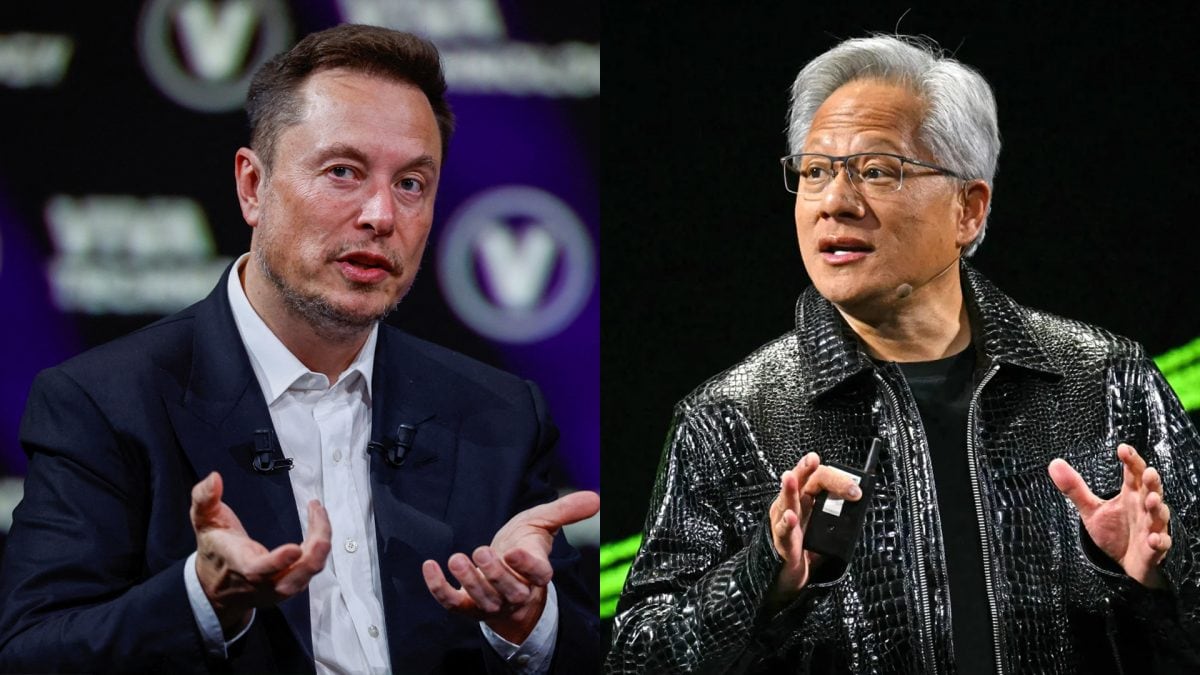
Musk made his position clear in a post on X, where he confirmed that he intended to support an online petition calling for Huang’s reinstatement.
“A petition is underway to reinstate Jensen and I’m signing it too,” Musk wrote.
The campaign, hosted on a volunteer-run website called Stand with Jensen, is asking Nvidia’s board to reconsider its decision while an independent investigation examines the circumstances surrounding Huang’s departure.
According to a report by Wired, the open letter had attracted more than 43,000 signatures. The website also displayed supporters identifying themselves as Nvidia employees, former employees and shareholders.
Its counter listed 2,980 current Nvidia employees, 454 former employees and 24,097 shareholders among those who had signed. However, these affiliations are self-reported and have not been independently verified.
The campaign has also clarified that it is not officially endorsed by Nvidia or Huang.
Musk’s involvement is particularly notable because of his own position in the artificial intelligence industry. Through Tesla, SpaceX and his AI company xAI, he has significant interests in the development of advanced computing infrastructure.
Nvidia’s processors are an important component of the infrastructure used to train and operate sophisticated AI systems.
Musk’s support therefore brings attention to a broader industry concern: whether a sudden leadership change at Nvidia could affect the companies and businesses that depend on its technology.
Are Nvidia Employees Also Calling for Huang’s Return?
The campaign appears to have attracted interest beyond Musk and other external supporters.
According to Wired, which cited internal correspondence, some Nvidia employees have also expressed a desire to have their views considered before the board makes a final decision on the company’s leadership.
A message reportedly posted by a long-serving Nvidia engineer attracted more than 1,600 comments, with employees discussing possible ways to encourage Huang’s return.
The reported internal reaction is significant because Nvidia has approximately 42,000 employees worldwide.
However, online discussions and petition signatures should not automatically be interpreted as representing the views of the company’s entire workforce.
Nvidia has not publicly commented on the reported employee campaign or Musk’s announcement.
The board must now navigate a sensitive situation involving corporate governance, executive succession and the company’s public image.
The central question is whether Nvidia’s next chief executive can maintain the confidence of employees, investors and technology partners while continuing the company’s expansion in the AI market.
What Led to Jensen Huang’s Departure?
Huang’s reported departure has attracted attention because of allegations involving his personal relationships.
Media reports have linked the leadership controversy to allegations of extramarital affairs, including claims involving a woman suspected of having connections to Chinese intelligence.
Huang, who has been married to his wife Lori for more than four decades, reportedly acknowledged an affair on Sunday.
Reports identified the woman as Alice Huang, a former senior executive at Singapore-based data centre company Megaspeed.
The allegations have added a sensitive dimension to the leadership transition, particularly because of the reported intelligence-related concerns.
However, it is important to distinguish between allegations, media reporting and independently established facts. The claims surrounding the alleged relationship and its connection to Huang’s departure have not been conclusively established through an independent investigation.
The circumstances have nevertheless prompted questions about how Nvidia’s board evaluated the situation and what factors influenced the reported leadership change.
For a company with Nvidia’s international reach, the issue extends beyond executive succession. It also touches on corporate governance, investor confidence and potential reputational risks.
Who Could Replace Jensen Huang at Nvidia?
With Huang’s future at the company uncertain, attention has shifted towards possible successors.
One name reportedly emerging in the discussions is Rene Haas, the chief executive of Arm Holdings.
According to the Financial Times, Nvidia’s board had approached Haas as part of its succession considerations. His experience in the semiconductor industry makes him a notable figure in discussions about the company’s future leadership.
However, there is no confirmation that Haas will receive an offer or accept the position.
Nvidia’s board has also attempted to discourage speculation about individual candidates.
In a statement, the board said it was still in the process of selecting an executive search firm to assist with the appointment of a new chief executive.
It added that speculation surrounding potential internal or external candidates was premature.
This suggests that the succession process remains at an early stage, with the board yet to announce a final decision.
The appointment will be closely watched by investors because Nvidia’s next leader will inherit a company operating at the centre of one of the world’s fastest-growing technology sectors.
Finding a successor will involve more than identifying someone with semiconductor experience. The next chief executive will also have to manage Nvidia’s relationships with major technology companies, governments, investors and an expanding network of AI businesses.
Why Is Jensen Huang So Important to the AI Industry?
Huang’s significance extends far beyond his position as Nvidia’s chief executive.
During his leadership, Nvidia became a critical supplier of the computing power required to develop and operate modern artificial intelligence systems.
Its graphics processing units, or GPUs, are widely used to train large AI models, operate data centres and support increasingly sophisticated computing applications.
But Nvidia’s influence is not limited to hardware.
Its software ecosystem has become an important part of the AI development process, helping researchers, developers and businesses build applications using the company’s computing platforms.
This combination of hardware and software has helped Nvidia establish a substantial position in the global AI supply chain.
Huang has also played a role in financing and supporting companies across the wider AI ecosystem.
Nvidia has committed billions of dollars to investments involving startups, AI developers, data centre operators and cloud infrastructure businesses.
These investments have helped some companies expand their computing capacity and develop the infrastructure needed to support increasingly powerful AI models.
As a result, Nvidia has become more than a chip supplier. It has also emerged as a financial and strategic participant in the broader AI economy.
This wider influence is one reason why Huang’s reported departure has generated concern beyond Nvidia itself. The company is deeply connected to the businesses building the next generation of artificial intelligence.
Could Nvidia’s Leadership Crisis Affect the AI Boom?
The leadership controversy raises an important question: how dependent is the AI industry on Nvidia and the leadership that has guided its expansion?
Other semiconductor manufacturers are attempting to develop alternatives to Nvidia’s products. Major technology companies are also investing in their own AI chips to reduce dependence on external suppliers.
However, replacing Nvidia’s position involves more than producing competing processors.
Its established software ecosystem, developer relationships, manufacturing partnerships and extensive customer network create a broader competitive advantage.
The company’s financial involvement in the AI ecosystem adds another layer to the situation.
Nvidia has helped support businesses that rely on its technology to expand their operations. A leadership transition could therefore attract attention from investors and partners concerned about the company’s future investment strategy.
That does not necessarily mean Nvidia’s technological progress will slow down without Huang. The company has a large workforce, experienced executives and established operational structures.
Nevertheless, the next chief executive will face the challenge of maintaining strategic continuity while responding to intensifying competition.
Will Musk’s Campaign Change Nvidia’s Leadership Decision?
Musk’s decision to support the reinstatement campaign has ensured that the debate surrounding Huang’s departure will receive continued attention.
But the final decision rests with Nvidia’s board, which must consider corporate governance requirements, succession planning and the company’s long-term interests.
For shareholders, the immediate concerns include leadership stability, business continuity and Nvidia’s ability to maintain its position in the AI market.
For employees, the issue involves confidence in the company’s direction and the leadership structure that will guide its next phase of growth.
And for the wider technology industry, the situation highlights how closely the AI boom is connected to a relatively small number of powerful companies and their executives.
Huang’s possible return is now a subject of public campaigning, but whether the board will reconsider its position remains uncertain.
One thing is clear: Nvidia’s next leadership decision will be closely followed across the global technology industry. As competition in artificial intelligence intensifies, the company must demonstrate that its future does not depend on any single individual, even one as closely associated with its success as Jensen Huang.
The bigger question is no longer simply who will occupy Nvidia‘s corner office. It is whether the company can preserve the technology ecosystem, investor confidence and strategic direction that helped make it one of the most important players in the AI revolution.