Will the India AI Impact Summit 2026 Shape the Future of Global AI?
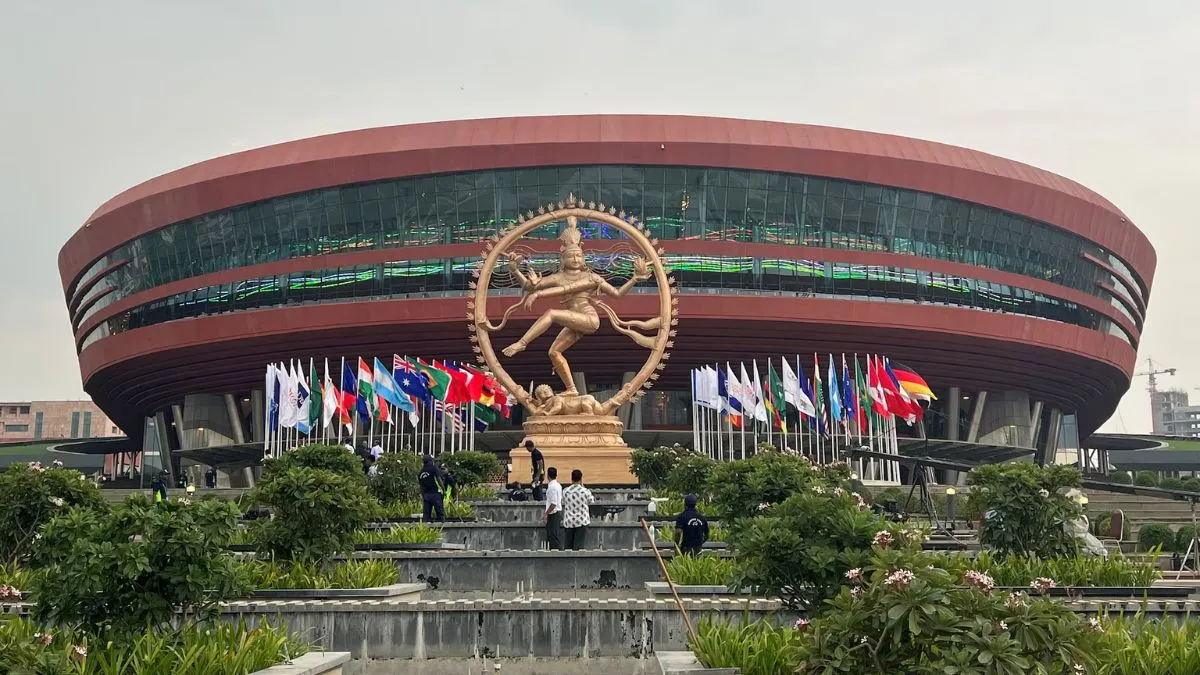
The India AI Impact Summit 2026, currently being held at Bharat Mandapam in New Delhi, is emerging as one of the most consequential technology gatherings of the decade. Widely referred to as the Global AI Summit New Delhi 2026, the five-day event has brought together policymakers, technology leaders, researchers, startups, and international delegations to deliberate on the future of artificial intelligence.
Inaugurated by Prime Minister Narendra Modi, the summit—also being described as the Narendra Modi AI Summit 2026—aims to create a structured and actionable global AI governance roadmap. At a time when artificial intelligence is reshaping industries and societies at unprecedented speed, this gathering positions India at the center of global AI policy discussions.
Why the Global AI Summit New Delhi 2026 Matters
Artificial intelligence is no longer a futuristic concept. It is now embedded in healthcare diagnostics, education platforms, agriculture technology, financial systems, cybersecurity, and governance models worldwide. As AI systems become more autonomous and data-driven, governments are increasingly concerned about regulation, ethics, accountability, and economic impact.
The Global AI Summit New Delhi 2026 arrives at a pivotal moment. Countries are struggling to strike the right balance between fostering innovation and enforcing regulation. Some nations have adopted strict AI laws, while others prioritize rapid technological growth. The absence of harmonized standards has created regulatory fragmentation.
By hosting this summit, India is attempting to bridge these divides and facilitate coordinated global dialogue.
AI Governance Summit India 2026: A Platform for Policy Consensus
Often described as the AI Governance Summit India 2026, the event’s primary objective is to move beyond discussion and toward alignment. Leaders are working to outline principles that can guide ethical AI development, cross-border data cooperation, workforce transition strategies, and child safety protections.
The idea of a shared global AI governance roadmap is central to these discussions. Such a roadmap would not impose uniform laws across countries but would establish common principles—transparency, fairness, accountability, safety, and inclusivity—that nations can adapt to their domestic contexts.
India’s approach reflects its broader diplomatic strategy: acting as a connector between developed economies and emerging markets. With over 2.5 lakh expected visitors, including international delegates, the summit demonstrates significant global interest in cooperative AI policymaking.
AI Impact Summit Bharat Mandapam: A Global Technology Showcase
The venue itself, Bharat Mandapam, has transformed into a hub of technological innovation. The AI Impact Summit Bharat Mandapam features participation from global technology firms, startups, academic institutions, research bodies, Union Ministries, state governments, and international organizations.
Thirteen country pavilions are showcasing AI advancements and collaborative initiatives, including representations from:
- Australia
- Japan
- Russia
- United Kingdom
- France
- Germany
- Italy
- Netherlands
- Switzerland
- Serbia
- Estonia
- Tajikistan
This broad international presence reinforces the summit’s global character and highlights the growing urgency of multilateral AI collaboration.
Narendra Modi AI Summit 2026: India’s Strategic Positioning
The Narendra Modi AI Summit 2026 underscores India’s ambition to play a leading role in shaping global technology governance. Over the past decade, India has built expansive digital public infrastructure and nurtured a dynamic startup ecosystem. These foundations provide a strong base for scaling AI applications across sectors.
Under the leadership of Narendra Modi, India has consistently emphasized technology-driven inclusive growth. The summit reflects this philosophy by focusing on equitable access to AI tools, multilingual AI development, and capacity-building for developing nations.
By convening diverse stakeholders—from Silicon Valley executives to policymakers from emerging economies—India is positioning itself as a mediator capable of aligning competing priorities.
Key Themes: Jobs, Safety, and Regulation
1. AI and Job Disruption
One of the most debated issues at the AI Governance Summit India 2026 is workforce transformation. Automation and generative AI tools are reshaping manufacturing, service industries, media, and administrative roles. While AI can increase productivity and create new career pathways, it also threatens existing employment structures.
The summit emphasizes reskilling initiatives, digital literacy expansion, and international cooperation to manage workforce transitions responsibly.
2. Child Safety and Ethical AI
As AI-driven platforms increasingly influence education and social interaction, concerns about child safety, misinformation, and digital manipulation have intensified. Leaders are discussing safeguards, age-appropriate AI design standards, and international coordination to protect vulnerable users.
Embedding these protections into a broader global AI governance roadmap could become one of the summit’s most meaningful outcomes.
3. Innovation vs Regulation
Balancing rapid technological advancement with ethical oversight remains a core challenge. Overregulation could stifle innovation, while weak governance risks societal harm. The summit seeks to establish flexible, principle-based frameworks rather than rigid global mandates.
Can the Global AI Governance Roadmap Deliver Real Change?
The success of the Global AI Summit New Delhi 2026 will depend not only on declarations but also on sustained cooperation after the event concludes. History shows that global summits often produce ambitious statements, yet implementation can lag.
However, the scale and diversity of participation suggest this summit may carry lasting influence. By emphasizing collaboration rather than competition, India is advocating for collective stewardship of AI technologies.
If nations align around a practical and adaptable global AI governance roadmap, the India AI Impact Summit 2026 could mark a turning point in technology governance history.
In Summary
The India AI Impact Summit 2026, also recognized as the AI Governance Summit India 2026 and the Global AI Summit New Delhi 2026, represents more than a high-profile gathering at Bharat Mandapam. It is a strategic attempt to shape the norms, ethics, and policies that will govern artificial intelligence worldwide.
With strong international participation, leadership from Narendra Modi, and focused discussions on regulation, job transformation, and child safety, the summit has the potential to influence global AI discourse for years to come.
Whether it ultimately reshapes the global AI order will depend on follow-through, partnerships, and policy action. But one thing is clear: India has firmly positioned itself at the center of the global conversation on artificial intelligence governance.
Google Releases Android 17 Beta 1, Focuses on APIs and Performance | Maya