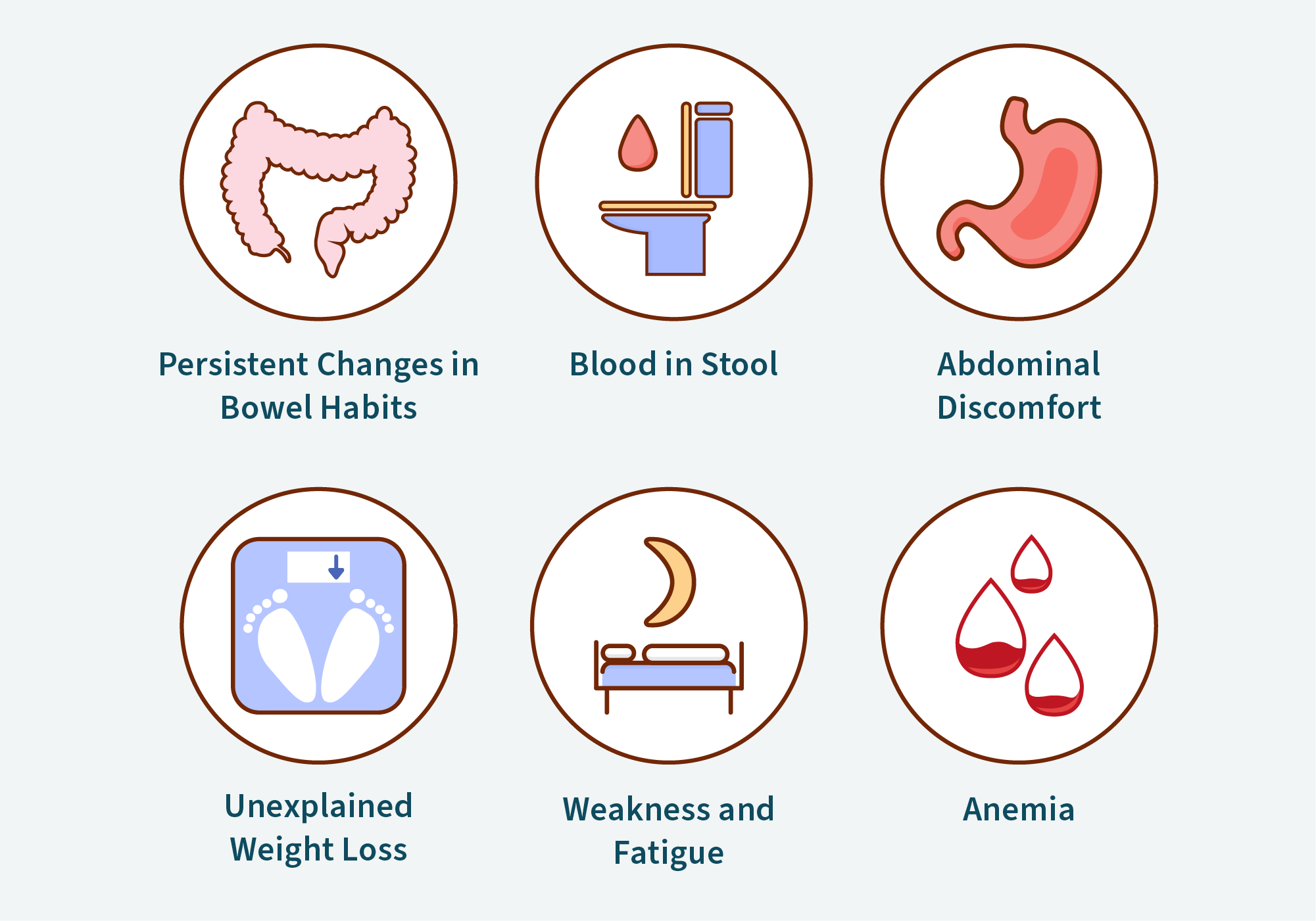
7 Early Warning Signs of Colon Cancer Often Mistaken for Digestive Issues; Most of us have had a stomach that wouldn’t behave. A few days of constipation after travel, cramping after a heavy meal, a bout of diarrhea that clears up on its own. Because digestive complaints are so common, we’ve learned to shrug them off.
That habit can be risky when it comes to colorectal cancer. Early colon cancer often produces no symptoms at all, and when it does, the signs tend to look like everyday gut trouble: irritable bowel syndrome, hemorrhoids, food intolerance, stress, or a poor diet. People wait it out, self-treat, or assume it’s nothing.
The stakes of waiting are high. When colorectal cancer is caught while still confined to the colon or rectum, the five-year survival rate is roughly 90%. Once it has spread to distant organs, that figure drops sharply. Doctors are also seeing more cases in adults under 50, an age group that rarely suspects cancer when symptoms appear.
This article covers seven early warning signs that are easy to dismiss as ordinary digestive problems, and how to tell when it’s time to call a doctor. It is general information, not a diagnosis. Having any of these symptoms does not mean you have cancer, since most of the time the cause is something benign.
1. A Change in Bowel Habits That Doesn’t Go Away
Everyone’s “normal” is different. Some people go three times a day, others every other day. What matters is a change from your normal that persists.
Examples include diarrhea that lingers for weeks, new constipation that doesn’t respond to fiber and water, or alternating between the two. You might also notice stools that are consistently looser or harder than usual, or that your routine timing has shifted.
Why it’s mistaken for something else: Changes in bowel habits are classic features of irritable bowel syndrome, food sensitivities, medication side effects, and stress. A tumor can partly obstruct the colon or irritate its lining, producing the same pattern.
The rule of thumb: A change that lasts more than two to three weeks without a clear explanation, such as a new medication, illness, or major diet change, deserves a medical conversation. Short-lived upsets are normal. Persistent ones are worth investigating.
2. Blood in or on the Stool
Seeing blood is alarming, and it’s one of the most important symptoms to take seriously. It may appear as bright red streaks on toilet paper, red blood in the toilet bowl, or blood mixed into the stool.
Why it’s mistaken for something else: Hemorrhoids and small anal tears (fissures) are very common causes of rectal bleeding, so most people, and sometimes even clinicians glancing at a story, assume that’s the explanation. Often it is. But hemorrhoids and cancer can coexist, and assuming the bleeding is “just piles” can delay a diagnosis, particularly in younger adults.
What to know: Bright red blood usually suggests bleeding closer to the rectum or anus, while darker blood suggests bleeding higher up. Neither can be reliably judged at home. Any rectal bleeding that is recurrent, unexplained, or not clearly tied to a known hemorrhoid problem should be checked. Heavy bleeding, or bleeding with dizziness or weakness, needs urgent care.
3. Dark, Tarry, or Unusually Colored Stools
Not all bleeding is visible as red. Blood that originates higher in the digestive tract, or deeper in the right side of the colon, is partially digested on its way out. It can turn stool dark brown, nearly black, or tar-like and sticky, often with a distinctive strong odor.
Why it’s mistaken for something else: Several harmless things darken stool, including iron supplements, bismuth-containing medicines such as Pepto-Bismol, and some foods like blueberries or black licorice. People reasonably blame those.
How to sort it out: If you can identify a clear dietary or supplement cause and the color returns to normal when you stop, there’s likely no concern. If stools are black and tarry without an obvious reason, or the change persists, get evaluated. Tumors on the right side of the colon can bleed slowly and invisibly for a long time, which brings us to the next sign.
4. Persistent Abdominal Discomfort, Cramping, or Bloating
Occasional gas and cramps are part of life. But ongoing abdominal symptoms, such as repeated cramping, a feeling of fullness, bloating that doesn’t ease, or a vague ache in the belly, can signal that something is narrowing or irritating the colon.
Why it’s mistaken for something else: Bloating and cramps are textbook symptoms of IBS, lactose intolerance, gluten sensitivity, indigestion, and constipation. Most people with these symptoms don’t have cancer, which is exactly why the pattern gets ignored.
What raises the concern: Pay attention to symptoms that are new for you, that keep recurring over weeks, that don’t follow a clear food trigger, or that come with other signs on this list. Pain that worsens, or is accompanied by vomiting and inability to pass gas or stool, can indicate a blockage and needs emergency care.
5. Narrow Stools or a Feeling That You Haven’t Finished
Two related symptoms belong together here. The first is stools that are persistently thinner than usual, sometimes described as pencil-like or ribbon-like. The second is the sensation that your bowels haven’t fully emptied after a bowel movement, or an urgent need to go with little or nothing to pass.
Why it’s mistaken for something else: Occasional narrow stools can result from simple dietary changes or temporary constipation, and a sense of incomplete emptying is common with hemorrhoids, IBS, and pelvic floor problems.
Why it matters: A growth in the lower colon or rectum can physically narrow the passage or press on the rectal wall, creating exactly these sensations. One thin stool means little. A lasting change in stool shape, especially with a persistent feeling of incomplete evacuation, is worth mentioning to your doctor.
6. Unexplained Fatigue and Weakness
Not every sign of colon cancer shows up in the bathroom. Tumors, particularly those on the right side of the colon, can bleed in tiny amounts over weeks or months. You won’t see it, but the slow blood loss can lead to iron-deficiency anemia.
Anemia often shows up as tiredness that doesn’t improve with rest, weakness, shortness of breath on mild exertion, pale skin, dizziness, or a racing heartbeat.
Why it’s mistaken for something else: Fatigue is among the most common complaints in modern life, and it’s easy to blame work, poor sleep, stress, parenting, or aging. It rarely makes anyone think of the colon.
The key clue: Iron-deficiency anemia in an adult, especially a man or a postmenopausal woman, should prompt a search for a source of bleeding in the digestive tract. If a blood test shows low iron or hemoglobin, ask your doctor whether colon evaluation is appropriate rather than just treating it with supplements.
7. Unexplained Weight Loss and Loss of Appetite
Losing weight when you’re trying to is welcome news. Losing weight when you’re not trying is a signal worth respecting. Unintentional loss of a noticeable amount of weight over a few months, particularly with reduced appetite or feeling full quickly, can be a sign of many conditions, including cancer.
Why it’s mistaken for something else: People often attribute it to stress, a busy schedule, a recent illness, or their diet. Sometimes the weight loss is even celebrated.
When to act: As a general guideline, losing around 5% or more of your body weight over six months to a year without trying warrants a medical check. This symptom tends to appear in more advanced disease, which is another reason not to wait for it before getting evaluated.
How to Tell Normal Digestive Trouble From a Red Flag
It helps to think in terms of patterns instead of single episodes. Consider seeing a doctor if you notice any of the following:
- Duration: Symptoms that last more than a few weeks without explanation
- Progression: Symptoms that are gradually getting worse
- Combination: Two or more of the signs above appearing together
- Blood: Any rectal bleeding or black stools without a clear cause
- Systemic changes: Fatigue, anemia, or weight loss alongside digestive symptoms
- Risk factors: A family history of colorectal cancer or polyps, inflammatory bowel disease, or a personal history of polyps
Who Is at Higher Risk?
Colorectal cancer can affect anyone, but certain factors raise the odds:
- Age: Risk rises with age, though rates in younger adults are increasing.
- Family history: Having a close relative with colorectal cancer, especially at a younger age, raises your risk. Inherited conditions such as Lynch syndrome carry a particularly high risk.
- Inflammatory bowel disease: Long-standing ulcerative colitis or Crohn’s disease of the colon.
- Lifestyle factors: Diets high in red and processed meat, low fiber intake, obesity, physical inactivity, heavy alcohol use, and smoking.
- Type 2 diabetes is also associated with higher risk.
Having risk factors doesn’t mean you’ll get cancer, and having none doesn’t make you immune. It simply means symptoms deserve a lower threshold for investigation.
Screening: Catching It Before Symptoms Appear
The best way to beat colon cancer is to find it, or the polyps that can become it, before symptoms ever start. Most colon cancers develop slowly from polyps over many years, which gives screening a real chance to prevent cancer entirely, not just detect it.
Many health organizations, including the American Cancer Society and the U.S. Preventive Services Task Force, now recommend that people at average risk begin screening at age 45. Options include:
- Colonoscopy: Allows the doctor to view the entire colon and remove polyps during the same procedure. Typically repeated every 10 years if results are normal.
- Stool-based tests: Such as the fecal immunochemical test (FIT), which is done at home and repeated yearly, or multi-target stool DNA tests, done less often.
- Flexible sigmoidoscopy or CT colonography: Alternative imaging and scope-based options.
If you have a family history or other risk factors, your doctor may recommend starting earlier or screening more often. Importantly, screening tests are for people without symptoms. If you already have symptoms, you generally need a diagnostic evaluation, usually a colonoscopy, rather than a home stool test.
What to Expect When You See a Doctor
Many people delay care out of embarrassment or fear. It helps to know what the process usually looks like.
Your doctor will likely ask about your symptoms, how long they’ve lasted, your diet, medications, and family history. They may perform a physical exam, order blood tests to check for anemia, and recommend a stool test or colonoscopy. A colonoscopy is done under sedation, and while the bowel preparation beforehand is unpleasant, the procedure itself is generally well tolerated.
Most of the time, the results are reassuring and point to something treatable like hemorrhoids, IBS, or diverticular disease. And if it is cancer, finding it early dramatically improves the outcome and often means less intensive treatment.
Practical Steps You Can Take Today
- Track your symptoms. Note what changed, when it began, and how often it happens. A simple log makes your doctor’s visit far more productive.
- Don’t self-diagnose. Don’t assume hemorrhoids, IBS, or stress is the answer without confirmation, especially if symptoms persist.
- Know your family history. Ask relatives about colon cancer or polyps, and share what you learn with your doctor.
- Schedule screening if you’re due. If you’re 45 or older and haven’t been screened, make the appointment.
- Support your colon health. Eat more fiber-rich foods, limit processed and red meat, stay physically active, maintain a healthy weight, limit alcohol, and avoid smoking. Are Designer Babies Becoming Real? The Truth About CRISPR | Maya
End Note
Colon cancer doesn’t always announce itself dramatically. Its early signs often look like the digestive problems we all experience: a change in bowel habits, a little blood, some cramping, feeling tired, losing a few pounds. What sets the warning signs apart is persistence, progression, and unexplained patterns.
The goal isn’t to panic over every upset stomach. It’s to stop automatically dismissing symptoms that don’t resolve. If something about your digestion has changed and stayed changed, a short conversation with your doctor can bring either peace of mind or a diagnosis early enough to make a real difference.
This article is for general educational purposes and is not a substitute for professional medical advice, diagnosis, or treatment. If you’re concerned about your symptoms, consult a qualified healthcare provider.