LPG vs CNG vs PNG: The Real Difference Explained Simply- When people talk about fuel for cooking or vehicles, three names often come up — LPG, CNG, and PNG. They are everywhere around us, yet most people don’t fully understand how different they actually are. At a basic level, all three are used as energy sources, but the way they are produced, stored, and delivered makes a huge difference in how we use them in daily life.
Let’s break it down in the simplest way possible.
The Core Difference: Source and Form
The biggest distinction starts with where these fuels come from.
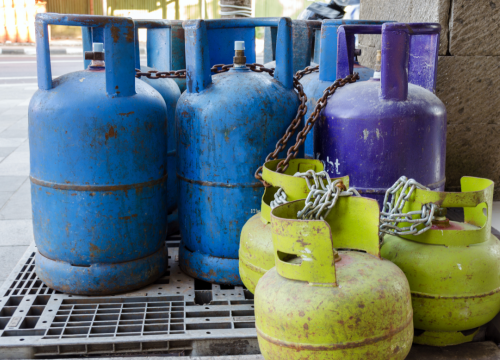
LPG, or Liquefied Petroleum Gas, is closely tied to crude oil. It is produced during oil refining and contains gases like propane and butane. What makes LPG unique is that it is converted into liquid form for storage, which is why it fits neatly inside cylinders that we use in kitchens.
CNG and PNG, on the other hand, come from natural gas reserves deep underground. Both are mostly methane, but the way they are handled is what separates them.
CNG (Compressed Natural Gas) is stored by compressing the gas at extremely high pressure. PNG (Piped Natural Gas) skips storage altogether and is delivered directly through pipelines.
So in simple terms:
LPG is liquid in a cylinder
CNG is gas under pressure in a tank
PNG is gas flowing through pipes
How They Reach You
Another major difference lies in how these fuels are delivered.
LPG works on a refill system. You book a cylinder, it gets delivered, and once it’s empty, you replace it. This model works well even in remote areas where pipelines don’t exist.
CNG requires you to go to a filling station, just like petrol. Vehicles fitted with CNG kits can refill there. This limits its use mostly to cities where such infrastructure is available.
PNG is the most seamless of all. It comes directly to your home through pipelines, much like water supply. There’s no booking, no waiting, and no storage involved. It’s always available.
Everyday Uses That Define Them
Each fuel has found its own space in everyday life.
LPG is still the backbone of household cooking, especially in places where pipeline networks are not developed. Its portability makes it extremely practical.
CNG has carved out its role in transportation. It is widely used in cars, buses, and auto-rickshaws because it is cheaper and burns cleaner than petrol or diesel.
PNG is becoming the preferred option in urban homes and businesses. Restaurants, hospitals, and apartments benefit from its uninterrupted supply and ease of use.
Safety and Practical Concerns
Safety is often a deciding factor when choosing between these fuels.
LPG is heavier than air. If it leaks, it tends to settle near the ground, which can increase the risk if not handled properly.
CNG and PNG are lighter than air. In case of leakage, they disperse quickly into the atmosphere, reducing the chances of accumulation.
However, CNG involves high-pressure storage, which requires strong and well-maintained tanks, especially in vehicles. PNG, operating at lower pressure, is generally considered safer in domestic settings.
Global Supply: Who Controls These Fuels?
The supply of these fuels is heavily influenced by global energy markets.
LPG production is dominated by countries with strong oil industries. The United States, Saudi Arabia, and Qatar are among the top exporters. The rise of shale energy in the U.S. has significantly boosted its presence in this segment.
Natural gas, which powers both CNG and PNG, has a different set of global players. Countries like the United States, Russia, Qatar, and Australia lead in exporting natural gas, often in liquefied form to make transportation easier across continents.
These global dynamics directly impact fuel prices and availability in countries like India, which rely heavily on imports.
Where Petrol Stands Today
Petrol remains one of the most widely used fuels, especially in personal vehicles. It is refined from crude oil and is known for its high energy output and ease of use.
But petrol comes with trade-offs. It is more expensive than CNG and contributes significantly to air pollution. As cities struggle with rising pollution levels, cleaner alternatives are gaining attention.
CNG has already started replacing petrol in public transport in many cities, while electric vehicles are emerging as the next big shift. Still, petrol continues to dominate due to its convenience and established infrastructure.
The Bigger Picture
If you look closely, these fuels represent different stages of energy evolution.
LPG made clean cooking accessible compared to traditional fuels like wood or coal.
CNG brought a cleaner option to transportation.
PNG is now pushing toward a future where fuel is continuous, invisible, and hassle-free.
Each one solves a specific problem, which is why all three continue to coexist rather than replace each other completely.
Final Thought
The difference between LPG, CNG, and PNG is not just technical — it reflects how energy is delivered, consumed, and evolving over time.
As infrastructure improves and environmental concerns grow, the shift toward natural gas-based solutions like CNG and PNG is likely to accelerate. But for now, LPG and petrol still hold strong, especially in regions where accessibility matters more than innovation.
Understanding these fuels helps you see not just what powers your kitchen or vehicle, but also how global energy systems are slowly transforming.