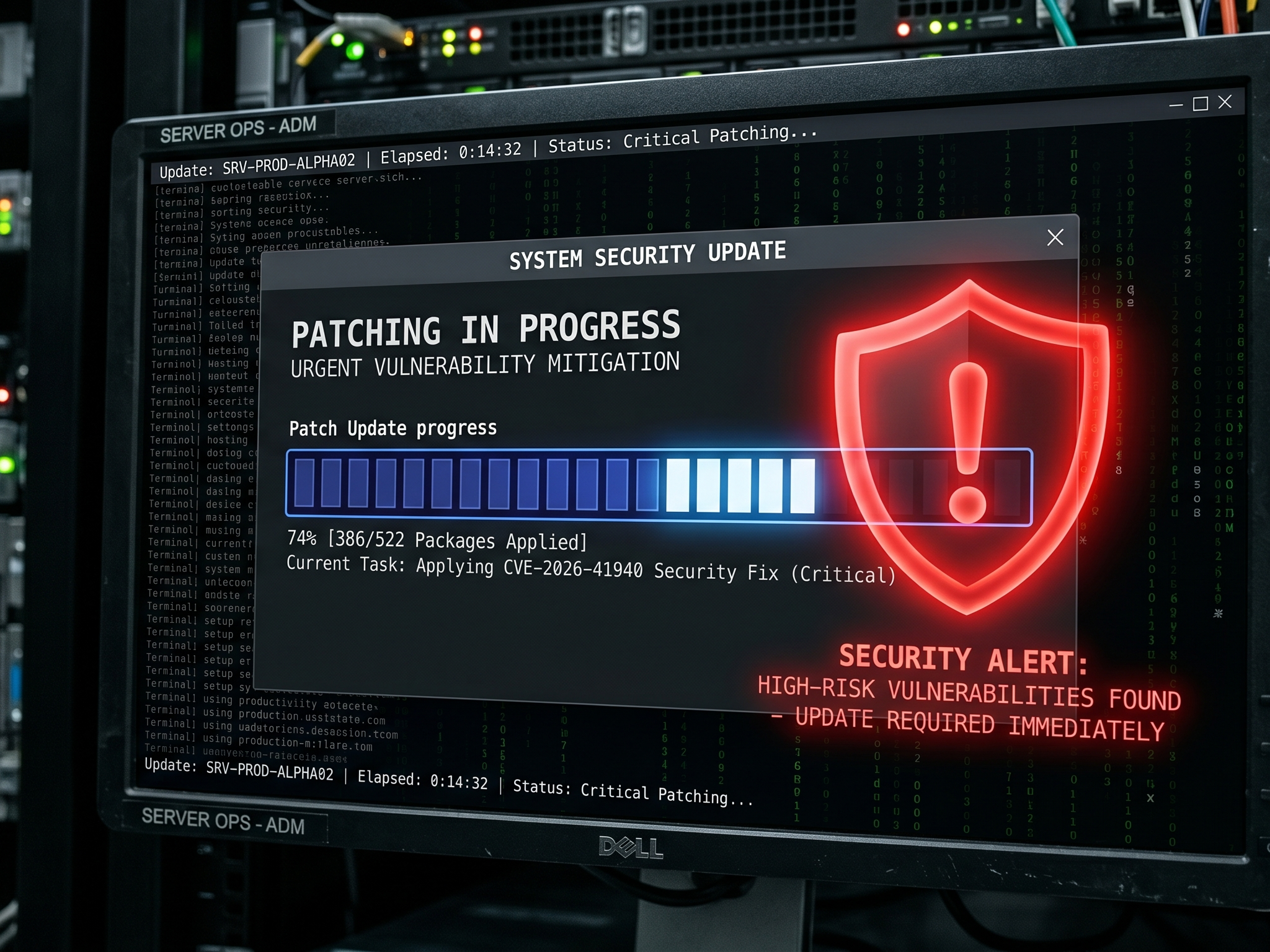
Critical cPanel Flaw Exposes Millions of Websites to Potential Takeover- Security experts are raising urgent concerns over a newly discovered vulnerability in widely used server management tools, potentially putting millions of websites at risk of being hijacked by hackers.
The flaw affects cPanel and WebHost Manager (WHM), two of the most commonly used platforms for managing web hosting environments. These tools are deeply embedded in the infrastructure of countless websites, giving administrators control over everything from domains and email systems to databases and server configurations.
Tracked as CVE-2026-41940, the bug is considered particularly dangerous because it allows attackers to bypass authentication entirely. In simple terms, a malicious actor could skip the login process and gain full administrative access to a server, effectively taking control of all websites and data hosted on it.
Because cPanel and WHM operate with high-level privileges, any successful exploit could have sweeping consequences. Hackers gaining access through this vulnerability could potentially read or modify sensitive data, deploy malicious code, disrupt services, or even take entire websites offline.
Cybersecurity authorities are warning that the threat is not theoretical. Canada’s national cybersecurity agency has issued an advisory stating that exploitation of the flaw is “highly probable,” especially in shared hosting environments where multiple websites rely on a single server. In such setups, a single successful breach could impact a large number of sites simultaneously.
The widespread use of cPanel makes the situation more concerning. Tens of millions of websites globally rely on the software, meaning the potential attack surface is vast. Smaller website owners, in particular, may be at higher risk if they depend on hosting providers to manage updates and security patches.
In response to the discovery, several major hosting providers have already taken action. Namecheap temporarily restricted access to its customers’ control panels after learning about the vulnerability. The move was intended to reduce the risk of exploitation while the company worked to deploy security patches across its systems.
Similarly, HostGator confirmed that it has patched affected systems and classified the issue as a “critical authentication-bypass exploit.” Such classification underscores the severity of the flaw and the urgency required in addressing it.
Evidence suggests that attackers may have been attempting to exploit the vulnerability even before it became publicly known. KnownHost reported detecting suspicious activity dating back several months. According to CEO Daniel Pearson, the company observed unauthorized access attempts on a number of servers as early as late February.
While the number of affected systems appeared limited—around 30 servers out of thousands—the findings indicate that hackers were actively probing for weaknesses well before the issue was disclosed. Pearson noted that these incidents appeared to be attempts rather than confirmed breaches, but they highlight how quickly vulnerabilities can be targeted once discovered.
In light of these developments, cPanel’s developers have urged all users and hosting providers to update their systems immediately. The company emphasized that the vulnerability affects all supported versions of the software, making patching essential across the board.
In addition to fixing the primary flaw, cPanel has also released a security update for WP Squared, a related tool used to manage WordPress websites. This suggests that the company is taking a broader approach to securing its ecosystem against potential threats.
For website owners, the incident serves as a stark reminder of the importance of timely updates and proactive security measures. Even widely trusted and established platforms can develop critical vulnerabilities, and delays in applying patches can leave systems exposed.
Experts recommend that users verify with their hosting providers whether patches have been applied and monitor their websites for any unusual activity. In cases where users manage their own servers, installing updates as soon as they become available is crucial.
The discovery of CVE-2026-41940 also highlights a broader challenge in cybersecurity: the balance between convenience and risk. Tools like cPanel simplify complex server management tasks, making it easier for businesses and individuals to operate online. However, their deep access to critical systems also makes them attractive targets for attackers.
As investigations continue, the full extent of attempted or successful exploitation may become clearer. For now, the priority remains containment and prevention. With millions of websites potentially exposed, swift action by hosting providers and users alike will be key to minimizing damage.
In an increasingly connected digital landscape, vulnerabilities like this one underscore the ongoing need for vigilance. Even a single flaw in widely used software can have far-reaching consequences, making cybersecurity a shared responsibility across the entire internet ecosystem.
Trump Approves Major Pipeline Project Linking Canadian Oil to U.S. Markets | Maya