
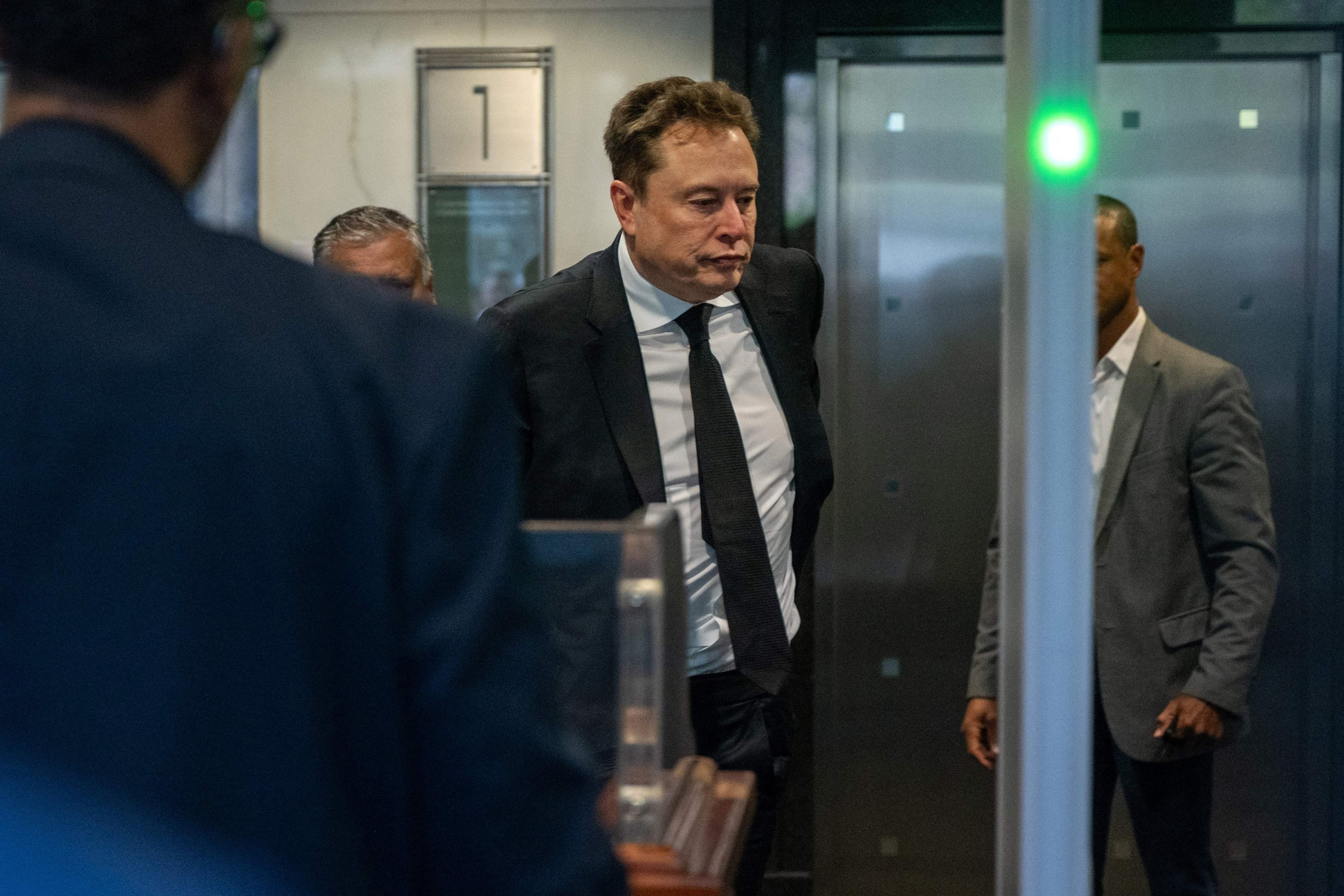
Musk vs OpenAI: Courtroom Clash Over Profit, Control, and the Future of AI
A high-stakes legal battle between Elon Musk and OpenAI is unfolding in a California courtroom, exposing deep divisions over the organization’s transformation from a nonprofit research lab into a commercial powerhouse at the center of the global AI boom.
At the heart of the dispute is Musk’s claim that OpenAI abandoned its original mission. He alleges that the company, along with its leadership including CEO Sam Altman and president Greg Brockman, shifted focus from developing safe artificial intelligence for public benefit to pursuing profit and private gain.
Musk, who was an early backer of OpenAI and contributed tens of millions of dollars along with significant personal involvement, testified that he supported the organization under the belief it would remain a nonprofit dedicated to AI safety. In court, he said he had been reassured by Altman and others that the nonprofit structure would not change in a way that compromised its mission.
However, under cross-examination, Musk acknowledged that he was aware of early discussions about creating a for-profit arm. When questioned about a 2017 document outlining such plans, he admitted he had not closely reviewed it. “I didn’t read the fine print, just the headline,” he told the court, a remark that became a focal point of the proceedings.
Lawyers representing OpenAI pushed back strongly, arguing that Musk was not misled and had been included in conversations about restructuring from the beginning. They suggested that internal communications showed clear discussions about monetization and even the possibility of limiting open access to AI technology—moves that Musk now criticizes.
The case has grown increasingly tense, with moments of visible frustration during Musk’s testimony. At one point, he accused the opposing lawyer of interrupting his answers, saying it was difficult to provide complete responses under constant pressure. The presiding judge, Yvonne Gonzalez Rogers, later intervened to ensure Musk was given space to respond, though she did not fully side with his objections.
Musk’s lawsuit seeks sweeping changes. He is asking the court to force OpenAI to return to its nonprofit roots and to remove Altman and Brockman from leadership roles. In addition, he is pursuing damages of up to $150 billion, arguing that the value generated by the company has been improperly shifted away from its original charitable purpose.
“The for-profit is overwhelmingly where the value is,” Musk said during his testimony, claiming that OpenAI’s commercial arm now holds the vast majority of the organization’s worth. He framed this as a fundamental betrayal of the nonprofit’s mission, describing it as an improper transfer of assets.
OpenAI, for its part, has rejected Musk’s allegations and painted a very different picture of his motivations. The company argues that Musk’s lawsuit is driven less by principle and more by competition. It claims he is attempting to gain influence over OpenAI or undermine it to benefit his own AI venture, xAI.
According to OpenAI’s legal team, Musk’s current stance is inconsistent with his past actions. They argue that he did not prioritize safety concerns while he was actively involved with the organization and that his objections only intensified after OpenAI achieved major success—particularly with products like ChatGPT, which helped bring artificial intelligence into mainstream use.
The company has also defended its transition to a for-profit structure, saying it was necessary to attract the massive investment required to build advanced AI systems. Developing cutting-edge models requires enormous computing power and highly specialized talent, both of which demand significant funding. OpenAI maintains that its hybrid structure—combining nonprofit oversight with for-profit operations—was designed to balance innovation with accountability.
The case also touches on broader questions about the future of artificial intelligence and how it should be governed. Musk has repeatedly warned about the risks posed by advanced AI, including the possibility of catastrophic outcomes. His legal team attempted to introduce arguments about existential threats as part of the trial, though the judge ruled that the case is not about AI safety in general, but rather about contractual and governance issues.
Adding another layer of complexity, Musk acknowledged during testimony that his own company, xAI, has used OpenAI’s technology in some capacity to help develop its models. He described this as standard industry practice, noting that AI systems are often evaluated or refined using outputs from other models.
The trial, which is expected to last several weeks, could have far-reaching implications. OpenAI has grown into one of the most influential companies in the tech sector, attracting billions in investment and reportedly working toward a potential initial public offering that could value it in the hundreds of billions of dollars. Its close partnership with Microsoft, a major investor, is also under scrutiny as part of the lawsuit.
Ultimately, the outcome of the case may help determine not only OpenAI’s future structure but also set a precedent for how mission-driven tech organizations balance public good with commercial realities. As artificial intelligence continues to reshape industries and societies, the question of who controls it—and for what purpose—has become more urgent than ever.
For now, the courtroom battle between Musk and OpenAI offers a rare, detailed glimpse into the internal tensions of one of the most important technological movements of our time.


