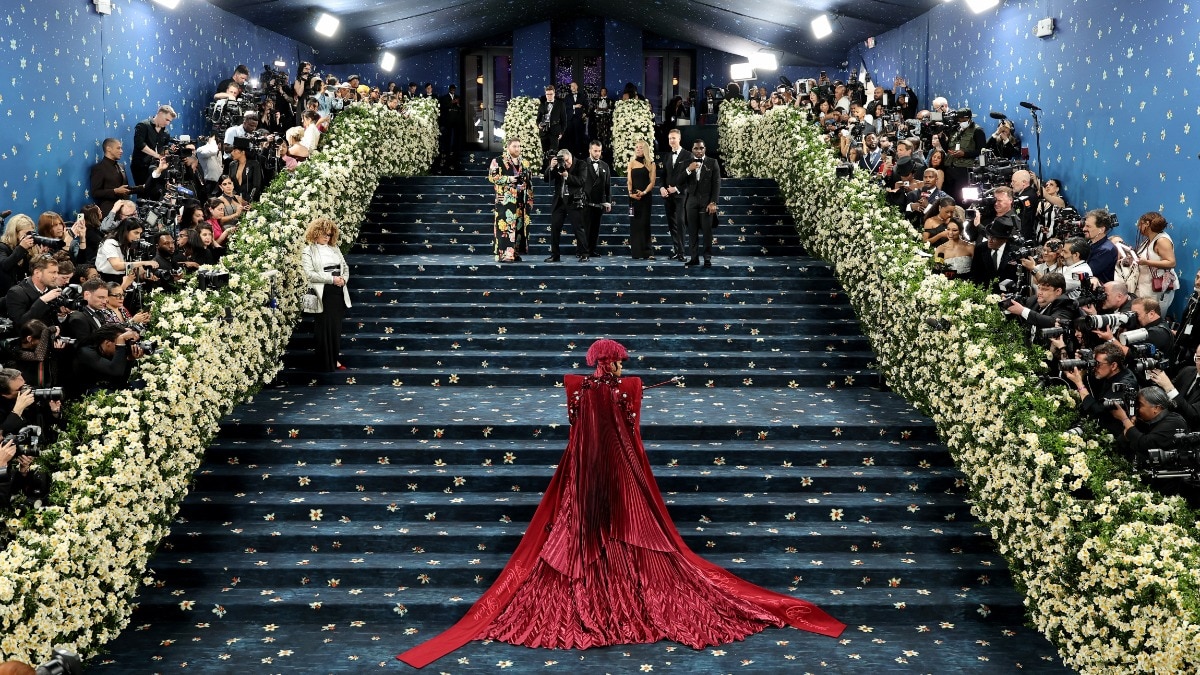
Dressed Like Art: The Met Gala’s Most Thought-Provoking Theme Yet – Every year on the first Monday of May, the steps of Metropolitan Museum of Art transform into one of the most closely watched stages in global culture. But this year’s Met Gala is sharpening its focus with unusual clarity: fashion isn’t just adjacent to art—it is art.
A Dress Code That Settles the Debate
The 2026 theme, “Fashion is art,” pushes attendees beyond simply dressing well. It asks them to treat clothing as a medium—something lived in, performed, and interpreted. The accompanying exhibition, “Costume Art,” centers on the dressed body as a site of creativity, reinforcing the idea that garments can carry the same conceptual weight as painting or sculpture.
This isn’t entirely new territory, but it’s the most explicit endorsement yet. For decades, fashion insiders have debated whether couture belongs in museums or on runways. Now, with the Costume Institute fully embracing the idea, the line has effectively disappeared.
Where Fashion Meets Art History
Designers have long blurred these boundaries. In 1937, Elsa Schiaparelli collaborated with Salvador Dalí to create the iconic lobster dress—part garment, part surrealist statement. Later, Yves Saint Laurent translated Piet Mondrian’s geometric abstractions into bold, wearable canvases.
More recently, Marc Jacobs and Takashi Murakami fused pop art with luxury branding, while Alexander McQueen turned runway shows into full-scale performance pieces—famously spray-painting a dress live on model Shalom Harlow.
These moments weren’t just collaborations; they were arguments—made in silk, paint, and spectacle—that fashion belongs in the same conversation as fine art.
Archival vs. Custom: The Red Carpet Question
One of the most interesting tensions this year is whether attendees will lean into archival fashion or commission entirely new works. Vintage pieces offer historical resonance—a direct connection to fashion’s past as art. Custom designs, on the other hand, allow for experimentation and conceptual storytelling in real time.
In recent years, archival looks have surged in popularity, with celebrities treating rare garments almost like borrowed masterpieces. But a theme this open-ended invites risk—and the Met Gala rewards those willing to take it.
Celebrity as Performance Artist
With names like Beyoncé, Nicole Kidman, and Venus Williams expected to attend, the red carpet becomes more than a parade—it’s a live exhibition. Attendees aren’t just wearing outfits; they’re embodying ideas.
That’s where this year’s theme gets especially interesting. If fashion is art, then the wearer becomes part of the artwork. Movement, posture, even interaction with the camera all become elements of the final piece.
From Controversy to Canon
The acceptance of fashion as art wasn’t always guaranteed. When Yves Saint Laurent was honored with a major Met exhibition in 1983, critics questioned whether clothing deserved museum space at all. Today, that skepticism feels almost outdated. Institutions like the Louvre Museum have begun hosting fashion exhibitions, signaling a broader cultural shift.
Fashion historian Nancy Hall-Duncan has argued that this year’s theme could mark a turning point in public perception—moving fashion definitively from the realm of commerce into that of cultural expression.
How to Watch the Spectacle
For those not on the guest list, the event is more accessible than ever. Vogue will stream the red carpet live, with hosts including Ashley Graham, La La Anthony, and Cara Delevingne, while Emma Chamberlain conducts interviews.
Meanwhile, Associated Press offers an earlier glimpse, livestreaming celebrity departures from New York hotels—often the first reveal of the night’s most talked-about looks.
A Defining Moment for Fashion
This year’s Met Gala doesn’t just showcase fashion—it reframes it. By explicitly declaring fashion as art, the event challenges audiences to reconsider what belongs in a gallery, what counts as creative expression, and who gets to define it.
On those museum steps, the debate won’t be theoretical. It will be worn, walked, and witnessed in real time. Google AI to Help Decide Planning Applications in England | Maya