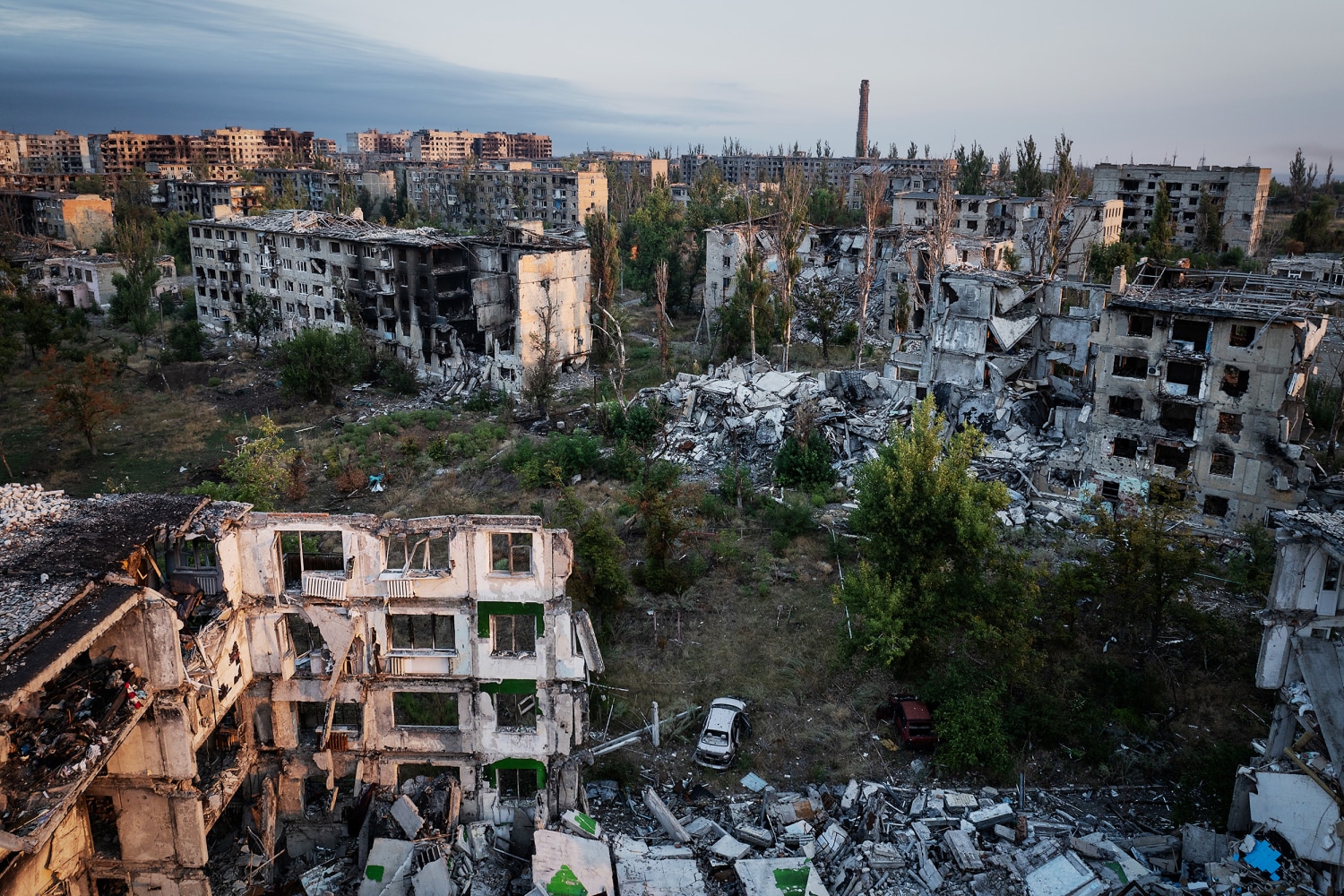
Deadly Strikes Intensify as Russia-Ukraine War Enters More Unpredictable Phase- A fresh wave of Russian drone and missile attacks across Ukraine has left at least 10 people dead and more than 70 injured, according to Ukrainian officials, underscoring the intensifying pace and reach of the ongoing war. The strikes, reported across multiple regions, highlight how the conflict continues to evolve into a high-frequency, long-range battle with mounting civilian and economic consequences.
Officials confirmed fatalities in at least five regions, including Kherson, Odesa, Donetsk, Zaporizhzhia, and Sumy. These attacks form part of a sustained Russian campaign targeting urban centers and infrastructure, often using a combination of drones and missiles to overwhelm air defenses.
Ukraine’s air force reported that Russia launched nearly 270 drones overnight, with the majority intercepted or electronically jammed. While this reflects the growing effectiveness of Ukraine’s defensive systems, the sheer volume of attacks shows Moscow’s strategy of attrition through saturation—forcing Ukraine to expend resources while still allowing some strikes to penetrate defenses.
Ukraine Expands the Battlefield
At the same time, Ukraine is increasingly taking the fight beyond its borders. President Volodymyr Zelensky revealed that Ukrainian forces carried out successful strikes on Russian naval and energy assets in key ports.
Among the reported targets were oil tankers and a warship at facilities in Primorsk on the Baltic Sea, as well as additional vessels near Novorossiysk on the Black Sea. Zelensky claimed that some of the tankers were part of Russia’s so-called “shadow fleet,” used to bypass Western sanctions imposed after the full-scale invasion that began in 2022.
One of the vessels reportedly struck was a Karakurt-class corvette, designed to carry Kalibr cruise missiles—an indication that Ukraine is not only targeting economic assets but also military capabilities deep inside Russian territory.
Energy War Takes Center Stage
A notable shift in recent weeks has been Ukraine’s increasing focus on Russia’s oil infrastructure. By targeting export terminals and tankers, Kyiv appears to be pursuing a strategy aimed at undermining Russia’s revenue streams, which are crucial for sustaining its war effort.
Strikes on facilities like Primorsk—one of Russia’s major oil export hubs—could have ripple effects far beyond the battlefield. Even limited disruptions can impact global energy flows, especially at a time when markets are already sensitive to geopolitical risks.
Ukraine claims these operations have already caused billions of dollars in losses to Russian exports. While Moscow has largely downplayed the damage, the repeated targeting suggests growing concern about the vulnerability of its energy network.
Russia Signals Growing Concern
Despite public efforts to minimize the impact of Ukrainian strikes, signs of unease are emerging in Moscow. Authorities recently announced scaled-down plans for the annual Victory Day celebrations marking the defeat of Nazi Germany in World War II, citing security threats.
The decision to limit such a symbolic national event points to increasing tension within the Kremlin over Ukraine’s expanding drone capabilities. Reports of hundreds of Ukrainian drones targeting regions deep inside Russia—including areas like Leningrad region—highlight how the conflict is no longer confined to frontlines.
A War of Drones and Distance
The latest developments underline how the war is shifting into a new phase dominated by long-range strikes, drones, and infrastructure warfare. Both sides are investing heavily in unmanned systems, electronic warfare, and precision targeting.
This evolution has several key implications:
- Civilian risk remains high: Even with improved defenses, urban areas continue to suffer casualties.
- Economic targets are increasing: Energy, shipping, and logistics hubs are becoming primary objectives.
- Frontlines are less defined: Strikes deep inside both countries blur the traditional boundaries of war zones.
Future Prospects: What Lies Ahead
Looking forward, the conflict appears set to become more prolonged and technologically driven, with several possible trends emerging:
1. Escalation in Infrastructure Attacks
Ukraine is likely to intensify strikes on Russian oil and transport networks, while Russia may continue targeting Ukrainian cities and power systems. This mutual targeting could deepen economic damage on both sides.
2. Expansion of Drone Warfare
Both countries are rapidly scaling up drone production and deployment. Expect larger, more coordinated drone swarms and improved countermeasures in the months ahead.
3. Greater Global Impact
As energy infrastructure becomes a central target, global markets may face renewed volatility. Disruptions to oil exports or shipping routes could affect prices worldwide.
4. Increased Pressure for Air Defense Support
Ukraine will likely push for more advanced air defense systems from allies to cope with the growing حجم of attacks.
5. Risk of Wider Escalation
Strikes deeper into Russian territory could provoke stronger retaliation, raising concerns about a broader regional escalation.
An Intensifying Stalemate
Despite ongoing offensives on both sides, there is little indication of a decisive breakthrough. Instead, the war is evolving into a high-intensity stalemate, where both Russia and Ukraine seek to weaken each other through sustained, strategic strikes.
For civilians caught in the crossfire, the cost remains severe. And for the wider world, the conflict continues to pose risks not only to regional stability but also to global economic security.
As drone warfare expands and targets grow more ambitious, the coming months may prove even more unpredictable than the last. Pokémon Fans, Take Note: Target Drops Massive 30th Anniversary Collection Online | Maya