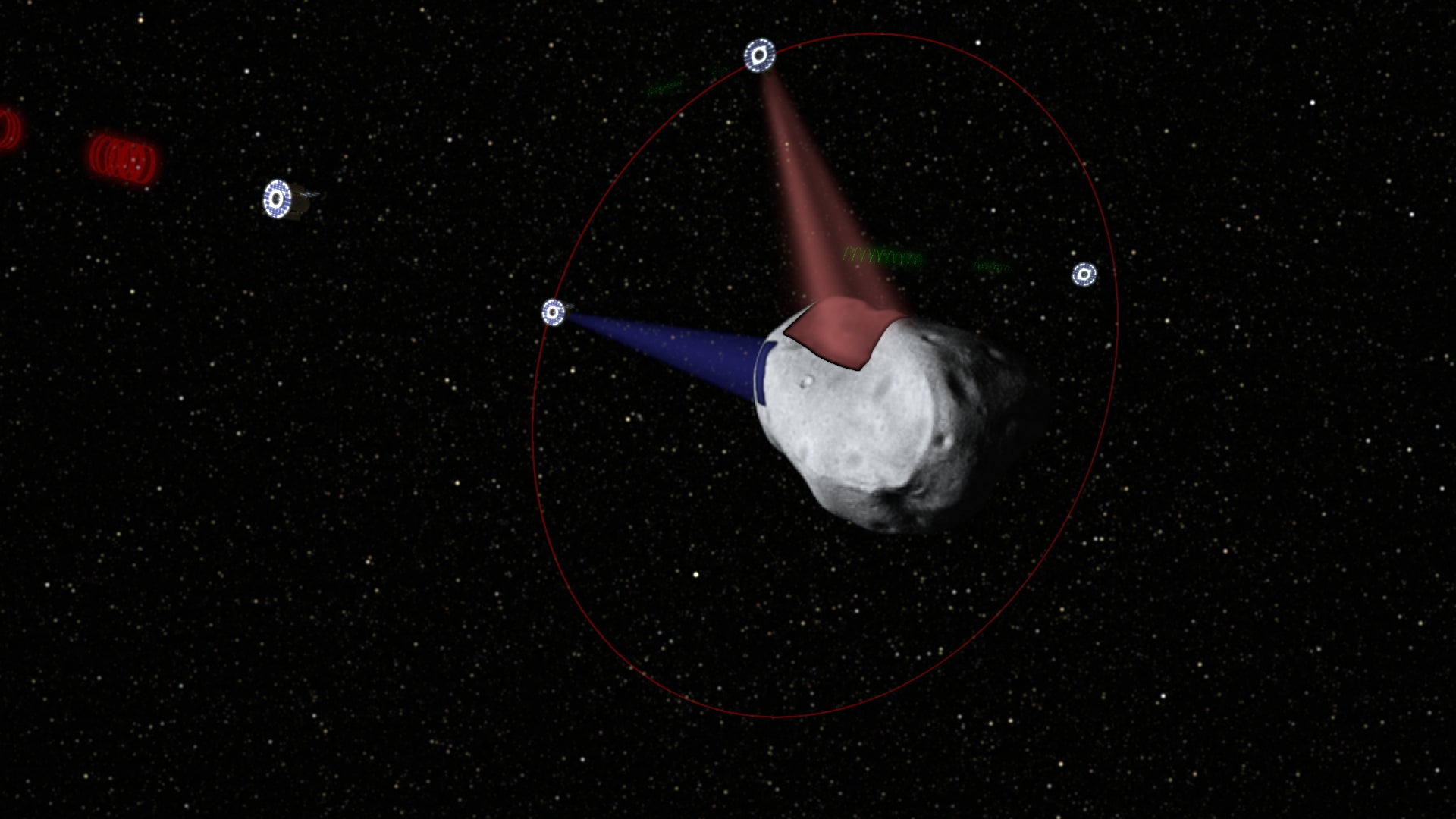
Can private companies legally claim asteroid resources? The short answer is: private companies can legally extract and own asteroid resources in some countries, but they cannot “own” an asteroid itself under current international space law. That distinction is the key to understanding one of the most debated topics in modern space exploration.
To make sense of this properly, we need to look at how space law works, what countries have allowed so far, where the legal gaps are, and why the issue is still unsettled globally.
First: what do we mean by asteroid resources?
Asteroids are rocky or metallic bodies orbiting the Sun. Some are small, some are massive, and many contain valuable materials such as:
- Iron and nickel (useful for construction)
- Platinum-group metals (used in electronics and industry)
- Water ice (can be split into hydrogen and oxygen for fuel and life support)
- Rare minerals
Because launching materials from Earth is extremely expensive, mining asteroids has long been seen as a potential future industry.
This idea is called space resource utilization or asteroid mining.
The core legal foundation: outer space is not owned by anyone
The main international agreement governing space is the Outer Space Treaty of 1967. Many countries signed it, including major spacefaring nations.
A central rule of the treaty is:
- No country can claim sovereignty over outer space, the Moon, or other celestial bodies
- Space must be used for peaceful purposes
- Space is considered the “province of all mankind”
This means:
- A country cannot say “this asteroid belongs to us”
- No government can legally annex space territory
However, the treaty does not clearly explain what happens when resources are extracted from those bodies.
That is where the controversy begins.
The legal gap: ownership of resources vs ownership of celestial bodies
The treaty prevents ownership of celestial bodies, but it does not explicitly forbid ownership of materials taken from them.
This creates a legal distinction:
- Owning an asteroid = not allowed under international law
- Owning resources extracted from an asteroid = not clearly defined
This gap is what some countries and companies rely on when developing asteroid mining laws.
What some countries allow private companies to do
A few countries have passed national laws that support private space resource extraction.
United States
The United States introduced the U.S. Commercial Space Launch Competitiveness Act (2015). This law states that:
- U.S. companies can legally own resources they extract from asteroids or other space bodies
- This includes minerals and water obtained through mining operations
Importantly, the law does not claim ownership of the asteroid itself, only the extracted materials.
This distinction is designed to stay within the limits of the Outer Space Treaty, at least according to U.S. interpretation.
Luxembourg
Luxembourg has also passed similar legislation allowing companies to:
- Explore space resources
- Extract and own those resources
- Receive legal support for space mining operations
The country is actively trying to position itself as a hub for space mining companies.
Other countries
Several nations, including Japan and the United Arab Emirates, are also developing frameworks that support private participation in space resource activities, although their laws are more cautious or still evolving.
What international law says (and does not say)
At the global level, there is no comprehensive treaty that clearly regulates asteroid mining.
The Outer Space Treaty is the main reference, but it was written in 1967—before private space companies existed and long before asteroid mining was technically imaginable.
Other related agreements include:
- The Moon Agreement (1979), which suggests space resources should be managed as the “common heritage of humanity”
However, very few major spacefaring nations have signed the Moon Agreement, making it far less influential.
As a result:
- There is no unified global rule explicitly governing asteroid resource ownership
- Countries interpret existing treaties differently
- National laws fill the gap, but only within each country’s jurisdiction
So can private companies legally claim asteroid resources?
The practical answer is:
Yes, but only under certain conditions
A private company can legally:
- Extract resources from an asteroid
- Own those extracted materials
- Sell or use them commercially
But only if:
- They operate under the laws of a country that allows it
- They do not claim ownership of the asteroid itself
- They comply with international obligations their country has accepted
This is why companies in the United States or Luxembourg may legally prepare for asteroid mining, while still technically operating in a legally uncertain international environment.
What they cannot legally do
Even in countries that support asteroid mining, private companies cannot:
- Claim ownership of an entire asteroid
- Declare exclusive sovereignty over a celestial body
- Prevent other nations from accessing the same asteroid
- Treat space like territorial property on Earth
Space remains legally “non-sovereign,” meaning it cannot be divided into property zones like land on Earth.
Why this distinction matters
At first glance, owning extracted materials but not the asteroid itself might seem like a minor legal detail. But it has major implications.
For example:
- A company could mine platinum from an asteroid and sell it on Earth
- But it cannot say “this asteroid is mine, stay away”
- Another country could potentially send its own mission to the same asteroid
This creates both opportunity and risk:
- Opportunity: commercial mining becomes possible
- Risk: unclear property rights could lead to disputes in space
What about enforcement in space?
One of the biggest challenges is enforcement.
Even if laws exist on Earth:
- There is no “space police”
- There is no global enforcement authority in orbit or deep space
- Conflicts would have to be handled through diplomatic or legal systems on Earth
This makes international agreement extremely important before large-scale mining begins.
Why governments are cautious
Asteroid mining sounds profitable, but governments are careful because:
- Space law is still evolving
- Ownership disputes could escalate between nations
- Mining operations could interfere with scientific missions
- Environmental concerns exist even in space (debris, contamination, orbital safety)
Because of these risks, most space agencies support gradual development rather than immediate large-scale mining.
Why companies are still interested
Despite legal uncertainty, private companies are actively exploring asteroid mining because:
- Some asteroids may contain trillions of dollars’ worth of metals
- Water from asteroids could support deep-space travel
- Resources in space could reduce the need to launch heavy materials from Earth
Companies such as Planetary Resources (now defunct but influential) and others helped popularize the concept, and new ventures continue to explore feasibility.
A simple way to understand the legal situation
Think of space law like this:
- Space itself is like international waters in principle
- No one can own the ocean itself
- But countries can own fish they catch under certain rules
In the same way:
- No one can own an asteroid
- But some countries allow ownership of materials taken from it
However, unlike oceans, space has far fewer established rules and no enforcement system.
The biggest unanswered questions
Several major legal questions remain unresolved:
- Who has the right to be first at a resource-rich asteroid?
- What happens if two countries attempt mining at the same location?
- Should space resources be shared globally or privatized?
- How can fairness be ensured between developed and developing nations?
These issues are still under international discussion.
The likely future
Most experts expect that asteroid mining will eventually happen, but only after clearer global agreements are made. Possible future directions include:
- An international regulatory body for space resources
- Standard licensing systems for asteroid mining
- Agreements on profit-sharing or resource access
- Stronger definitions of property rights in space
Until then, companies operate in a limited but legally tolerated space, guided mainly by national laws rather than a single global rule.
The Most Beautiful Galaxies Captured by Hubble | Maya
Final analysis
Private companies can legally claim ownership of asteroid resources in certain countries, but only the materials they extract—not the asteroid itself. International space law, especially the Outer Space Treaty, prevents ownership of celestial bodies, but it does not clearly define ownership of extracted resources. This legal gap has allowed countries like the United States and Luxembourg to create laws supporting commercial space mining.
However, the global legal framework is still incomplete. There is no universal agreement, no enforcement mechanism in space, and no final consensus on how space resources should be shared or regulated.
In simple terms, asteroid mining is legally possible in parts of the world today, but the rules governing it are still being written as humanity moves closer to actually doing it.
:max_bytes(150000):strip_icc():focal(731x406:733x408)/nutella-on-artemis-2-040726-0cee13d41344467a9f2ccd0eaef856ad.jpg "iPhone 17 Pro Max and Nutella Grab Attention During NASA’s Artemis II Mission")