Can weather forecasting exist without space satellites today? A massive storm begins forming over an ocean thousands of kilometers wide, but no one can see it clearly, no satellites are watching, and only scattered ground reports are trickling in from distant ships and islands.
Yes, weather forecasting can still exist without space satellites today, but it would become slower, less accurate, and far more uncertain—especially for storms that develop over oceans and remote regions. Modern forecasting would not disappear, but it would lose much of its global reach and real-time precision.
What forecasting looked like before satellites
Before the space age, meteorologists relied entirely on Earth-based observations. This included:
- Weather stations on land
- Ship reports from oceans
- Weather balloons sent into the atmosphere
- Aircraft observations
- Historical weather patterns
This system worked, but it had clear limitations:
- Large gaps over oceans and polar regions
- Storms often detected too late
- Short forecast windows (usually 2–3 days with reasonable accuracy)
So forecasting existed, but it was more reactive than predictive.
What satellites changed in modern forecasting
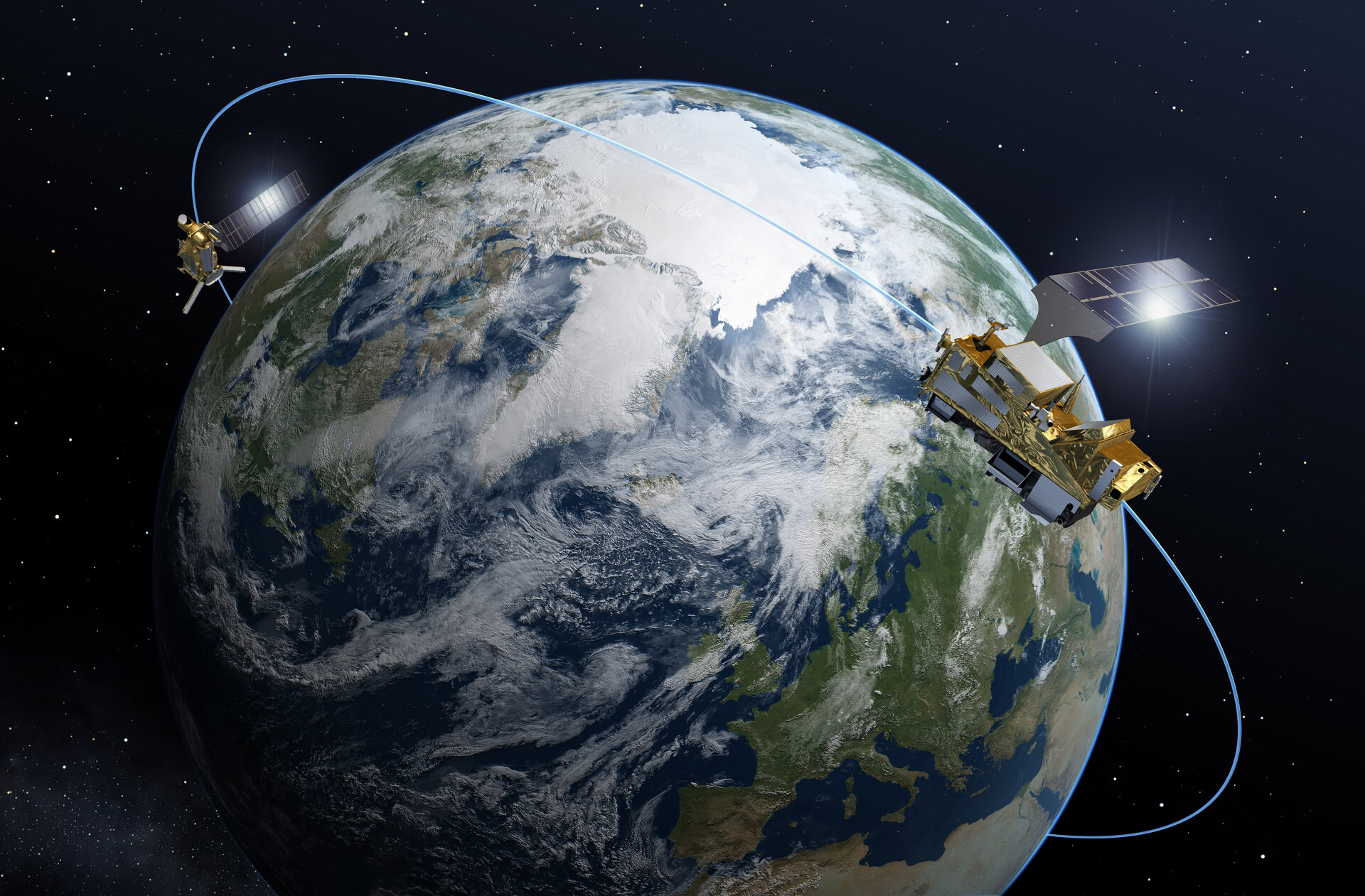
Today’s system depends heavily on continuous global observation from space. Weather satellites provide something no ground system can match: a complete, real-time view of Earth’s atmosphere.
A key example is the GOES weather satellite, which continuously observes cloud systems, storms, and atmospheric changes over large regions.
Satellites provide three critical advantages:
1. Global coverage
They observe:
- Entire oceans
- Remote deserts
- Polar regions
- Areas with no human presence
This is crucial because most major weather systems originate over oceans.
2. Continuous monitoring
Unlike ground stations, satellites can track:
- Cloud growth and movement
- Storm formation in real time
- Temperature and moisture patterns
- Large-scale atmospheric circulation
This allows meteorologists to see how weather systems evolve hour by hour.
3. Early detection of extreme weather
Satellites often identify:
- Tropical cyclones before they reach land
- Rapid storm intensification
- Heatwaves and large-scale atmospheric disturbances
This early warning capability saves lives by improving preparation time.
What would happen if satellites disappeared today
If all weather satellites suddenly stopped working, forecasting would not collapse—but it would change in several important ways.
1. Oceans would become “blind zones”
Without satellites:
- Storms forming over oceans would be harder to detect
- Hurricanes and cyclones would be identified later
- Intensity estimates would be less reliable
This is one of the biggest losses, because oceans drive most global weather systems.
2. Forecast accuracy would drop quickly with time
Even today’s advanced computer models depend on satellite data. Without it:
- Short-term forecasts (1–2 days) might still work reasonably well
- Medium-range forecasts (3–5 days) would become less reliable
- Long-range forecasts would degrade significantly
Errors would grow faster because the system would lack global input data.
3. Uneven forecasting quality across regions
The impact would not be equal everywhere:
- Countries with dense ground station networks would cope better
- Remote and developing regions would struggle more
- Oceanic and polar forecasting would be severely limited
Weather prediction would become more local and less global.
What would still work without satellites
Even without space-based systems, meteorology would not stop. Several important tools would still function:
Ground weather stations
These measure:
- Temperature
- Air pressure
- Humidity
- Wind speed
They provide accurate local data but cannot cover oceans or remote areas.
Weather balloons
These are launched twice daily in many regions and measure:
- Atmospheric pressure
- Temperature at different heights
- Wind patterns in the upper atmosphere
They are extremely valuable but geographically limited.
Radar systems
Weather radar can track:
- Rainfall
- Storm movement
- Short-term severe weather events
However, radar cannot see far beyond its range and is mostly useful for local forecasting.
Computer weather models
Even without satellites, numerical models would still exist. They simulate weather using physics equations, but:
- They rely heavily on real-world input data
- Missing satellite data reduces accuracy
- Forecast uncertainty increases with time
How long forecasts would remain reliable
With satellites:
- 5–7 day forecasts are generally reliable
- Some useful predictions extend beyond a week
Without satellites:
- 1–3 day forecasts would still be fairly usable in many regions
- Beyond that, accuracy would decline rapidly
- Storm tracking over oceans would become especially uncertain
In short, forecasting would shift from global prediction to short-term estimation.
The biggest loss: extreme weather warning systems
The most serious impact would be on disaster preparedness.
Satellites are essential for:
- Detecting hurricanes early
- Tracking cyclone paths
- Monitoring heatwaves and large storm systems
- Estimating storm strength over oceans
Without them:
- Warning times would shrink
- Storm tracking would depend on delayed ground reports
- Risk of sudden impact would increase
This would have direct consequences for safety and emergency planning.
Why satellites are difficult to replace
No ground-based system can fully replace satellites because:
- Earth’s surface is too large
- Oceans cover most of the planet
- Remote regions lack observation stations
- Atmospheric systems require global perspective
Satellites provide a continuous, wide-angle view that ground systems simply cannot replicate.
A simple way to understand it
Imagine trying to understand the weather of an entire planet while:
- Standing only in scattered cities
- Receiving occasional reports from ships
- Using local sensors without any global view
You could still make educated guesses, but you would miss the full picture of how weather systems develop and move across the planet.
Satellites provide that missing global perspective.
Takeaway
Weather forecasting can continue without space satellites, but it would return to a more limited and uncertain system. Ground stations, radar, weather balloons, and computer models would still provide useful information, especially for short-term and local forecasts. However, the loss of satellite data would significantly reduce global coverage, early storm detection, and long-range accuracy.
Systems like the GOES weather satellite are what make modern forecasting truly global and fast.
In simple terms, forecasting would still exist without satellites, but it would lose its “big picture” view of Earth’s atmosphere—making the weather harder to predict, especially when it matters most.
How the Space Economy Will Outgrow Earth Markets by 2030 | Maya