How will emergency medical care work on Mars with communication delay? A medical emergency on Mars would not begin with a siren reaching Earth, nor with a doctor instantly stepping in from mission control. It would begin with silence, distance, and a clock that cannot be sped up.
On Mars, even the fastest radio signal takes about 4 to 24 minutes to reach Earth, depending on where the planets are in their orbits. That means a single question like “What should we do?” can take nearly an hour to get a complete answer back. In emergency medicine, that delay is not just inconvenient—it changes the entire structure of care.
So emergency medical systems on Mars will not be built around Earth-based doctors. They will be built around autonomy, preparation, and systems that can think and act locally.
The core shift: from remote help to local responsibility
On Earth, emergency care is deeply connected to real-time communication. A paramedic can call a hospital, a doctor can guide treatment live, and specialists can intervene within minutes.
On Mars, this model collapses.
Instead of:
- Patient → Earth doctor → instructions → treatment
It becomes:
- Patient → local diagnosis → immediate action → Earth informed later
Earth becomes a support system, not a decision-maker.
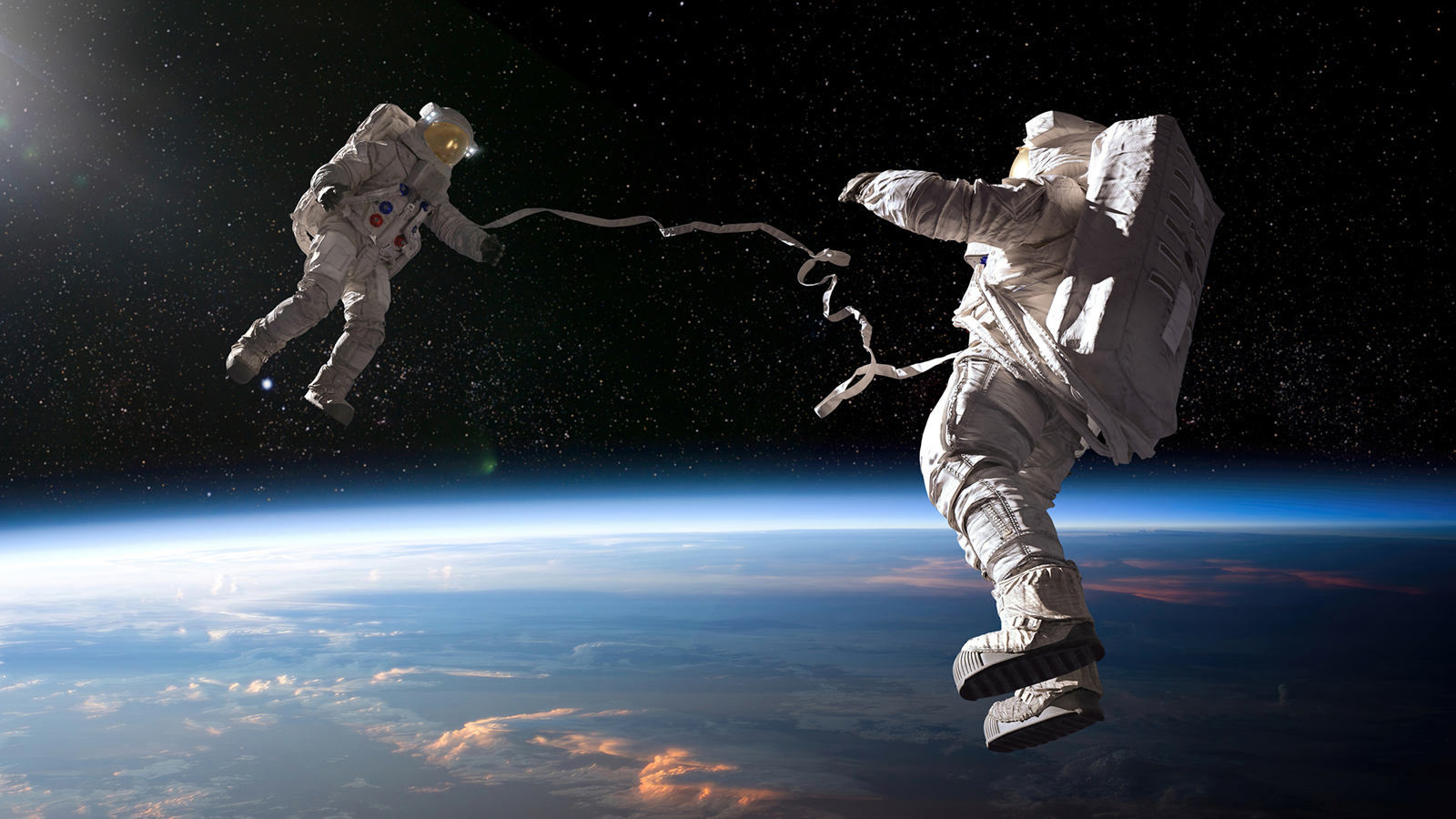
This is similar in concept to how spacecraft like the International Space Station operate. Even though it is much closer to Earth than Mars, many medical and operational decisions onboard must be made independently because communication is not always immediate or practical in critical moments.
Why delay is the biggest medical challenge
The communication delay between Earth and Mars is not constant. It changes depending on orbital positions:
- Closest approach: about 4 minutes one way
- Average distance: 10–20 minutes one way
- Worst alignment: up to 24 minutes one way
Now imagine a life-threatening situation:
- A patient stops breathing
- A crew member suffers severe trauma
- A sudden allergic reaction begins
By the time Earth responds, the patient’s condition may have already changed dramatically—improved, worsened, or become irreversible.
In emergency medicine, even a 2–3 minute delay can be critical. On Mars, that delay is multiplied many times over.
Step 1: AI becomes the first responder
The first line of medical response on Mars will not be a human or Earth doctor—it will be artificial intelligence.
AI systems will:
- Monitor astronauts continuously
- Detect abnormal vital signs instantly
- Compare symptoms with medical databases
- Suggest likely diagnoses
- Recommend immediate treatment steps
This is not science fiction; it is a necessity.
For example, if a crew member shows signs of internal bleeding, AI could immediately:
- Flag the emergency severity
- Trigger medical alerts in the habitat
- Suggest stabilization procedures
- Prepare medication and equipment automatically
The key idea is speed. AI reacts in seconds, while Earth reacts in minutes or hours.
Step 2: Human crew must act like fully trained emergency physicians
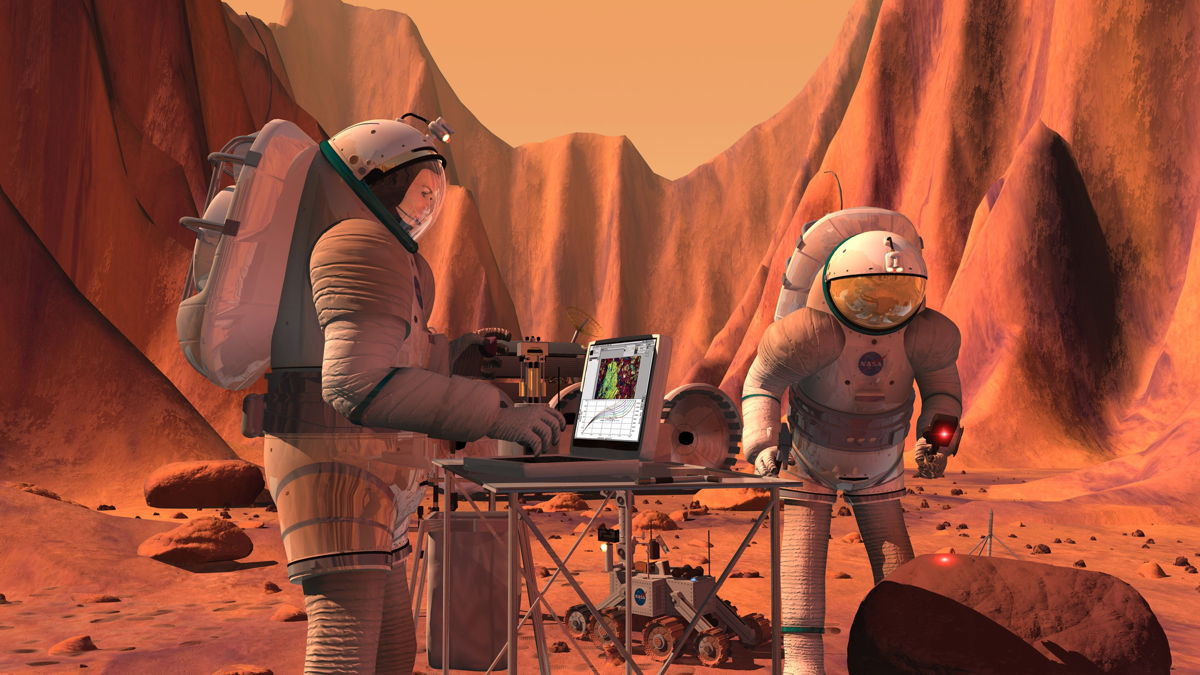
Mars crews will not just be scientists or engineers. They will also be trained medical responders capable of handling serious emergencies without external help.
They must be able to:
- Perform emergency surgery
- Stabilize trauma patients
- Treat infections and radiation-related illness
- Use diagnostic imaging systems
- Make life-or-death decisions under pressure
There will be no option to “wait for confirmation.”
The responsibility shifts entirely to the crew present on Mars.
Step 3: Pre-planned medical decision systems
Because improvisation during emergencies is risky, Mars medicine will rely heavily on structured protocols.
These are detailed response pathways such as:
- If condition A is detected, perform step B immediately
- If bleeding exceeds a threshold, apply procedure C
- If heart rhythm changes in a certain way, use treatment D
These systems reduce thinking time during emergencies.
Instead of asking Earth:
“What should we do?”
The crew follows:
“We already know what to do.”
This transforms medicine into a highly prepared decision tree rather than a real-time consultation process.
Step 4: Earth’s role becomes delayed expertise
Earth-based doctors will still be essential, but their role shifts dramatically.
They will:
- Review recorded medical data
- Analyze complex or unusual cases
- Suggest adjustments after initial treatment
- Provide long-term recovery strategies
But they will not guide immediate emergency actions.
By the time Earth responds, the critical phase of treatment will already be over.
In this sense, Earth becomes a “second opinion system,” not the first responder.
Step 5: Telemedicine becomes asynchronous
On Earth, telemedicine often feels like a live video consultation. On Mars, it will be very different.
Medical communication will look like:
- Data is recorded locally
- Sent to Earth in structured packets
- Earth analyzes the information
- Response is sent back later as updated guidance
This creates a delayed feedback loop rather than a conversation.
It is closer to scientific collaboration than real-time medical care.
Step 6: Medical robotics and automation
Robotics will play a major supporting role in Mars healthcare.
Robotic systems could:
- Perform precise surgical assistance
- Handle imaging scans like ultrasound or CT equivalents
- Monitor vital signs continuously
- Deliver medication accurately
- Assist in sterile procedures
These systems reduce human workload and increase precision, especially during emergencies when stress is high.
They also help compensate for the lack of immediate Earth-based guidance.
Step 7: Psychological pressure of isolation
One of the most underestimated challenges is emotional stress.
In a Mars emergency:
- There is no instant reassurance from Earth
- Decisions must be made immediately
- There is no quick correction if mistakes happen
- The crew is fully responsible for outcomes
This creates significant psychological pressure.
To manage this, Mars missions will likely include:
- Intensive simulation training for emergencies
- Mental health monitoring systems
- Structured decision protocols to reduce hesitation
- Team-based decision-making to distribute responsibility
The goal is to reduce isolation stress during high-pressure moments.
Step 8: Communication delay shapes everything from design to training
Because delay cannot be eliminated, it influences every part of Mars medical design:
- Equipment must be simple to operate under stress
- Procedures must be standardized and repeatable
- Diagnostics must be fast and automated
- Crew roles must overlap for redundancy
Even training will reflect this reality. Astronauts will repeatedly practice scenarios where:
- No help comes from Earth
- AI provides only partial guidance
- Decisions must be made within seconds
Step 9: Types of emergencies that are most difficult
Some medical situations are especially challenging on Mars:
Trauma injuries
Severe injuries require immediate intervention. There is no time for consultation delays.
Cardiac or neurological events
Conditions like heart attacks or strokes depend heavily on fast response.
Unknown conditions
If a new illness or unexpected reaction occurs, Earth expertise arrives too late for initial treatment.
These are exactly the situations where autonomy is most critical.
A simple way to understand Mars emergency medicine
Think of Earth-based medicine as a system where:
- Doctors guide actions in real time
- Communication is instant
- Specialists can be consulted immediately
Now imagine removing the instant communication.
On Mars:
- The crew becomes the primary medical authority
- AI becomes the rapid assistant
- Earth becomes a delayed advisory system
- Time becomes the most valuable resource
Final analysis
Emergency medical care on Mars will not function as an extension of Earth’s hospitals. It will be an independent system built for extreme delay, isolation, and self-reliance. AI will act as the first responder, trained crew members will make immediate decisions, and Earth-based doctors will provide delayed but valuable expertise.
The presence of communication delay fundamentally reshapes medicine from a collaborative real-time process into a local, autonomous system where preparation matters more than connection.
In simple terms, Mars medicine is not about asking Earth for help—it is about being ready to act before Earth can answer. The First Signs of Alien Atmospheres? What JWST and Its Successors Might Reveal | Maya