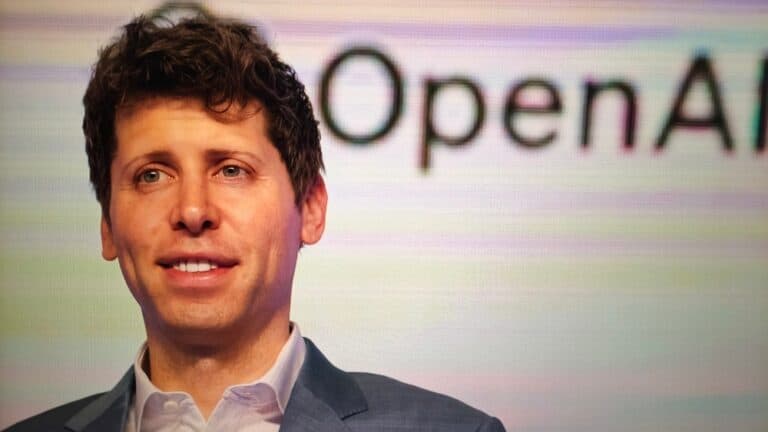
Ex-OpenAI Chief Alleges Sam Altman Sent Conflicting Messages to Executives: Fresh testimony emerging from the ongoing legal battle involving Elon Musk and OpenAI is shedding new light on the internal tensions that once threatened to destabilize one of the world’s most influential artificial intelligence companies.
Former OpenAI Chief Technology Officer Mira Murati testified that CEO Sam Altman often delivered inconsistent messages to different executives, creating confusion and distrust within the company’s leadership ranks during a critical period of rapid AI expansion.
Murati’s remarks offer one of the clearest public accounts yet of the internal concerns that surrounded Altman before his dramatic and short-lived removal from OpenAI in late 2023.
“My concern was about Sam saying one thing to one person and completely the opposite to another person,” Murati reportedly said during testimony. She also accused Altman of “creating chaos” inside the company and suggested that some executives viewed his communication style as deceptive.
The comments arrive at a pivotal moment for OpenAI as it continues to dominate the global AI conversation while facing mounting scrutiny over governance, transparency, and corporate control.
A Rare Look Inside OpenAI’s Leadership Turmoil
OpenAI has largely maintained a tightly controlled public image despite becoming one of the most powerful technology organizations in the world. But the latest courtroom testimony is exposing just how turbulent things may have become internally as the company accelerated its development of advanced AI systems.
Murati was not a peripheral executive. As chief technology officer, she played a central role in the development and deployment of many of OpenAI’s most important products, including ChatGPT.
Her perspective carries particular weight because she also briefly served as interim CEO during the company’s leadership crisis in November 2023, when OpenAI’s board unexpectedly removed Altman from his position.
At the time, the board said Altman had not been consistently candid in his communications with directors, though few specifics were made public. The decision triggered shock across the technology industry and led to a near revolt among OpenAI employees, many of whom threatened to resign unless Altman returned.
Within days, Altman was reinstated.
But Murati’s latest testimony suggests that concerns surrounding leadership communication and executive trust may have been more serious and widespread internally than previously understood.
The Pressure of Scaling an AI Giant
The allegations also highlight the extraordinary pressures facing companies at the center of the artificial intelligence race.
OpenAI’s rise has been unprecedented. Once founded as a nonprofit research organization focused on developing AI safely and openly, the company rapidly transformed into one of Silicon Valley’s most commercially influential players after the launch of ChatGPT ignited the global generative AI boom.
That growth brought enormous expectations.
OpenAI suddenly found itself balancing competing priorities:
- Advancing cutting-edge AI research
- Commercializing products at massive scale
- Managing partnerships and investments
- Addressing safety concerns
- Responding to governments and regulators
- Competing with major rivals
As the company expanded, decision-making became increasingly consequential, both financially and politically.
Murati’s testimony suggests that some executives may have struggled with how leadership communication operated under those conditions. If senior leaders were receiving conflicting information, it could have complicated strategic planning and intensified internal uncertainty at a time when OpenAI was moving faster than almost any company in the tech industry.
Musk’s Lawsuit Adds More Pressure
The testimony emerged as part of Musk’s broader lawsuit against OpenAI and Altman.
Musk, who helped co-found OpenAI before later distancing himself from the organization, has accused the company of abandoning its original nonprofit mission in favor of aggressive commercial expansion.
At the center of the dispute is Musk’s argument that OpenAI evolved from a public-interest AI research lab into a company increasingly driven by profit motives and corporate alliances, particularly its close relationship with Microsoft.
OpenAI has rejected Musk’s allegations and defended its current structure as necessary to support the enormous costs associated with advanced AI research and deployment.
Still, the lawsuit has become more than just a legal disagreement over corporate structure. It is now functioning as a rare public examination of how power operates inside one of the world’s most important AI organizations.
Murati’s testimony contributes to that broader narrative by focusing attention on leadership culture and internal governance rather than purely technical or financial issues.
Leadership Style Under the Microscope
Altman has long been regarded as one of Silicon Valley’s most influential and ambitious executives. Under his leadership, OpenAI became the defining company of the modern AI era.
But rapid success can also amplify leadership tensions.
In fast-moving technology companies, executives often rely heavily on internal alignment and trust to make decisions involving billions of dollars, sensitive research, and products capable of affecting global industries. Any breakdown in communication at the top levels of leadership can quickly create instability.
Murati’s comments suggest some OpenAI leaders may have believed those cracks were already emerging during the company’s explosive growth phase.
At the same time, Altman’s swift return after his firing demonstrated how much support he retained among employees and investors. Many viewed him as indispensable to OpenAI’s momentum and long-term vision.
That contrast — between concerns raised by some executives and loyalty shown by much of the workforce — illustrates the complicated leadership dynamics inside companies driving the AI revolution.
A Broader Debate About AI Governance
Beyond the personalities involved, the testimony underscores a much larger issue confronting the AI industry: how organizations developing transformative technology should be governed.
OpenAI’s original structure was intentionally unusual, designed to balance commercial success with long-term safety considerations. But as the company became more commercially dominant, tensions between those goals appeared to intensify.
Questions about accountability, executive transparency, and oversight are now becoming central to the broader AI conversation.
As governments worldwide debate regulation for advanced AI systems, OpenAI’s internal struggles may increasingly be viewed as a case study in the challenges of managing organizations operating at the frontier of artificial intelligence.
For now, the courtroom testimony is offering the public an unusually candid look inside a company that has helped reshape the global technology landscape in just a few years.
And as the legal proceedings continue, they may reveal even more about the tensions, ambitions, and power struggles behind the AI boom.
Apple Could Simplify Foldable Repairs With This Clever Internal Layout | Maya