
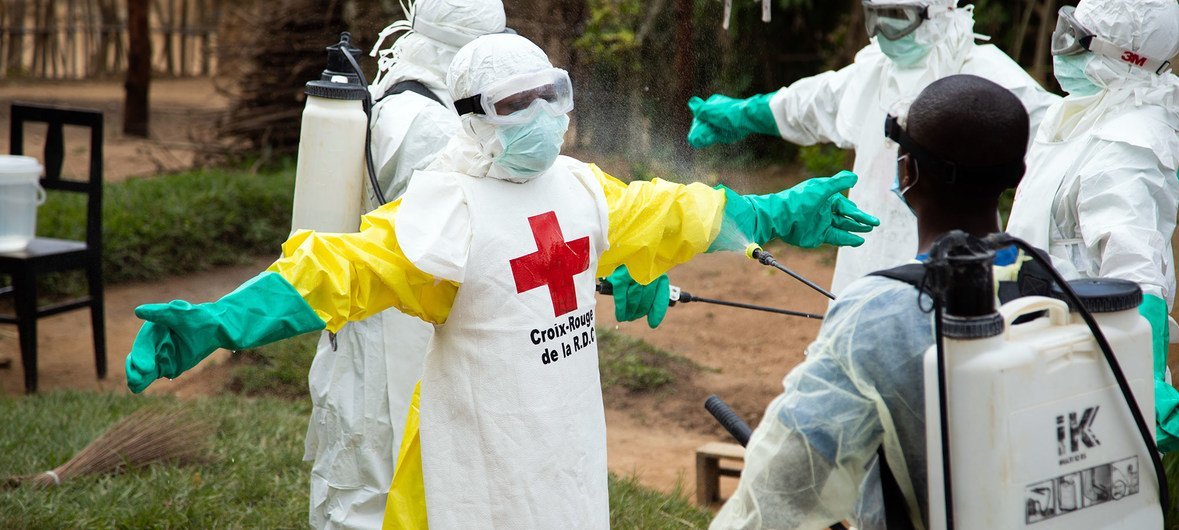
WHO Declares Congo-Uganda Ebola Outbreak Global Health Emergency- The World Health Organization (WHO) has issued its highest level of global health alert over the growing Ebola outbreak affecting the Democratic Republic of Congo (DRC) and Uganda, warning that the disease now poses a serious regional threat requiring urgent international action.
The declaration of a “Public Health Emergency of International Concern” (PHEIC) comes after Ebola infections spread beyond eastern Congo into neighboring Uganda, while confirmed cases also surfaced in major cities including Kampala and Kinshasa.
Health officials say the outbreak is being caused by the rare Bundibugyo strain of the Ebola virus — a variant for which no approved vaccine currently exists. The absence of targeted vaccines and treatments has intensified concerns among medical experts as authorities struggle to contain infections in areas already facing conflict and humanitarian instability.
Despite the emergency declaration, WHO clarified that the outbreak has not been classified as a pandemic. According to the UN agency, transmission remains concentrated within the affected region, though the possibility of wider spread cannot be ignored.
Death Toll Continues to Climb in Eastern Congo
The epicenter of the outbreak remains Ituri province in eastern DRC, where health authorities have reported at least 80 suspected deaths and more than 240 suspected Ebola cases across several affected zones, including Bunia, Mongbwalu, and Rwampara.
Laboratory testing has so far confirmed only a limited number of infections, but officials believe the true scale of the outbreak could be much larger due to gaps in testing and difficulties reaching remote communities.
The region’s fragile healthcare system has further complicated containment efforts. Hospitals are facing shortages of medical supplies and trained personnel, while ongoing violence by armed groups has made some areas inaccessible to emergency responders.
Local health workers say fear and misinformation are also slowing the response. In some communities, residents remain hesitant to report symptoms or cooperate with medical teams, raising the risk of undetected transmission.
Uganda Reports Imported Cases
Regional alarm grew after Uganda confirmed Ebola infections linked to travelers arriving from the DRC.
Authorities in Kampala announced two laboratory-confirmed cases over the weekend, including one death. Officials believe both individuals had recently traveled from outbreak-hit areas in eastern Congo.
At the same time, Congo reported a confirmed case in the capital city of Kinshasa involving a person who had returned from Ituri province.
The detection of Ebola in major urban centers has increased fears that the outbreak could become significantly harder to control if transmission expands within densely populated areas.
In response, Uganda has intensified airport screening, emergency surveillance, and contact tracing operations. Medical teams are monitoring individuals who may have come into contact with infected patients, while hospitals have been instructed to isolate suspected cases immediately.
The Africa Centres for Disease Control and Prevention (Africa CDC) warned that evidence of “active community transmission” is emerging, signaling that infections may no longer be limited to isolated clusters.
Why WHO Issued Its Highest Alert
A Public Health Emergency of International Concern is declared when an outbreak is considered capable of crossing borders and requiring coordinated international action.
The designation is designed to accelerate funding, strengthen cross-border cooperation, and mobilize medical resources before a health crisis escalates further.
WHO officials said the current Ebola outbreak met the criteria for an international emergency because of several key factors: cross-border infections, cases appearing in major cities, and the absence of proven vaccines against the Bundibugyo strain.
The organization stressed, however, that the situation does not currently meet the definition of a global pandemic.
Health experts say the declaration should serve as an early warning rather than a sign of uncontrollable spread. Rapid containment efforts over the next few weeks are expected to play a critical role in determining whether the outbreak can be brought under control.
Understanding the Bundibugyo Ebola Variant
The Bundibugyo strain is one of several forms of the Ebola virus known to infect humans. First identified in Uganda in 2007, it is less common than the Zaire strain that caused previous major outbreaks in West and Central Africa.
Although some studies suggest Bundibugyo Ebola may have a slightly lower fatality rate than other variants, the disease remains extremely dangerous.
Symptoms typically begin with fever, exhaustion, headaches, and muscle pain before progressing to vomiting, diarrhea, and, in severe cases, internal or external bleeding.
The virus spreads through direct contact with bodily fluids from infected individuals or contaminated surfaces. Family members caring for patients and frontline healthcare workers are often among the highest-risk groups during outbreaks.
One major challenge is that early Ebola symptoms resemble common illnesses such as malaria or typhoid, making rapid diagnosis difficult in regions with limited healthcare access.
No Approved Vaccine Adds to Concerns
One of the most troubling aspects of the current outbreak is the lack of licensed vaccines specifically developed for the Bundibugyo strain.
During previous Ebola emergencies involving the Zaire variant, vaccines and experimental antibody treatments played an important role in reducing deaths and limiting transmission.
In this case, scientists are still studying whether existing Ebola vaccines may provide partial protection against the Bundibugyo virus.
International research groups and pharmaceutical partners are now exploring emergency options for testing candidate vaccines and treatments, but experts caution that developing and distributing effective tools could take time.
Until then, containment efforts will rely heavily on traditional public health measures such as patient isolation, rapid contact tracing, safe burial practices, and protective equipment for medical workers.
Conflict and Displacement Complicate the Response
Eastern Congo has long struggled with armed conflict, political instability, and mass displacement, conditions that health experts say make disease outbreaks significantly harder to manage.
Large population movements between Congo and Uganda increase the risk of cross-border transmission, especially through unofficial border crossings that are difficult to monitor.
Aid organizations warn that overcrowded camps housing displaced civilians could become vulnerable hotspots if Ebola spreads further within the region.
Medical charities operating in the area say security concerns are slowing response efforts and limiting access to remote communities where infections may already be circulating undetected.
International Agencies Mobilize Emergency Support
Following the WHO declaration, governments and humanitarian organizations across Africa have stepped up preparedness efforts.
Neighboring countries are increasing surveillance at border crossings, reviewing emergency response plans, and stockpiling protective medical equipment.
International health agencies, including Doctors Without Borders and the United Nations, are deploying additional medical teams and logistical support to affected areas.
The WHO has urged the global community to provide immediate financial and technical assistance, warning that delays could allow the outbreak to worsen rapidly.
Lessons From Past Ebola Crises
The latest outbreak has revived memories of the devastating West African Ebola epidemic between 2014 and 2016, which killed more than 11,000 people and exposed major weaknesses in global outbreak preparedness.
Since then, international agencies have invested heavily in surveillance systems, emergency response mechanisms, and vaccine development.
However, the emergence of a rare Ebola variant without approved vaccines highlights the continuing challenges global health systems face in responding to evolving infectious diseases.
For now, public health officials remain focused on one goal: stopping the outbreak before it spreads further across the region.
The next several weeks are expected to be crucial. If aggressive containment measures succeed, authorities may be able to limit the outbreak before it escalates into a far larger humanitarian and health emergency. AI Reshapes Auto Industry as Detroit Automakers Cut Thousands of White-Collar Jobs | Maya

