Investors Rush Into SpaceX IPO Despite Market Risks- Wall Street is preparing for one of the most anticipated public offerings in modern market history as SpaceX moves closer to its blockbuster Nasdaq debut, drawing enormous investor interest despite growing concerns about market volatility, high valuations, and the unpredictable nature of Elon Musk-led ventures.
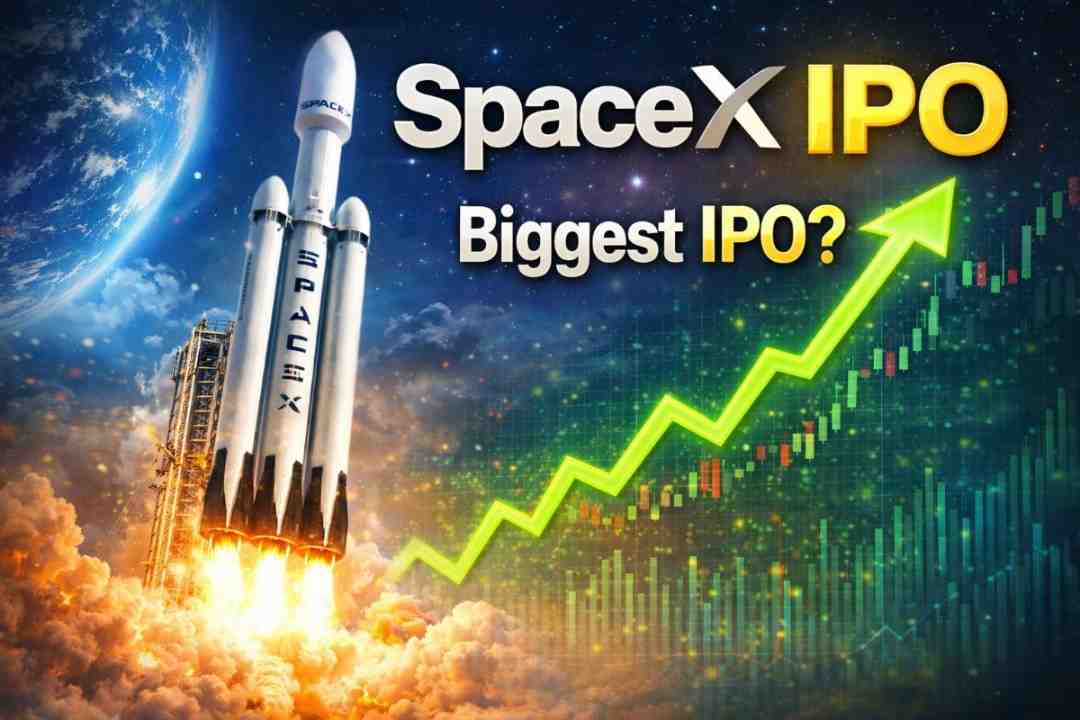
The rocket and satellite giant, founded by billionaire entrepreneur Elon Musk, is expected to price its long-awaited initial public offering as early as June 11, with trading likely to begin the following day under the ticker symbol “SPCX.” If successful, the listing could become one of the largest technology IPOs ever and potentially reshape investor appetite for the rapidly expanding commercial space industry.
Excitement surrounding the offering has already reached extraordinary levels. Institutional investors, hedge funds, and retail traders are closely watching the company’s move to public markets, with many viewing SpaceX as one of the few firms operating in a sector with virtually no true global competitor.
Analysts say investor enthusiasm is being driven by the company’s dominance in rocket launches, satellite internet infrastructure, and national security contracts — areas considered increasingly important in both commercial and geopolitical terms.
Yet the frenzy surrounding the IPO is unfolding against a complicated backdrop. Global markets remain volatile, interest rates are elevated, and technology stocks have experienced sharp swings over the past year. Despite those risks, demand for SpaceX shares appears stronger than almost any major offering in recent memory.
Betting on Elon Musk Again
Much of the optimism surrounding SpaceX is tied directly to Elon Musk himself, whose influence over global technology markets remains unmatched despite repeated controversies and business risks.
For many investors, Musk’s track record outweighs concerns about valuation or market timing. Over the past two decades, he has transformed Tesla from a struggling electric car startup into one of the world’s most valuable automakers while also turning SpaceX into the dominant force in private aerospace.
That history has created a powerful investor mindset summarized by a phrase increasingly repeated across financial circles: “Never bet against Elon.”
Supporters argue that SpaceX possesses an unusually strong competitive advantage because of its vertically integrated business model, reusable rocket technology, and rapidly expanding Starlink satellite network.
Some analysts describe the company as having one of the deepest “economic moats” in the modern tech sector — meaning competitors face enormous barriers in attempting to replicate its infrastructure, engineering expertise, and launch capabilities.
SpaceX currently handles a major share of global commercial rocket launches and has become a key contractor for NASA and the U.S. Department of Defense. The company’s Falcon rockets have dramatically reduced launch costs, helping reshape the economics of the space industry.
Its Starlink satellite internet service has also expanded aggressively across international markets, providing broadband connectivity in remote regions and conflict zones while generating a fast-growing stream of recurring revenue.
Why Investors Are So Interested
The SpaceX IPO arrives at a time when investors are searching for companies with long-term growth potential beyond traditional software and consumer technology.
Artificial intelligence has dominated Wall Street headlines over the past year, but aerospace and satellite infrastructure are increasingly viewed as the next strategic frontier. Governments and corporations worldwide are investing heavily in communications technology, space exploration, defense systems, and low-Earth-orbit satellite networks.
SpaceX sits at the center of all those trends.
The company has built a business model that extends far beyond rocket launches. Revenue now comes from multiple sources, including government contracts, private satellite deployments, cargo missions, crew transportation, and subscription-based internet services through Starlink.
That diversification has strengthened investor confidence that SpaceX can continue growing even during economic slowdowns.
Another factor driving excitement is scarcity. For years, ordinary investors had no direct access to SpaceX because the company remained privately held. Shares were largely limited to institutional firms and wealthy private investors through secondary markets.
The IPO changes that dynamic completely, opening the door for public market participation in one of the world’s most closely watched technology companies.
Concerns Over Valuation and Market Timing
Despite the enthusiasm, several market analysts have warned that the IPO carries significant risks.
One major concern involves valuation. Private market estimates have placed SpaceX’s worth at hundreds of billions of dollars, making it one of the most valuable private companies in the world even before its public debut.
Some investors worry that expectations may already be too high.
Technology IPOs have historically struggled when valuations become disconnected from near-term profitability, especially during periods of economic uncertainty. Rising interest rates and tighter monetary conditions have also reduced investor tolerance for highly speculative growth stocks.
Critics argue that parts of the commercial space industry remain difficult to monetize consistently, particularly large-scale Mars exploration ambitions that may require years of additional investment before generating meaningful returns.
Others point to Elon Musk’s management style as another potential risk factor.
Musk simultaneously oversees multiple companies, including Tesla, X, Neuralink, and xAI. Investors have previously expressed concerns that his attention can become divided during periods of operational pressure or public controversy.
His unpredictable social media activity and public statements have also triggered regulatory scrutiny in the past, creating occasional turbulence for shareholders.
Still, many institutional investors appear willing to overlook those concerns because of SpaceX’s unique market position.
The Starlink Factor
One of the strongest drivers behind investor enthusiasm may be Starlink, the company’s rapidly growing satellite internet division.
Originally designed to provide high-speed internet access to underserved regions, Starlink has evolved into a potentially transformative communications business with global reach.
The network already operates thousands of satellites in orbit and continues expanding coverage across multiple continents. Analysts believe Starlink could eventually become SpaceX’s most profitable division due to its subscription-based revenue structure and massive addressable market.
The service has also demonstrated strategic importance during military conflicts and natural disasters, increasing its value to governments and defense agencies worldwide.
Some analysts believe Starlink alone could justify a substantial portion of SpaceX’s valuation if subscriber growth continues accelerating over the next several years.
A Defining Moment for the Space Industry
The IPO is expected to mark a major milestone not only for SpaceX but for the broader commercial space sector.
For decades, space exploration was dominated almost entirely by governments. Today, private companies are increasingly shaping the future of orbital transportation, satellite communications, and deep-space missions.
SpaceX has played a central role in that transformation.
Its reusable rocket technology dramatically lowered launch costs, helping make commercial space operations financially viable at a scale previously considered impossible.
Competitors such as Blue Origin, Rocket Lab, and several international aerospace firms continue attempting to challenge SpaceX’s dominance, but the company still maintains a commanding lead in launch frequency, payload capacity, and operational experience.
The IPO could provide SpaceX with even greater financial flexibility to accelerate ambitious projects, including the development of Starship — the company’s next-generation spacecraft designed for lunar and eventual Mars missions.
Retail Investors Prepare for Trading Frenzy
Retail investor excitement surrounding the IPO is also expected to be intense.
Online trading communities have already begun discussing potential opening-day price surges, with some market observers comparing the anticipation to major tech debuts from previous decades.
Financial advisors, however, are cautioning smaller investors against making emotionally driven decisions.
Large IPOs can experience sharp volatility during their first days of trading, particularly when demand significantly outpaces available shares. Rapid price swings may create both major gains and steep losses.
Still, enthusiasm surrounding SpaceX appears unlikely to fade anytime soon.
For many investors, the company represents more than just another stock market listing. It symbolizes the commercialization of space, the rise of private technological power, and continued faith in Elon Musk’s ability to disrupt entire industries.
Whether the IPO ultimately lives up to the extraordinary hype remains uncertain. But one thing is already clear: SpaceX’s arrival on public markets is shaping up to be one of the defining financial events of the year. Starbucks Announces Third Round of Corporate Layoffs Since 2025 | Maya