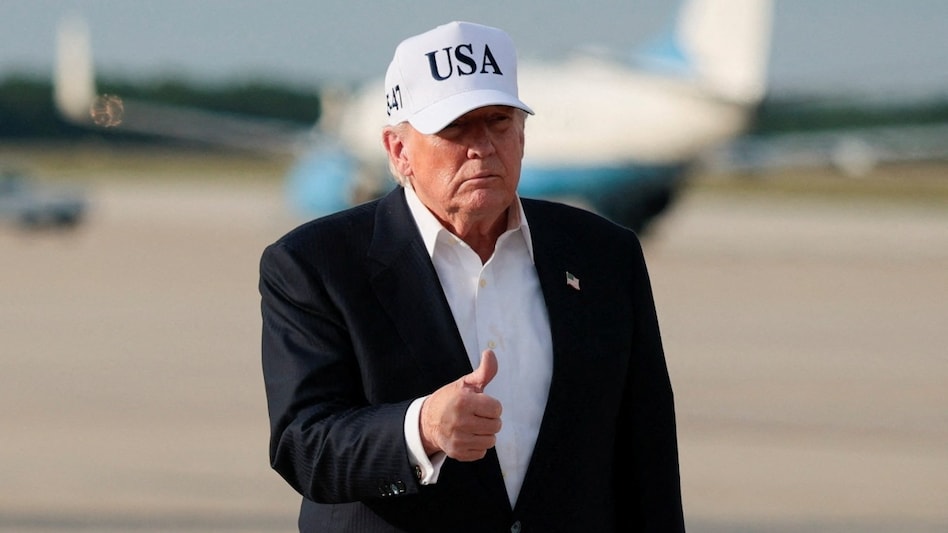
U.S. Holds Off on Iran Strike After Gulf Allies Urge Delay- The United States has temporarily stepped back from launching a planned military strike on Iran after key Gulf allies reportedly urged Washington to give diplomacy one more chance. President Donald Trump confirmed that a major attack scheduled for Tuesday was postponed as “serious negotiations” continue behind closed doors.
The decision marks a dramatic shift in what had appeared to be a rapidly escalating regional conflict. For weeks, tensions between the United States, Israel, and Iran have pushed the Middle East dangerously close to another full-scale war. Military threats, naval confrontations, and warnings from both Washington and Tehran fueled fears that a direct confrontation was becoming unavoidable.
However, according to Trump, leaders from Qatar, Saudi Arabia, and the United Arab Emirates requested a short delay, arguing that diplomatic channels were still open and a breakthrough remained possible.
Speaking at the White House, Trump revealed that the administration had prepared what he described as a “very major attack” on Iran. Yet he said the operation was put on hold after Gulf leaders expressed confidence that negotiations could produce an agreement acceptable to all sides.
“If we can do that without bombing the hell out of them, I’d be very happy,” Trump said while addressing reporters.
Despite the pause, the U.S. president also warned that military action remains on the table. He stated that American forces have been instructed to remain fully prepared for a large-scale assault if negotiations collapse or if Iran refuses to meet U.S. demands regarding its nuclear program and regional military activities.
The latest development comes at a highly sensitive moment in the Middle East. A fragile ceasefire has held only partially in recent weeks after repeated exchanges involving missile strikes, drones, and naval incidents near the Strait of Hormuz — one of the world’s most strategically important oil shipping routes.
Global markets reacted immediately to news of the postponed strike. Oil prices fell after investors interpreted the delay as a sign that Washington may still prioritize diplomacy over military escalation. Energy traders have been closely watching the region because any major conflict involving Iran could disrupt global oil supplies and send prices sharply higher worldwide.
Behind the scenes, reports suggest Gulf nations are increasingly worried about the economic and security consequences of another regional war. Countries such as Saudi Arabia and the UAE have spent years trying to stabilize their economies and attract international investment. A direct war involving Iran could threaten infrastructure, shipping lanes, tourism, and financial markets across the Gulf.
Sources close to the negotiations claim Iran has floated revised proposals through intermediaries, including discussions linked to sanctions relief and limits connected to its nuclear activities. While no official agreement has been announced, diplomats appear to believe enough progress is being made to justify delaying military action.
Still, significant disagreements remain unresolved.
Washington reportedly wants stronger guarantees that Iran will not move toward developing nuclear weapons. Iran, meanwhile, continues demanding sanctions relief and broader security assurances before agreeing to deeper concessions.
The delay also highlights the growing influence of regional allies in shaping U.S. decisions in the Middle East. Gulf leaders have increasingly positioned themselves as mediators capable of balancing ties with Washington while maintaining communication with Tehran.
Analysts say the current pause should not be mistaken for a permanent de-escalation.
Military forces across the region remain on high alert. U.S. naval assets continue operating near the Gulf, Israeli defense systems remain activated, and Iranian military commanders have warned that any future attack would trigger a powerful response.
At the same time, the political pressure surrounding the crisis continues to grow. Critics inside the United States have questioned whether repeated threats followed by delays weaken Washington’s credibility. Others argue that avoiding another large-scale Middle East conflict is the wiser path, especially given the global economic uncertainty and rising energy concerns.
Trump’s announcement has also intensified international diplomatic activity. European governments, China, and several regional powers are reportedly encouraging continued negotiations in hopes of preventing another military confrontation that could destabilize the wider region.
For now, diplomacy appears to have bought valuable time.
But uncertainty still dominates the situation.
The next few days could prove critical in determining whether the United States and Iran move toward a negotiated settlement or return to the brink of war. Much will depend on whether ongoing talks can produce concrete commitments strong enough to satisfy both Washington and its allies.
Until then, the world remains focused on the Middle East, where a temporary pause in military action may have prevented a broader conflict — at least for the moment. Apple’s Reported AirPods With Cameras Move Closer to Reality, Hint at New AI Wearables Era | Maya