The Billion-Dollar Scam Networks Now Taking Over Indonesia- Indonesia is rapidly emerging as the newest battleground in Southeast Asia’s growing cybercrime crisis, with authorities uncovering large-scale scam compounds, illegal gambling operations, and transnational fraud networks that experts say are generating billions of dollars annually.
What was once viewed primarily as a tourism and business destination is now increasingly being used as a base for sophisticated online criminal syndicates relocating from neighboring countries after facing intense crackdowns elsewhere in the region.
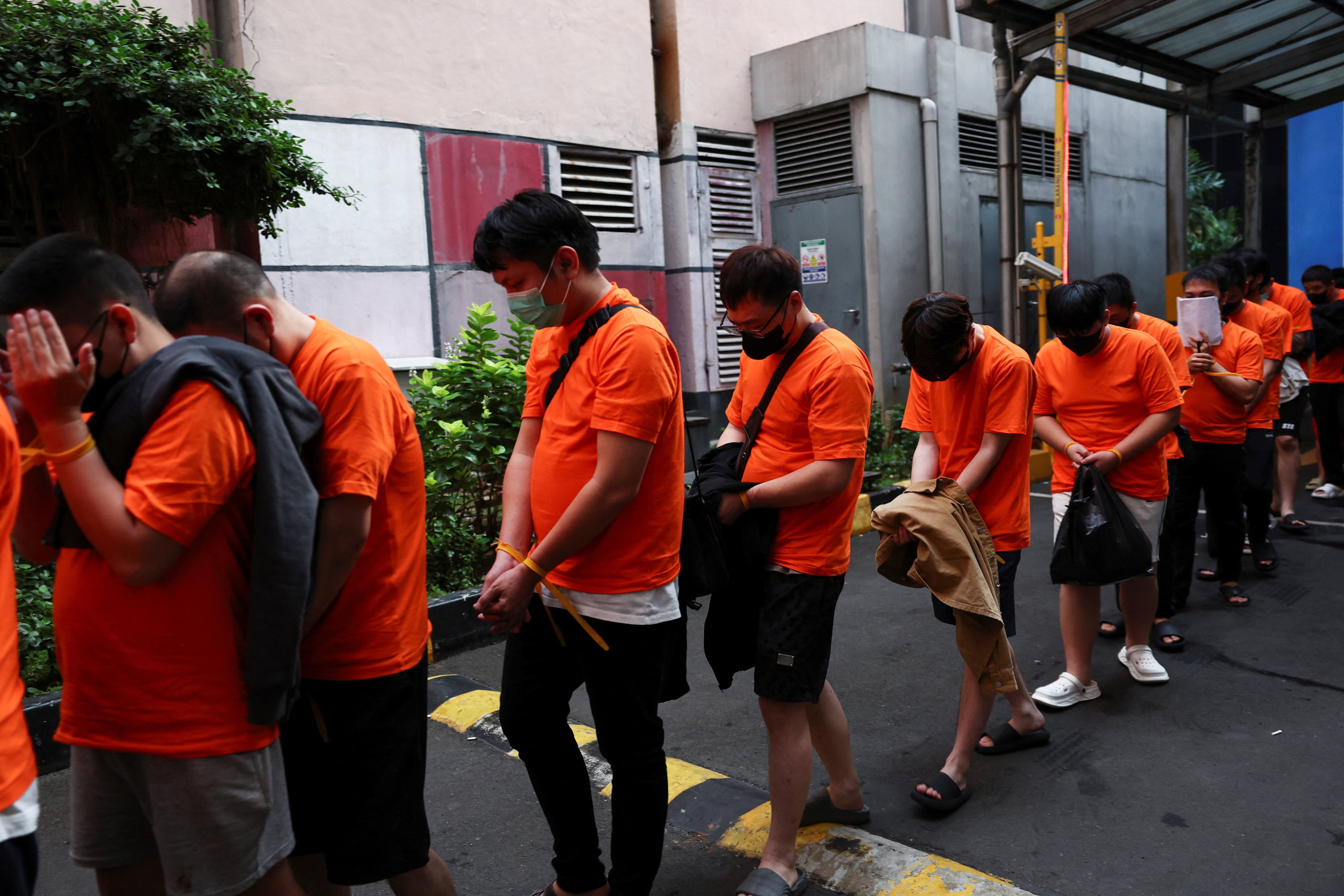
Over the past few weeks alone, Indonesian authorities have detained more than 550 suspects during a series of coordinated raids targeting hidden cybercrime operations spread across major cities and tourist areas. Investigators believe the arrests may expose only a small portion of a much larger underground industry quietly expanding across the country.
The raids paint a troubling picture of how organized cybercrime networks are adapting, moving quickly across borders, exploiting visa systems, and building new operational hubs whenever pressure increases in one location.
The biggest operation occurred near Jakarta’s Chinatown district, where police stormed a commercial building and arrested 321 individuals suspected of participating in online fraud schemes and illegal betting operations. Days earlier, authorities detained more than 200 suspects during a separate raid on an apartment complex in Batam, an Indonesian city located close to Singapore that has become a strategic location for international criminal movement.
Another operation on the island of Bali resulted in dozens more arrests linked to similar scam networks.
Officials say most of those detained were foreign nationals, primarily from China, but also from countries including the Philippines, Thailand, Cambodia, Myanmar, and Malaysia. Many had reportedly entered Indonesia legally using the country’s visa-free entry system or visa-on-arrival program before overstaying their permitted stay periods and joining illegal online operations.
Police believe many suspects were working inside organized cyber compounds carrying out various forms of digital fraud targeting victims around the world.
These scams often include fake investment platforms, cryptocurrency fraud, romance scams, identity theft operations, phishing attacks, and illegal online gambling portals. Some syndicates also operate fake customer service centers or impersonation schemes designed to steal personal data and financial information from unsuspecting victims.
Authorities say the scale of the problem is growing rapidly.
What makes these networks particularly dangerous is their international structure. Scam operations frequently involve workers and coordinators from multiple countries, with technology, financing, recruitment, and money laundering systems spread across different jurisdictions. This complexity makes it extremely difficult for law enforcement agencies to dismantle entire organizations even after raids and arrests occur.
Indonesia’s growing role in this regional cybercrime ecosystem is closely tied to developments elsewhere in Southeast Asia.
For years, countries such as Cambodia, Myanmar, and parts of Thailand became infamous for hosting heavily guarded scam compounds where organized criminal groups ran large-scale online fraud operations. Weak governance, corruption, political instability, and limited law enforcement capacity allowed many of these networks to expand with little resistance.
In some areas, scam compounds evolved into massive criminal industries protected by local power brokers, militia groups, or corrupt officials. International organizations and human rights groups have repeatedly accused authorities in certain regions of either ignoring the operations or directly benefiting from them financially.
As global pressure mounted and regional governments intensified crackdowns, however, many operators began shifting their activities to new countries where oversight was weaker or where immigration systems were easier to exploit.
Indonesia has now become one of the latest destinations in this migration.
Experts believe the country’s large population, booming tourism sector, major transportation hubs, and relatively open visa policies made it attractive to transnational criminal groups searching for safer operational bases.
The Indonesian government originally designed its visa-on-arrival program to boost tourism and support economic growth. But officials are now reassessing whether those same policies unintentionally created opportunities for organized cybercrime syndicates to establish a foothold inside the country.
Authorities say many suspects entered Indonesia as tourists before quietly moving into hidden compounds disguised as apartments, office spaces, or rented villas.
Some operations reportedly functioned around the clock, with workers divided into teams responsible for targeting victims in different countries and languages. Investigators believe many syndicates relied on encrypted messaging apps, cryptocurrency transactions, and offshore payment systems to avoid detection.
The financial impact of these scam networks is staggering.
Cyber fraud compounds across Southeast Asia are estimated to generate billions of dollars every year. Victims are often manipulated through sophisticated psychological tactics designed to build trust before money is stolen through fake investments, romance scams, or fraudulent financial opportunities.
One increasingly common tactic involves scammers posing as successful investors or romantic partners online before convincing victims to transfer large amounts of money into fake cryptocurrency platforms controlled by criminal organizations.
Experts say the rise of artificial intelligence, deepfake technology, and automated translation tools has made these scams even more convincing and harder to detect.
Beyond financial fraud, authorities and human rights organizations have also raised alarm about labor abuse connected to scam compounds.
Many workers inside these facilities are not willing participants. Across Southeast Asia, thousands of people have reportedly been trafficked into scam compounds after accepting fake job offers promising high salaries or office work abroad. Once inside, victims often have their passports confiscated and are forced to participate in online fraud schemes under threats of violence or punishment.
Survivors have described brutal working conditions, physical abuse, surveillance, and impossible performance targets imposed by criminal bosses.
While Indonesian authorities have not yet publicly confirmed widespread human trafficking linked to the recent raids, experts warn that such exploitation often accompanies the expansion of organized cybercrime operations.
The rapid spread of these scam compounds is now becoming a major regional security concern.
Law enforcement agencies across Asia are increasingly cooperating with international partners to track criminal finances, monitor cross-border movement, and identify the masterminds behind these operations. However, experts say the syndicates remain highly adaptable.
When one country intensifies crackdowns, operations frequently shift elsewhere within weeks or months.
That mobility makes long-term enforcement extremely challenging.
Indonesia’s government is now considering stricter immigration measures, including reviewing visa-free access and tightening visa-on-arrival rules for certain nationalities. Officials are also discussing stronger cooperation with neighboring countries to improve intelligence sharing and prevent criminal groups from simply relocating operations across borders.
Still, experts warn that enforcement alone may not be enough.
The enormous profits generated by cyber scams continue attracting organized crime groups, corrupt intermediaries, and underground financial networks. As long as the business remains highly profitable and enforcement gaps persist between countries, syndicates are likely to keep evolving and expanding.
For Indonesia, the challenge goes beyond simple law enforcement.
The country now faces the difficult task of protecting its growing digital economy, tourism industry, and international reputation while confronting one of the fastest-growing forms of organized crime in the modern world.
What began as scattered online fraud operations across Southeast Asia has transformed into a sophisticated multinational criminal industry worth billions of dollars — and Indonesia may now be standing directly in its path. Bizarre Future Facts That Sound Impossible | Maya