Jensen Huang Sees Future Opening for US AI Chips in China
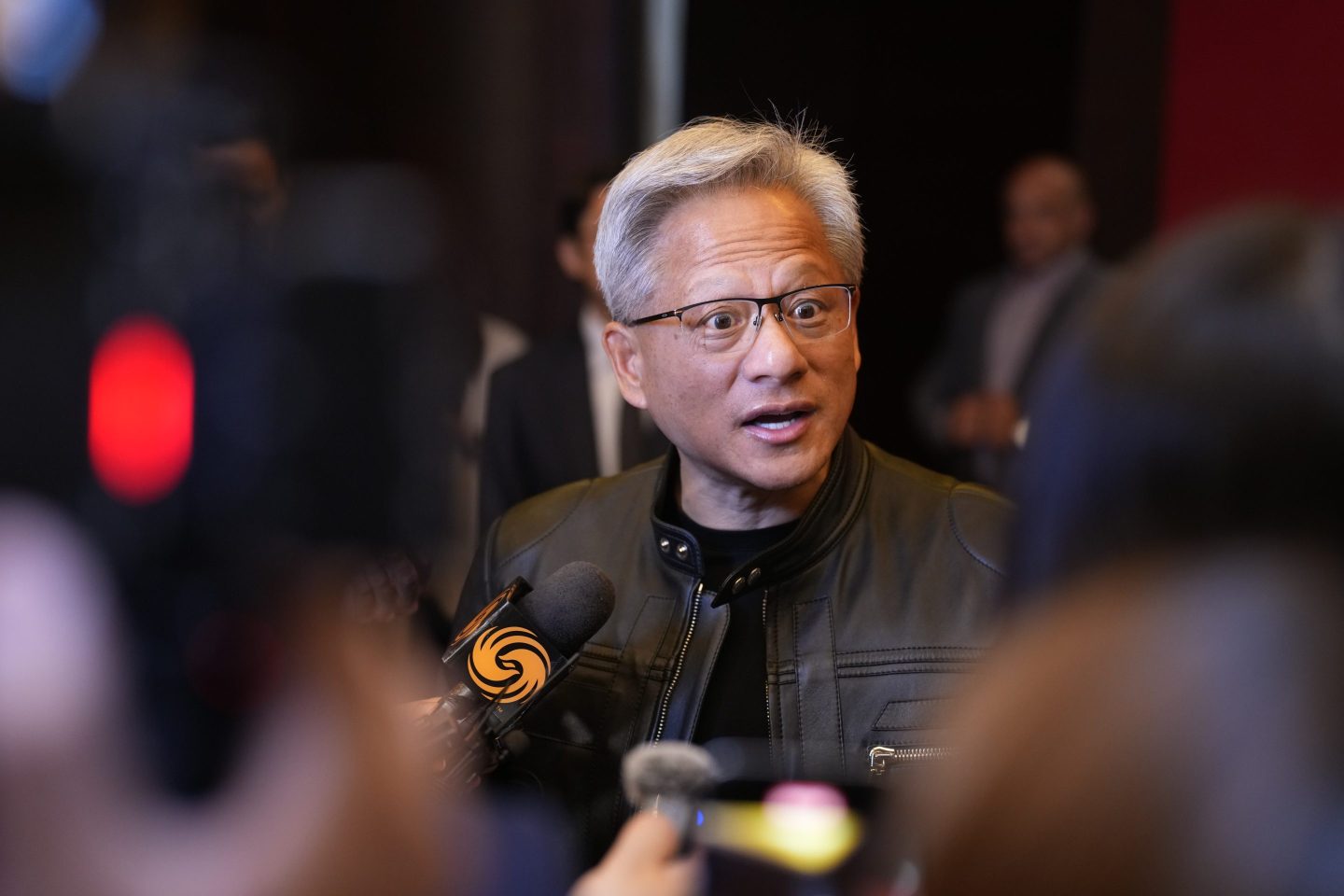
The global semiconductor industry continues to sit at the intersection of technology and geopolitics, with Nvidia chief executive Jensen Huang suggesting that China may eventually reopen its market to advanced American artificial intelligence chips. Speaking in a recent interview, Huang struck a cautiously optimistic tone, arguing that despite current restrictions and political friction, economic and technological pressures could gradually push both sides toward greater cooperation in the AI hardware space.
His remarks come at a time when AI chips have become one of the most strategically sensitive technologies in the world. Export controls, domestic industrial policy, and national security concerns are all shaping how advanced semiconductors move between the United States and China.
Long-term optimism amid short-term uncertainty
Huang’s core argument was not that change is imminent, but that it is likely over time. He suggested that China will eventually have to balance its desire for technological self-reliance with the practical need for access to cutting-edge computing power.
In his view, the direction of travel points toward gradual market normalization. While he acknowledged that current conditions remain restrictive, he expressed confidence that economic realities and the pace of global AI development could encourage a more open approach in the future.
The H200 chip at the center of tensions
A major focus of the discussion is Nvidia’s H200 AI chip, a high-performance processor designed for training advanced artificial intelligence systems. These chips are widely used in building large language models, generative AI tools, and other compute-intensive applications.
Although US authorities have created pathways that could allow controlled exports of such chips to China, commercial adoption has been uneven. Chinese firms have shown hesitation in placing large orders, even when regulatory approval appears to be in place.
Huang noted that discussions about AI chips have occurred at the government level between the United States and China, though he emphasized that he was not directly involved in those negotiations. The situation highlights a gap between policy approval and real-world business execution.
Policy shifts in Washington
The regulatory landscape has been evolving. US President Donald Trump reportedly approved a framework allowing Nvidia to ship H200 chips to Chinese customers under licensing conditions. This marked a notable easing compared to earlier restrictions designed to limit China’s access to high-end AI computing power.
Following that decision, export licenses began to be issued, creating a legal pathway for sales. However, the existence of permissions has not guaranteed actual purchases, as companies in China continue to weigh broader strategic considerations.
China’s push for technological independence
China’s cautious stance is closely tied to its long-term goal of reducing dependence on foreign semiconductor technology. Instead of relying heavily on US-designed chips, Chinese policymakers have been supporting domestic alternatives and strengthening local supply chains.
A key player in this strategy is Huawei Technologies, which has expanded aggressively into advanced computing and AI chip development. Alongside other domestic firms, it represents Beijing’s broader ambition to build a self-sufficient semiconductor ecosystem.
This shift means that even when foreign chips are available, adoption is not guaranteed. Strategic priorities often outweigh short-term performance advantages, especially in sectors considered critical to national security.
Nvidia’s complicated position in China
China has long been seen as a major growth opportunity for Nvidia, with estimates in previous years suggesting it could represent tens of billions of dollars in potential revenue. However, ongoing restrictions and policy uncertainty have made that opportunity increasingly difficult to realize.
At times, Nvidia has indicated that it expects no significant sales of advanced AI chips in China due to regulatory barriers. Even when approvals have been granted, shifting conditions have created uncertainty for both suppliers and buyers.
Reports suggest that initial interest from Chinese companies has sometimes cooled after approvals, reflecting hesitation tied to policy risk and long-term strategic alignment.
Taiwan’s continuing importance in chip production
Another key point raised by Huang is the importance of Taiwan in the global semiconductor supply chain. Despite efforts by multiple countries, including the United States, to expand domestic chip manufacturing, Taiwan remains central to the production of the most advanced semiconductors.
Huang emphasized that global demand for computing power is growing so quickly that production cannot easily be localized to a single country or region. Instead, the industry continues to rely on a distributed supply chain that spans multiple geographies.
This structure, he argued, is not temporary but a reflection of how complex and capital-intensive semiconductor manufacturing has become.
A new bottleneck: memory chips
Beyond geopolitical constraints, industry leaders are also facing a growing technical bottleneck in memory chip supply. Speaking alongside Dell Technologies chief executive Michael Dell, Huang noted that while much attention is placed on GPUs and AI accelerators, memory components are increasingly becoming a limiting factor.
AI systems require enormous amounts of fast memory to process and store data during training and inference. As demand for AI infrastructure grows rapidly, memory manufacturers are struggling to scale production at the same pace.
Michael Dell echoed this concern, highlighting that building new fabrication capacity takes significant time and investment. Even as companies commit to expansion, supply shortages may persist in the near term.
Market implications and investor focus
Investors are closely watching Nvidia’s position in China because it remains one of the largest unresolved variables in the company’s long-term growth outlook. While global demand for AI infrastructure continues to surge, China represents both a major opportunity and a major uncertainty.
Key questions for the market include whether China will eventually reopen its market, how aggressively domestic alternatives will replace foreign chips, and how export regulations may evolve in the coming years.
For now, Nvidia continues to benefit from strong global demand outside China, but the long-term picture remains tied to geopolitical developments.
A long-term strategic balancing act
Huang’s remarks reflect the broader tension shaping the global AI industry. On one hand, governments are treating advanced chips as strategic assets that require control and protection. On the other, the rapid expansion of AI applications is driving unprecedented demand for computing power that no single country can easily satisfy alone.
Whether China ultimately reopens its market to advanced US chips will depend on a mix of political decisions, domestic technological progress, and global economic pressure. What remains clear is that companies like Nvidia are operating in an environment where technology strategy and geopolitics are increasingly inseparable.
The result is a long-term landscape defined not just by innovation, but by negotiation, regulation, and shifting global alliances. Putin Heads to Beijing Seeking Major Energy Deal With China | Maya