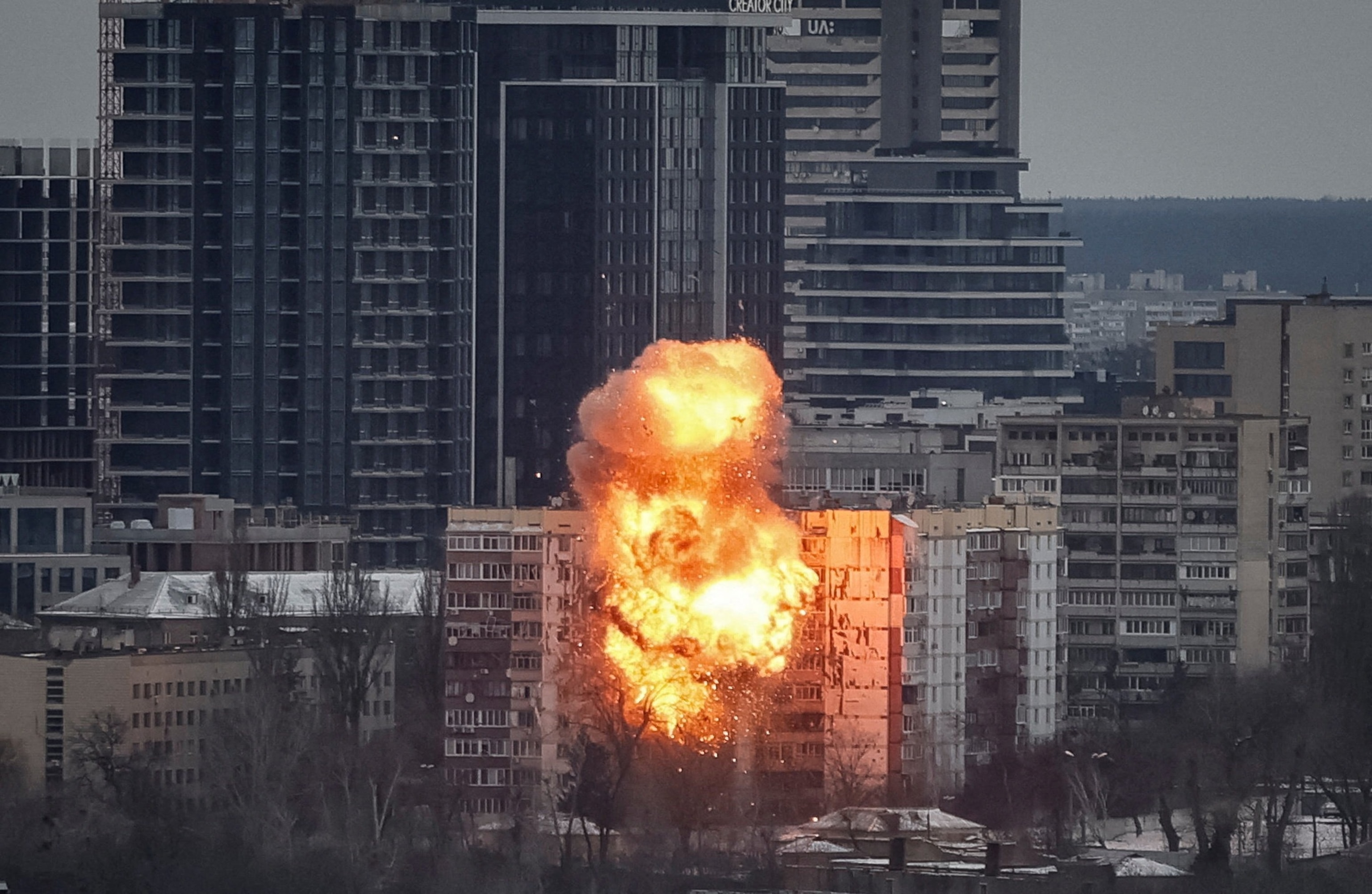
Oreshnik Missile Used in Deadly Russian Attack on Kyiv- Russia launched one of its most intense aerial assaults on Ukraine overnight, striking Kyiv with a massive wave of drones and missiles that left civilians dead, dozens injured, and key buildings damaged across the capital. Ukrainian officials said the attack included the use of the Oreshnik hypersonic ballistic missile, a powerful weapon capable of carrying nuclear warheads, marking a significant escalation in Moscow’s ongoing campaign against Ukraine.
According to Ukraine’s air force, Russian forces fired nearly 600 drones and around 30 missiles during the overnight operation. Air defense systems were activated across Kyiv as explosions echoed through the city for hours. Thick smoke rose above residential districts while emergency crews rushed to damaged neighborhoods searching for survivors trapped under debris.
Ukrainian authorities confirmed that at least two people were killed, while scores of others suffered injuries ranging from burns to shrapnel wounds. Several apartment blocks, schools, and public facilities were hit during the bombardment. Witnesses described scenes of panic as residents sought shelter in underground metro stations and basements while sirens blared throughout the night.
President Volodymyr Zelenskyy condemned the strikes, accusing Russia of deliberately targeting civilian infrastructure. In a statement posted on social media, Zelenskyy said the “largest number of missiles” were aimed directly at ordinary residential areas and educational institutions in Kyiv.
Among the damaged sites were several culturally significant buildings, including the Chornobyl Museum, the National Art Museum, and the office building housing Germany’s ARD broadcaster. Ukrainian officials said the attacks caused severe structural damage and shattered windows across multiple districts of the capital.
The use of the Oreshnik missile drew immediate international attention. The missile is believed to be one of Russia’s newest hypersonic systems, designed to travel at extremely high speeds while maneuvering to evade air defenses. Military analysts say such weapons are difficult to intercept due to their velocity and unpredictable flight paths.
Ukraine had reportedly received intelligence warnings about a possible Oreshnik strike days before the attack. Zelenskyy warned that the deployment of such weapons represents a dangerous signal to the wider world, arguing that their use could create a precedent for future conflicts involving advanced hypersonic missiles.
The overnight barrage came shortly after Russian President Vladimir Putin accused Ukraine of carrying out an attack on a student dormitory in occupied Luhansk, where Russian-installed officials claimed 18 people were killed. Moscow blamed Kyiv for the strike and announced that retaliatory measures were being prepared.
Ukraine denied targeting civilians in Luhansk and insisted its forces struck a military command facility instead. Ukrainian military officials accused Russia of using the incident as justification for another large-scale assault on civilian areas.
The attack triggered strong condemnation from Western leaders and international organizations. European Union foreign policy chief Kaja Kallas described the strikes as “abhorrent acts of terror” aimed at causing maximum civilian casualties. She also criticized Russia’s use of the Oreshnik missile, calling it “reckless nuclear brinkmanship” intended to intimidate both Ukraine and its allies.
German Chancellor Friedrich Merz, Canadian Prime Minister Mark Carney, and Estonian Prime Minister Kristen Michal were among the leaders who expressed solidarity with Ukraine following the assault. Several European officials called for tougher sanctions and increased military support for Kyiv in response to the escalation.
Military experts say the scale of the attack highlights Russia’s growing reliance on combined drone-and-missile tactics intended to overwhelm Ukrainian air defense systems. Swarms of drones are often launched first to exhaust defenses before ballistic and cruise missiles follow behind. Analysts believe this strategy increases the likelihood of successful strikes on critical targets.
Despite the intensity of the attack, Ukraine’s air defenses reportedly intercepted a large number of incoming drones and missiles. However, officials acknowledged that several projectiles managed to penetrate defensive lines, causing destruction in multiple parts of the city.
Residents across Kyiv spent the night in fear as emergency alerts continued into the early morning hours. Videos circulating online showed burning buildings, shattered apartment windows, and firefighters battling flames amid piles of rubble. Many families were forced to flee damaged homes with only a few belongings.
The latest assault underscores the continuing volatility of the war as both sides intensify military operations. With the introduction of advanced hypersonic weapons like the Oreshnik into active combat, concerns are growing internationally about the possibility of further escalation and the widening risks posed by increasingly sophisticated missile systems.
As rescue operations continue and damage assessments are carried out, Ukrainian officials say the attack serves as another reminder that the country remains under constant threat despite ongoing international diplomatic efforts aimed at ending the conflict. What Happens When Batteries Become Recyclable, Safer, and Infinite? | Maya