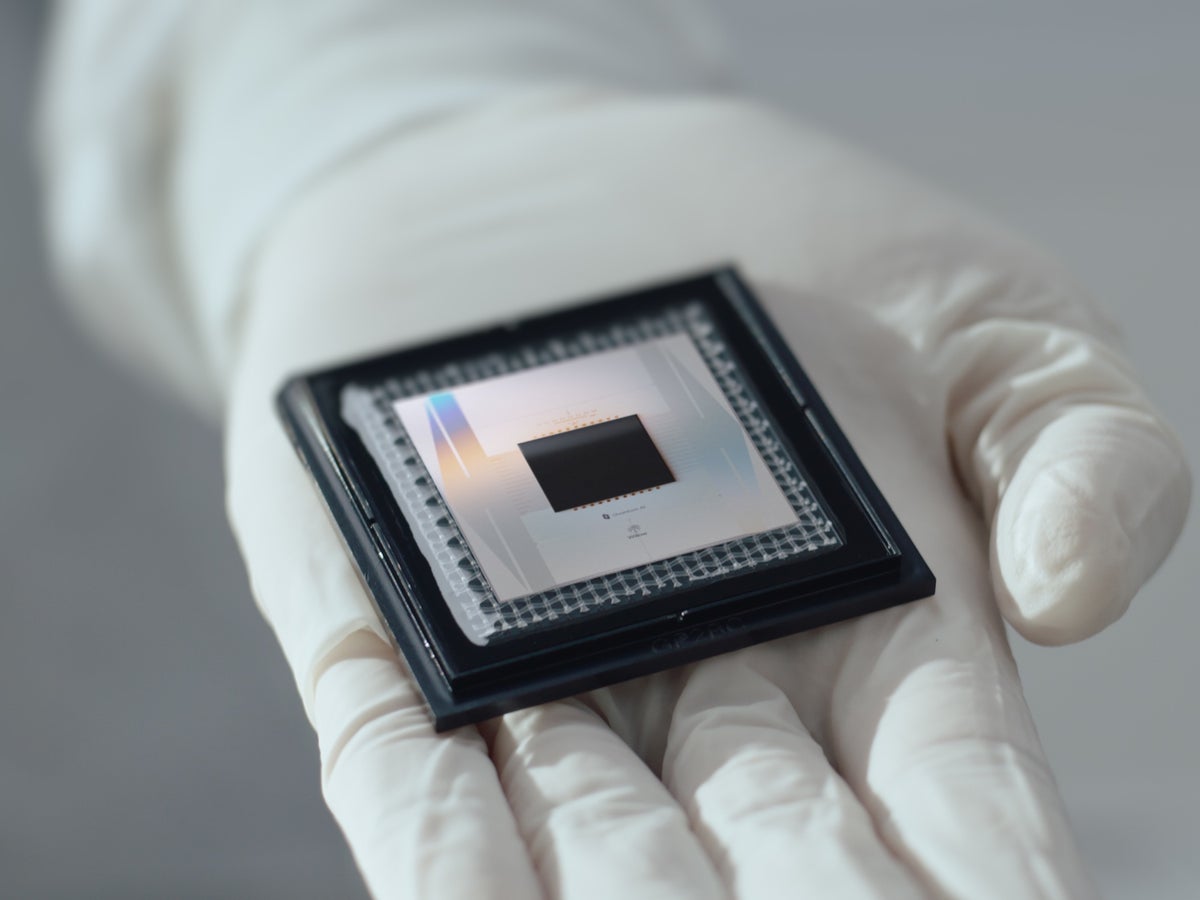
King’s College London Researchers Gain Access to Google’s Willow Quantum Chip- Scientists from King’s College London have become the first academic research team in the UK to gain access to Google’s advanced quantum computing chip, Willow, marking a significant milestone for quantum research in the country.
The breakthrough comes through a collaboration launched last year between Google and the UK’s national quantum laboratory, aimed at expanding academic access to next-generation quantum computing technology. Researchers believe the partnership could accelerate discoveries in fields ranging from clean energy and materials science to medicine and chemistry.
Quantum computers are considered one of the most promising technologies of the future because they have the potential to solve highly complex problems that traditional computers struggle to process. Unlike conventional systems, which store information in binary bits represented as either 0 or 1, quantum computers use quantum bits, or qubits, which can exist in multiple states simultaneously. This allows them to process enormous amounts of information far more efficiently for certain tasks.
Google claims its Willow quantum chip can solve a highly complex theoretical calculation in just five minutes, a task the world’s fastest supercomputers would take approximately 10 septillion years to complete. The figure highlights the dramatic processing potential quantum systems may eventually offer, although researchers note that practical large-scale applications are still under development.
The research project at King’s College London will focus on using Willow to study complicated natural processes that are currently difficult to simulate using existing computing systems. According to the university, the work could help scientists better understand how molecules and particles interact at the most fundamental level.
Dr. Eleanor Crane, who is leading the project alongside Dr. Alexander Schuckert from ENS Paris, said access to Willow could significantly expand scientific understanding of important physical and biological systems.
She described the opportunity as a way to “light a torch” for future research into some of nature’s most challenging scientific questions.
Among the team’s goals is exploring how plants convert sunlight into energy during photosynthesis, a process scientists have studied for decades but still do not fully understand at the quantum level. Researchers also hope to investigate materials capable of transporting electricity more efficiently and examine how molecules bind together inside biological systems.
These interactions involve large numbers of microscopic particles acting simultaneously, making them extremely difficult to model using even today’s most powerful supercomputers. Quantum computers, however, are theoretically capable of simulating these systems more naturally because they operate according to the same principles of quantum mechanics.
According to Dr. Crane, breakthroughs in this area could have major real-world applications across several industries. Improved understanding of quantum-level interactions could help researchers develop more efficient solar panels, create better energy transmission systems, and accelerate the discovery of treatments for diseases that are currently difficult or impossible to cure.
Scientists believe quantum simulations could eventually transform drug discovery by allowing researchers to model molecular behavior with far greater precision. This could reduce the time and cost involved in developing new medicines and help identify compounds that might otherwise remain undiscovered.
The collaboration also reflects the growing global race to develop practical quantum computing systems. Technology companies including Google, IBM, Microsoft, and several startups are investing heavily in the field, while governments worldwide are increasing funding for quantum research and infrastructure.
Although quantum computing remains in an experimental stage, experts see it as a technology with the potential to reshape computing, cybersecurity, artificial intelligence, and scientific research over the coming decades.
For the UK research community, gaining direct access to one of Google’s most advanced quantum chips represents an important step toward participating more actively in global quantum innovation. Researchers at King’s College London hope the project will not only advance scientific understanding but also help build expertise that positions the UK as a key player in the rapidly evolving quantum technology sector.
While practical consumer applications may still be years away, scientists believe partnerships like this one could help unlock discoveries that are currently beyond the reach of traditional computing systems. Are Designer Babies Becoming Real? The Truth About CRISPR | Maya