
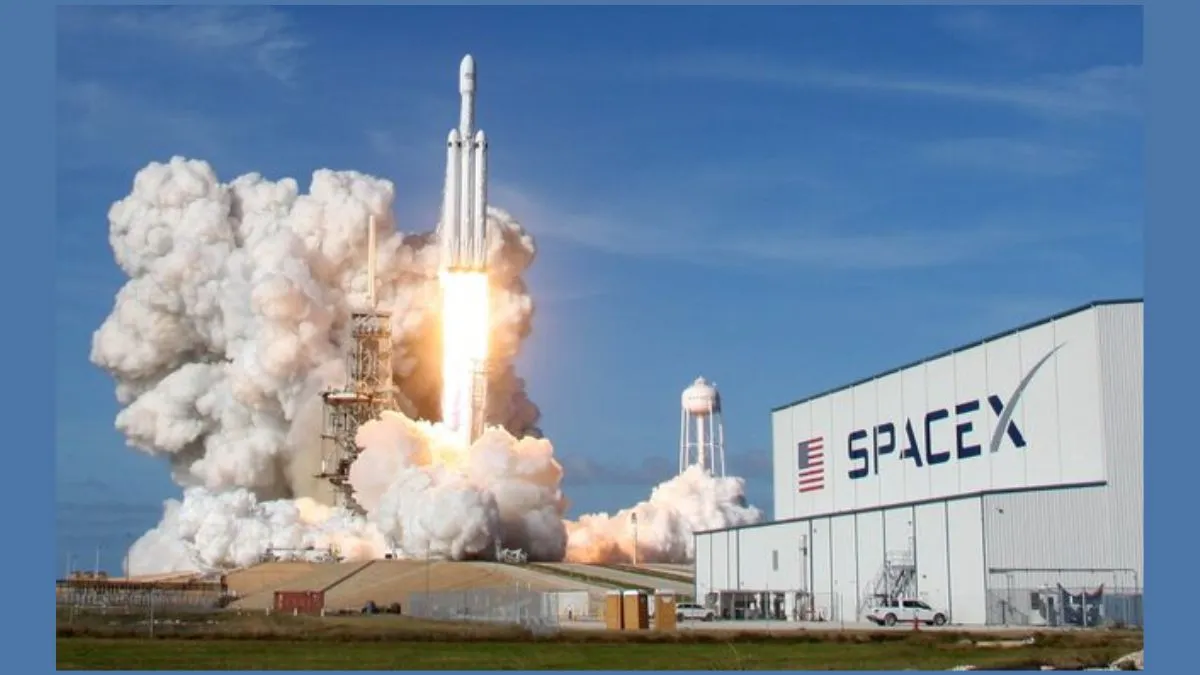
SpaceX Hits 50th Dedicated Starlink Launch of 2026 With Falcon 9 Mission- SpaceX reached another major milestone in its rapidly expanding launch campaign on Saturday, successfully completing its 50th dedicated Starlink mission of 2026. The company launched a Falcon 9 rocket carrying 24 Starlink internet satellites from California’s Vandenberg Space Force Base, further strengthening its global broadband network and underscoring the remarkable pace of its operations this year.
The mission, designated Starlink 17-41, lifted off from Space Launch Complex 4 East at Vandenberg Space Force Base at 8:25 a.m. PDT. Following launch, the Falcon 9 rocket traveled along a south-southwesterly trajectory, carrying its payload toward low Earth orbit where the satellites will eventually join the growing Starlink constellation.
The latest deployment adds 24 new satellites to SpaceX’s orbital internet network, which now consists of more than 10,000 spacecraft in orbit. The constellation has become the backbone of SpaceX’s ambitions to provide high-speed internet connectivity to customers across the globe, particularly in regions where traditional broadband infrastructure remains limited or unavailable.
Saturday’s launch highlights the extraordinary operational tempo SpaceX has established over the past several years. Reaching 50 dedicated Starlink missions before the end of the year demonstrates the company’s ability to conduct launches at a frequency that would have seemed unimaginable just a decade ago. The achievement reflects not only advancements in reusable rocket technology but also the growing maturity of SpaceX’s launch infrastructure and mission planning capabilities.
A key factor behind this success remains the Falcon 9 rocket. The workhorse launcher has become one of the most frequently flown rockets in history thanks to its reusable first-stage booster design. By recovering and reusing boosters multiple times, SpaceX has significantly reduced launch costs and increased flight cadence, allowing the company to support both commercial customers and its own ambitious satellite deployment efforts.
The Starlink project continues to be one of SpaceX’s most important long-term initiatives. Since the first Starlink satellites were launched in 2019, the network has expanded dramatically, transforming from an experimental concept into a global communications system serving millions of users. The service now provides internet access for households, businesses, maritime customers, airlines, and government organizations in numerous countries.
As the constellation grows, SpaceX has also continued upgrading satellite technology. Newer generations of Starlink spacecraft are designed to offer greater network capacity, improved efficiency, and enhanced performance. These upgrades are intended to support increasing demand while improving service quality in densely populated areas where bandwidth requirements continue to rise.
The company’s aggressive deployment strategy has helped Starlink establish a significant presence in the satellite internet market. While competitors are developing their own low Earth orbit broadband constellations, SpaceX currently maintains a substantial lead in both satellite numbers and active customers. Each successful launch strengthens that position by expanding coverage and increasing available network capacity.
Beyond the commercial implications, the mission also serves as another demonstration of the broader transformation taking place within the space industry. Frequent launches, rapid satellite deployment, and reusable rockets have fundamentally changed expectations regarding access to space. What was once considered a rare and costly undertaking has increasingly become a routine operation for companies capable of sustaining high launch rates.
Saturday’s flight followed the familiar profile of recent Starlink missions. After delivering the satellites toward orbit, the Falcon 9’s first-stage booster was expected to perform a controlled landing, enabling it to be refurbished and potentially flown again on a future mission. Reusability remains central to SpaceX’s business model and continues to play a critical role in maintaining the company’s launch cadence.
With 50 dedicated Starlink missions already completed in 2026, SpaceX shows no signs of slowing down. The company continues to pursue an ambitious launch schedule while expanding its satellite network at an unprecedented rate. As additional satellites enter service and new customers come online, Starlink’s role in the global communications landscape is likely to grow even further.
For SpaceX, the latest Falcon 9 launch represents more than just another successful mission. It marks a significant milestone in a year defined by relentless activity, technological achievement, and the continued expansion of one of the world’s largest satellite constellations. CBS Says Byron Allen Deal Turned $40M Late-Night Loss Into $15M Profit | Maya


:max_bytes(150000):strip_icc():focal(731x406:733x408)/nutella-on-artemis-2-040726-0cee13d41344467a9f2ccd0eaef856ad.jpg "iPhone 17 Pro Max and Nutella Grab Attention During NASA’s Artemis II Mission")