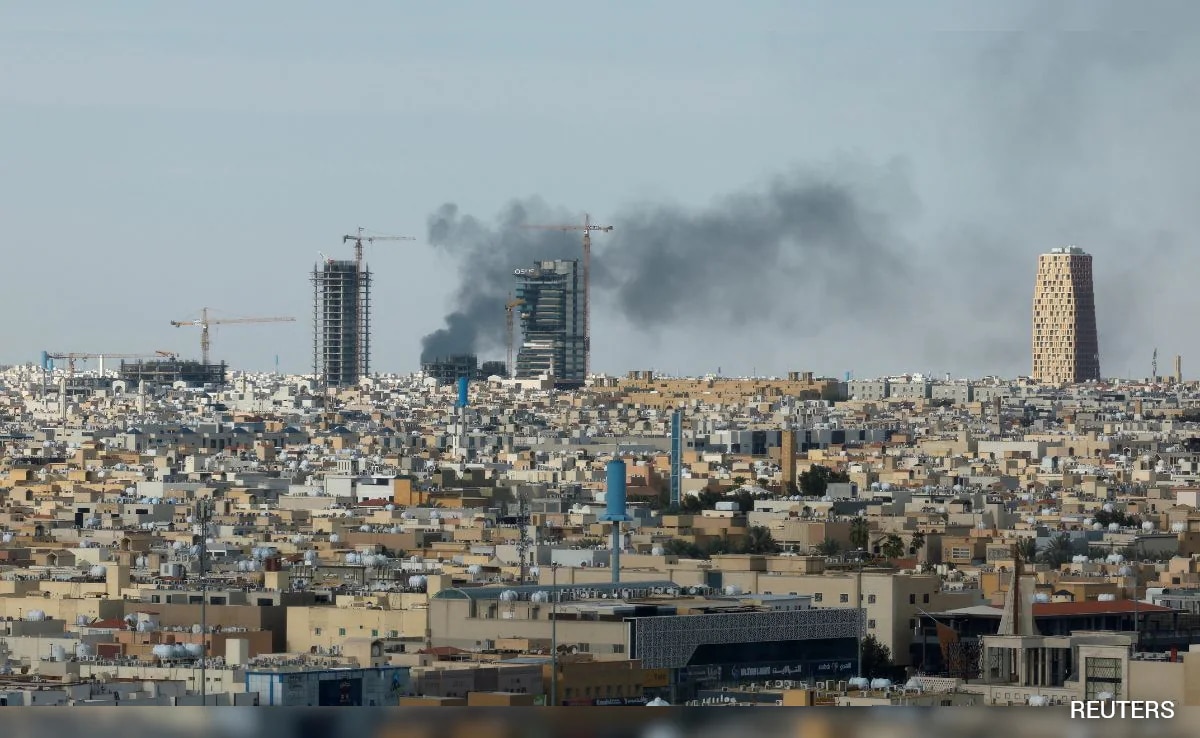
Iranian Missile Strike on Kuwait Airport Kills Indian Citizen, Threatening Fragile Gulf Ceasefire: KUWAIT CITY — A renewed wave of regional tensions erupted on Wednesday after an Iranian missile and drone attack struck Kuwait International Airport, killing an Indian national and injuring dozens of people. The incident marks the first fatal attack on Gulf territory since a ceasefire between Iran and its regional adversaries took effect on April 8.
The strike has raised concerns about the stability of the truce that ended weeks of intense military confrontation involving Iran, the United States, and Israel. Although the ceasefire has largely prevented a return to full-scale conflict, sporadic attacks have continued to test its durability.
According to Kuwaiti authorities, the assault caused significant damage to airport facilities and nearby diplomatic properties. Emergency crews rushed to the scene as debris and damaged infrastructure forced airport officials to suspend operations temporarily.
Health officials reported that 63 people were injured in the attack, with victims suffering a range of injuries, including head trauma, amputations, burns, and wounds caused by explosions. Medical teams distributed the injured across several hospitals in Kuwait as emergency services responded to the crisis.
The casualties included airport employees, travelers, and civilians who happened to be in the area during the attack. Authorities dispatched more than two dozen ambulances to manage the emergency and transport victims for treatment.
India’s government confirmed that one of its citizens was killed during the strike. In a statement, New Delhi condemned attacks on civilian locations and urged all parties involved in the conflict to avoid further escalation.
Kuwaiti officials said the airport was targeted as part of a larger barrage involving approximately 30 ballistic missiles and drones. The attack caused extensive material damage and disrupted air traffic for several hours.
Civil aviation authorities diverted incoming flights to alternative airports while assessing the extent of the destruction. Although airport operations were partially restored later in the day, the incident highlighted the vulnerability of critical infrastructure in the Gulf region.
The airport complex includes both civilian facilities and military-linked infrastructure. A logistics and cargo area within the broader airport zone is used by United States forces, though it is located separately from passenger terminals.
Iran acknowledged launching attacks against military-related targets in Kuwait and Bahrain but did not specifically claim responsibility for the strike on the airport itself. Iranian officials said the operation was retaliation for what Tehran described as recent attacks on an Iranian oil tanker and communications facilities on Qeshm Island.
In a statement, Iran’s Revolutionary Guards said they had targeted Ali Al Salem Air Base in Kuwait and the headquarters of the United States Fifth Fleet in Bahrain, arguing that both locations were linked to military operations against Iran.
The Gulf region has become a central battleground in the broader confrontation between Iran and its rivals. The latest exchange follows months of escalating tensions that intensified after American and Israeli military actions against Iranian targets earlier this year.
Tehran has repeatedly accused Gulf nations of allowing foreign military forces to operate from their territory, allegations that countries such as Kuwait and Bahrain have consistently rejected. Gulf governments maintain that they are not participating in offensive operations against Iran and have sought to avoid becoming direct parties to the conflict.
Meanwhile, the United States military reported that most of the Iranian missiles and drones launched toward Gulf targets were intercepted before reaching their objectives. American officials stated that joint air defense operations involving US and regional forces successfully neutralized multiple incoming threats.
According to the US Central Command, several missiles aimed at Kuwait failed to reach their intended targets, while others were intercepted. Bahraini authorities also reported the successful interception of missiles and drones approaching their territory.
Despite these defensive successes, Wednesday’s attack demonstrated that the risk of escalation remains high. The death of a civilian traveler and the disruption of a major international airport have intensified concerns that future incidents could draw the region closer to another broader conflict.
Analysts warn that the ceasefire remains fragile, particularly as all sides continue to exchange accusations and conduct limited military operations. While leaders across the region have expressed support for preventing a wider war, recent events suggest that tensions remain far from resolved.
For Kuwait, the attack represents a significant security challenge. The country’s main airport had only recently returned to normal operations after previous disruptions linked to the regional conflict. The latest strike once again placed one of the Gulf’s busiest transportation hubs at the center of geopolitical tensions.
As investigations continue and diplomatic efforts seek to prevent further violence, the attack serves as a stark reminder that even periods of relative calm can quickly give way to renewed instability in one of the world’s most strategically important regions. Google Expands AI Scam Protection Ahead of Android 17 Rollout | Maya