Ukraine Launches Major Drone Strike on St. Petersburg as Economic Forum Opens : ST. PETERSBURG, Russia — Ukraine carried out one of its most ambitious long-range drone operations yet, targeting sites in and around St. Petersburg as Russia prepared to host its flagship annual economic forum. The attack underscored Kyiv’s growing ability to strike deep inside Russian territory and brought the war’s impact closer to one of the country’s most prominent cities.
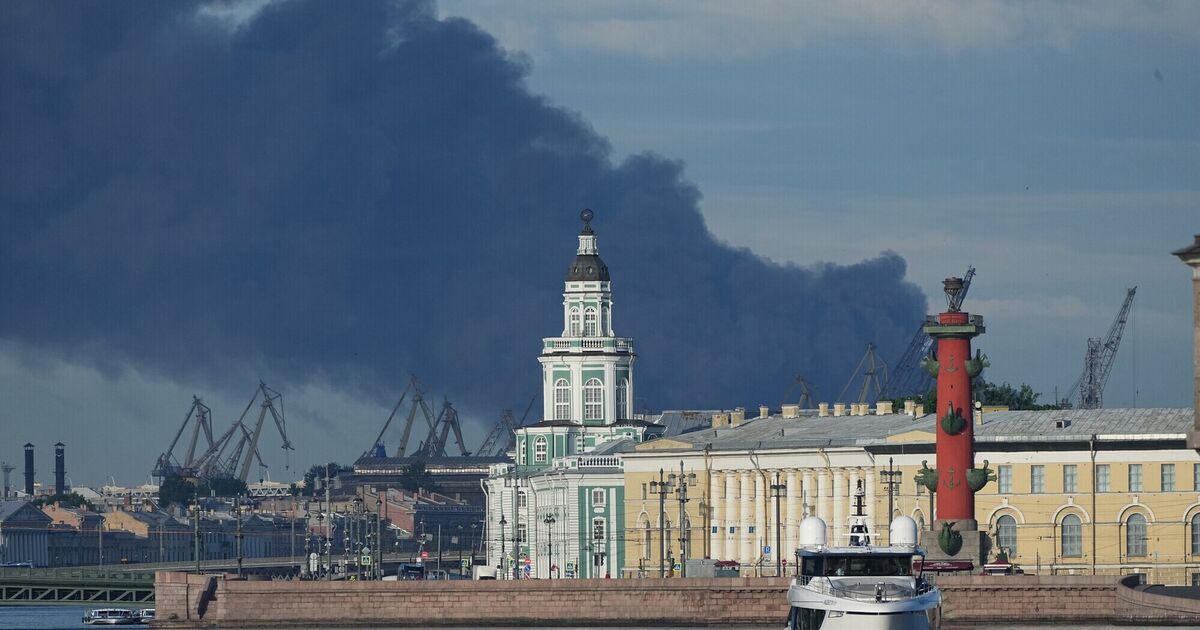
Russian officials reported multiple drone incursions overnight, triggering air defense responses across the wider St. Petersburg region. Witnesses shared images and videos showing dark smoke rising above parts of the city, while emergency services were dispatched to assess damage and respond to affected locations.
According to Ukrainian officials, one of the primary targets was an oil export facility near St. Petersburg. Kyiv described the strike as part of its broader campaign aimed at disrupting infrastructure that supports Russia’s military operations and war economy. Ukrainian President Volodymyr Zelenskyy said the operation demonstrated the effectiveness of Ukraine’s expanding long-range capabilities.
The timing of the attack drew particular attention because it coincided with the opening of the St. Petersburg International Economic Forum, a high-profile event often used by the Kremlin to showcase investment opportunities and strengthen economic partnerships. The gathering attracts government officials, business leaders, and international delegates from around the world.
Security concerns intensified as authorities moved to protect key locations linked to the forum. While the event proceeded as scheduled, the drone assault cast a shadow over the proceedings and highlighted the challenges Russia faces in defending strategic areas far from the front lines.
Russian regional officials stated that air defense systems intercepted numerous drones approaching St. Petersburg and neighboring districts. Additional drone activity was reported near Moscow, where local authorities said defensive measures were taken to prevent strikes on the capital.
The latest operation reflects a broader shift in the conflict, with both sides increasingly relying on drones to project power beyond the battlefield. Long-range unmanned aircraft have become a central component of military strategy, allowing each side to target infrastructure, logistics hubs, fuel facilities, and military installations hundreds of miles from active combat zones.
For Ukraine, such strikes serve both military and symbolic purposes. By reaching deep into Russian territory, Kyiv seeks to demonstrate that no region is completely insulated from the consequences of the war. Analysts say attacks on energy and transport infrastructure can also complicate military logistics and increase the cost of sustaining military operations.
The strike came only a day after Russia launched a large-scale aerial assault against Ukraine, involving missiles and drones aimed at several cities. Ukrainian authorities reported significant casualties and widespread damage from those attacks, which targeted civilian and infrastructure sites across multiple regions.
The cycle of retaliation has intensified in recent months, with both countries expanding the scale and frequency of drone operations. Military experts note that drone technology has transformed the conflict, providing a relatively low-cost method of conducting long-range attacks while reducing risks to pilots and conventional aircraft.
Despite the growing sophistication of air defense systems, the sheer number of drones deployed in some operations has made interception increasingly difficult. Both Russia and Ukraine have invested heavily in drone production and electronic warfare capabilities, turning the skies into a critical front in the conflict.
Meanwhile, officials in Russian-controlled areas of eastern Ukraine reported casualties from separate drone attacks, further illustrating the widening reach of aerial warfare. Claims from both sides regarding battlefield successes and damage assessments remain difficult to verify independently during active military operations.
The developments come against the backdrop of stalled diplomatic efforts. Peace negotiations have shown little sign of progress, while fighting along the front line continues without major breakthroughs by either side. As a result, long-range strikes have become an increasingly important tool for both governments seeking to gain leverage and shape perceptions of the war.
For Russia, an attack near St. Petersburg carries significant symbolic weight. The city is not only the country’s second-largest urban center but also the hometown of President Vladimir Putin. A successful strike in the region sends a powerful message about Ukraine’s ability to challenge Russian defenses far beyond areas traditionally associated with the conflict.
As the war enters another year, the latest drone offensive highlights how modern warfare is evolving. With front-line positions largely unchanged and diplomatic channels struggling to deliver results, both sides appear determined to expand the use of long-range technology to pressure their adversaries and influence the broader course of the conflict.
The attack on St. Petersburg serves as another reminder that the battlefield now extends well beyond trenches and contested territory, reaching into major cities and strategic economic centers on both sides of the border. Microsoft Tests AI-Enabled Wearables as Next Computing Platform | Maya